


Article by
Harry Stanley III
Harry Stanley III is a construction marketing strategist and fractional CMO at H&A Marketing. He has helped construction companies grow through website strategy, SEO, paid advertising, branding, lead generation, CRM systems, and professional content. His past work includes helping Meraki Solar generate an additional $3.7 million in revenue in his first year and supporting American Builders as a fractional CMO. Today, Harry works directly with custom home builders and construction companies to build marketing systems designed to generate qualified leads and measurable growth.
A commercial roofing lead isn’t just a larger residential lead. Commercial roofing lead generation has to reach property owners and facility managers, connect their building needs to restoration or replacement work, and support a more considered sales process.
You already know a steady flow of inquiries matters, but lead volume alone won’t build a strong project pipeline. The prospect’s fit, project type, and how the opportunity reaches your team all matter.
This guide explains how commercial leads differ from residential ones and where inbound marketing, paid ads, shared lead services, and exclusive agency leads fit. You’ll learn what each approach can contribute, what to consider when choosing between them, and how clear tracking and follow-up help turn inquiries into qualified opportunities. The goal is a lead strategy built around the commercial roofing work you want, not simply a longer list of names.
Key Takeaways
- Commercial prospects often involve property owners or facility managers and a longer decision process, so qualify project fit rather than counting inquiries alone.
- Shape campaigns around your service area, target projects, and sales capacity to attract restoration and replacement opportunities that fit your goals.
- Use Google Ads and social advertising for different roles, then assess performance by lead quality and pipeline progress.
- Shared lead services and exclusive agency leads differ in how opportunities are distributed; weigh that trade-off against your follow-up capacity and growth goals.
- Connect your website, search visibility, lead capture, and follow-up so promising inquiries have a clear path into your sales pipeline.
Campaign customization by market and contractor goals
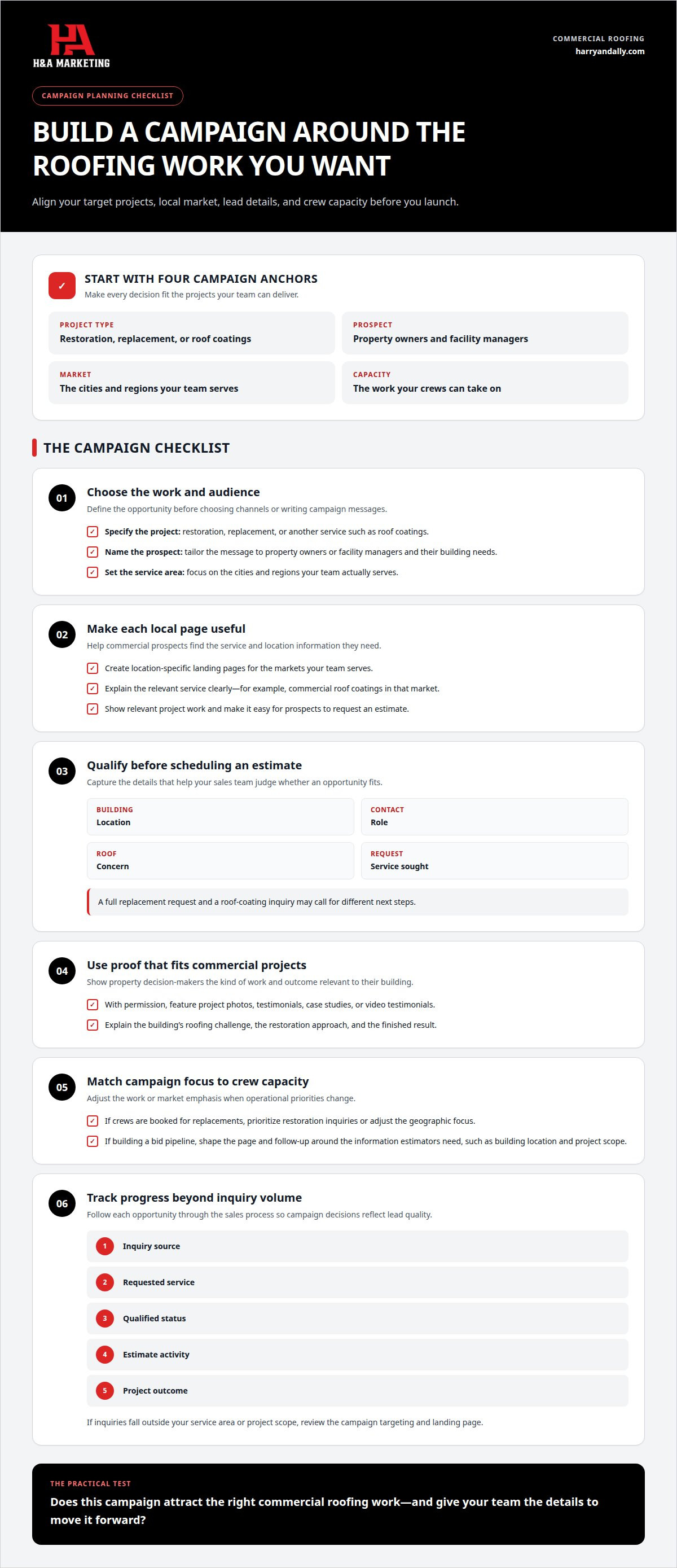
A campaign works best when it reflects the projects your crews can deliver and the markets you serve. A contractor focused on commercial roof restorations may prioritize facility managers with aging roofs, while a replacement-focused team may target property owners planning major capital work. Define the project type, service area, and prospect before choosing channels. This keeps campaigns aligned with real sales opportunities, not just general roofing inquiries.
Local relevance matters, too. Build location-specific landing pages around the cities and regions your team serves, using local search terms alongside the services offered. A page for commercial roof coatings in one market should explain that service clearly, show relevant project work, and make it easy to request an estimate. A website designed for construction companies can organize those details so property managers can find the right information without sorting through residential services.
Use customer proof to help prospects understand the work behind a proposal. With permission, feature project photos, customer testimonials, case studies, and video testimonials. For example, a case study might explain the building’s roofing challenge, the restoration approach, and the finished result. Keep the details specific to commercial roofing. A property owner considering a replacement needs different evidence from a homeowner comparing shingle options.
Retention also belongs in campaign planning. After completing a commercial roofing project, send a thank-you email that recognizes the customer and leaves a clear path for future communication. A useful follow-up can invite feedback or ask whether the property team has other buildings to assess. Facility managers may oversee multiple sites, so an active relationship can lead to future conversations.
Referrals from past customers can introduce contractors to new property owners and managers. Make the request after a successful project, when the customer has direct experience with the completed work. Roofing businesses can offer a discount or gift card for a successful referral. Keep the terms clear and tie the request to the work you want, such as commercial restoration or replacement opportunities.
Before launching, align the campaign with operational capacity. If crews are booked for replacements, prioritize restoration inquiries or adjust the campaign’s geographic focus. If the goal is to build a bid pipeline, tailor the page and follow-up around information estimators need, such as building location and project scope. Track inquiry sources and which inquiries become qualified opportunities. This gives contractors a practical basis for refining messages, markets, and follow-up instead of treating every lead as equally valuable.
What makes commercial roofing leads different from residential leads?
Commercial opportunities often involve property owners, facility managers, and longer evaluation processes. Inbound marketing helps roofers reach these decision-makers with information relevant to specific buildings and project needs.
Finding Property Owners and Facility Managers
Professional marketers help roofing businesses reach commercial decision-makers through search campaigns, useful website content, and focused outreach. For example, a landing page about commercial roof restoration can speak to a facility manager researching options for an aging building. The strategy should match the contractor’s service area, target projects, and the platforms prospects use to find roofing information.
Qualifying Leads Before Estimating
Before an estimator schedules a site visit, lead forms and follow-up can capture details such as building location, contact role, roofing concern, and requested service. A property owner seeking a full replacement has different needs from a manager exploring roof coatings. These details help the sales team decide which opportunities fit its scope and estimating process.
Inbound marketing gives commercial prospects a way to learn before speaking with a sales representative. A roofing business can publish pages about restoration, replacement, and roof coatings, then connect each page to a clear inquiry form. Search visibility and useful project information can help property owners and facility managers discover the business while researching a roofing issue.
Marketing strategies should reflect the contractor’s goals, not simply copy a residential campaign. A team seeking replacement projects may focus content on building assessments and project planning. A contractor prioritizing restorations can make coating and restoration services easier to find. A coordinated commercial roofing marketing strategy connects those messages with the right landing pages and lead capture.
Marketing costs depend on campaign scope, target markets, selected platforms, content needs, and tracking requirements. A strategy covering multiple service areas with separate restoration and replacement pages involves different work from a single focused campaign. The provider’s quote should reflect the deliverables and how campaign management, creative, and reporting are handled.
Performance tracking helps contractors see which campaigns create useful opportunities. Track inquiry source, requested service, qualified status, estimate activity, and eventual project outcome. For example, if a campaign brings inquiries but few fit the contractor’s service area, its targeting or landing page may need adjustment.
Branded materials make campaign messages recognizable across platforms. Use consistent logos, colors, project photography, and service descriptions on landing pages, email follow-ups, and proposal materials. A facility manager who first sees a search result and later receives a proposal should encounter the same commercial roofing identity and a clear description of the work offered.
Google Ads and social media advertising
Google Ads and social media advertising serve different roles in a roofing campaign. Google Ads can reach people searching for roofing services in a defined area. Social media can build awareness among audiences in that market. For commercial contractors, campaign messages should speak to property owners and facility managers considering restoration, replacement, or roof coating.
For search ads, select keywords tied to commercial services and the locations your crews serve. A search for commercial roof replacement in a target city signals a different need from a general roofing query. Location targeting and keyword bidding help focus advertising on local searches. Send each ad to a landing page that matches its service and location, rather than a broad page that leaves prospects guessing.
Social media advertising works differently because people may not be actively looking for a roofer. A campaign can introduce a contractor’s commercial services through project updates, educational content, or a clear explanation of restoration options. Platforms such as Facebook and Instagram offer audience targeting, including location and demographics. Keep the message specific so a property manager can quickly understand which building needs and roofing projects the contractor handles.
Seasonal timing can shape the message. Roofing businesses can run local campaigns around storm damage inspections or pre-winter checkups. For example, a commercial contractor might promote inspections after severe weather, then direct interested property teams to a page explaining the next step. Google Business Profile posts can also share seasonal updates, project photos, contact details, and service information.
Paid advertising can create visibility while organic search supports ongoing discovery. Ads can put a service in front of local searchers quickly, while useful pages and local SEO help the roofing business appear in relevant searches over time. The two approaches work best when they share service language, location targeting, and a clear conversion path. A campaign for roof restoration should not lead to a page focused only on residential repairs.
Track more than clicks. Record the campaign source, requested service, prospect location, qualified status, and whether the inquiry becomes an estimate or proposal opportunity. If social media generates engagement but few relevant inquiries, adjust the audience or message. If Google Ads brings inquiries outside the service area, refine its location targeting. Consistent social media marketing can support the same commercial message across posts and paid campaigns.
Compare channels by the quality and progress of the opportunities they produce. A commercial roofing campaign should help the sales team identify useful conversations, not just report activity. Review results alongside follow-up, since a relevant inquiry can stall if the response overlooks the prospect’s project needs or timing.
Shared pay-per-lead services versus exclusive agency leads
Shared services distribute an inquiry to multiple contractors, while an exclusive arrangement directs it to one contractor under agreed terms. That difference affects competition, follow-up, and how roofing leads fit your sales process. For commercial roofing leads, clarify what “exclusive” means, including the service area, project type, and channels covered.
A shared pay-per-lead service can provide access to inquiries without requiring you to build every campaign from scratch. The trade-off is that other roofers may contact the same prospect. If several contractors respond to a property manager seeking a replacement estimate, fast, informed follow-up matters. Ask how the service defines a lead, handles duplicates, and routes commercial inquiries.
Exclusive agency leads are generated for one contractor within the agreed campaign scope. Exclusivity can reduce direct competition for an inquiry, but it doesn’t guarantee project fit or a signed proposal. A roofing business should define its target profile before launch, such as facility managers seeking restoration work in a specific market. Review how campaigns attract, capture, and qualify those prospects.
Commercial and residential leads require different qualification. A homeowner may be seeking a repair for one property, while a commercial inquiry may involve a property owner, facility manager, or several decision-makers. The project could concern roof coating, restoration, or replacement. A lead source focused on residential requests may not support a contractor focused on commercial projects.
Generating qualified opportunities can be challenging because commercial prospects may be researching early, comparing approaches, or coordinating internally. Broad targeting can bring inquiries outside a contractor’s service area or project scope. A sound process starts with clear service descriptions, relevant campaign targeting, and consistent lead records. Track inquiry source, building location, requested work, and the next sales step.
To pursue exclusive roofing leads, define the campaign before agreeing to its terms. Specify the roofing services, target locations, ideal contact profile, and what happens when an inquiry falls outside those boundaries. Then clarify whether exclusivity applies across channels or only to a particular campaign. These details help you judge whether the arrangement matches your sales capacity.
Appointment-setting programs should also be assessed by the conversations they create. Clarify how a meeting is considered qualified, what project details are shared beforehand, and how appointments reach your sales team. For example, an estimator may need the building address, contact’s role, and stated roofing concern before deciding how to prepare. Clear handoffs help distinguish a relevant meeting from a calendar booking alone.
Compare providers by how they define lead quality, report activity, and support follow-up, not by the word “exclusive” alone. A useful lead-generation system connects targeting, inquiry capture, and sales tracking so contractors can see which opportunities progress. This structure helps distinguish a high-volume source from a dependable fit for commercial restoration and replacement work.
Commercial roofing lead generation
A productive system connects audience, offer, inquiry capture, and sales follow-up. For a roofing company focused on commercial restorations and replacements, each method should attract relevant building projects and help the team identify the next step. A high inquiry count means little if prospects need services outside the company’s scope or territory.
Start with the target project and buyer. A facility manager researching roof restoration needs different information from a property owner planning a replacement. Build campaign messages around those needs, then guide each audience to a matching service page. This helps prospects understand the work and gives the sales team more context when an inquiry arrives.
Inbound methods help commercial buyers find useful information while researching. A local search result, service page, or Google Business Profile listing can lead them to a contractor’s website. Clear service descriptions, project examples, and contact options make it easier to take the next step. Keep the path specific: a commercial replacement page should not send visitors into unrelated residential content.
Appointment setting adds direct outreach to the mix. It can help create conversations with property owners or facility managers who may not be actively searching online. Quality depends on targeting and context. A call about a commercial building’s roofing needs is more relevant than a generic pitch that doesn’t distinguish commercial work from residential roofing.
Exclusive lead arrangements may limit distribution of an inquiry, while shared services can send the same opportunity to multiple contractors. Neither format replaces qualification. Define what counts as a suitable lead, including service type, geography, contact role, and project information. Then record those details consistently so estimators can prioritize opportunities and sales staff can follow up with context.
Measure progress beyond the first contact. Track the source, requested service, qualified status, estimate or proposal activity, and project outcome. For example, if a campaign attracts property managers but few requests match your restoration services, adjust the message or landing page. If appointments are set but conversations rarely advance, review the target profile and outreach approach.
Connect the pieces in a practical order: define your target, align each campaign with a commercial service, capture useful inquiry details, and establish who owns follow-up. Review outcomes across inbound and appointment-setting methods to see which channels contribute qualified opportunities. This creates a clearer basis for refining the pipeline than choosing a channel by lead volume alone.
A coordinated commercial roofing marketing strategy can align campaign targeting, lead capture, and follow-up around the projects you want.
H&A Marketing: Lead Generation
H&A Marketing helps commercial roofing contractors build lead generation around the restoration and replacement projects they want to pursue. Turn to H&A when inquiries are inconsistent, campaigns attract poor-fit prospects, or your website doesn’t make commercial services clear. The work can connect lead generation with Construction Website Design and SEO for Construction Companies, helping prospects find relevant service information and a clear way to inquire.
For example, a contractor targeting facility managers can align service pages and campaign messaging around commercial roof restoration, then track the inquiries those efforts produce. Clear branding can also keep the company’s identity consistent across its website and marketing materials.
To discuss lead generation for your commercial roofing business, request a free quote from H&A Marketing.
Build the Pipeline You Want Next
Choose the next step based on the projects your team wants to pursue, not just the number of inquiries arriving. A commercial roofing lead generation plan should give your sales team a clear path from first contact to a qualified conversation. Set a practical priority, such as attracting more restoration opportunities or improving visibility with property owners in a target market.
Then make sure your marketing supports that direction. H&A Marketing offers Construction Website Design, Construction Branding and Logo Design, and SEO for Construction Companies to help commercial roofing contractors present their services clearly and reach relevant prospects. These services can support a consistent presence, from the first search to the moment a property manager considers contacting your team.
A focused campaign gives you a stronger basis for making your next marketing decision. Start with the project types and prospects that fit your business, then build from there.
Your next qualified commercial opportunity can start with a clear plan.
Frequently Asked Questions
What are the most effective commercial roofing lead generation strategies?
Effective commercial roofing lead generation combines search visibility, targeted advertising, and consistent sales follow-up. The right mix depends on whether your priority is restoration work, replacements, or roof coatings. Assess each method against a sales milestone: qualified inquiry, site assessment, proposal, or awarded project. This makes it easier to identify which activity contributes to the pipeline rather than simply generating attention.
How much does commercial roofing lead generation cost per lead?
Cost per lead depends on the channel, targeting, market competition, service scope, and how narrowly a lead is qualified. Calculate it by dividing campaign spend by the number of leads that meet your agreed criteria. Then compare that figure with the quality of those inquiries, not just their quantity. A lower-cost inquiry may have little value if it concerns residential work or falls outside your service area.
What is the average conversion rate for commercial roofing leads?
There’s no single conversion rate that represents every commercial roofing pipeline. Results depend on what counts as a conversion: an inquiry becoming a qualified opportunity, an opportunity receiving a proposal, or a proposal becoming a signed project. Track these stages separately in your CRM. For example, compare qualified inquiries with completed estimates, then review awarded projects against proposals. This shows where follow-up or qualification may need attention.
How do professional marketers generate commercial roofing leads through SEO and local search?
Marketers build search visibility by matching useful pages to the services and locations a contractor targets. They can organize pages around commercial restoration, replacement, or roof coatings, then keep business details and project information consistent across search listings. A property manager searching for a specific service should land on a page that explains the work and offers a clear inquiry path, rather than a broad page mixing residential and commercial content.
Which paid advertising channels work best for commercial roofing contractors?
Google Ads is suited to reaching people actively searching for commercial roofing services. Facebook and Instagram advertising can introduce a contractor’s work and services to audiences who may not be searching yet. Use search ads for specific service intent, such as commercial roof replacement, and social campaigns for project awareness or educational content. Evaluate each channel by qualified inquiries and sales progress, since clicks alone don’t show project fit.
Are commercial roofing leads exclusive, and how do lead providers price them?
Some providers distribute an inquiry to one contractor; others share it among several. Define “exclusive” in writing, including the covered project type, geography, campaign, and whether duplicate inquiries are excluded. Providers may charge per lead or structure fees around a broader campaign or service arrangement. Compare the pricing basis with qualification criteria and lead handling, so you know what the charge covers.
How can commercial roofing companies measure lead generation ROI?
Connect marketing records to the sales pipeline, then compare attributable project profit with marketing spend. Track source, qualified status, estimate activity, proposal outcome, and awarded work in your CRM. For example, review whether inquiries from a restoration campaign progress to site assessments and proposals. Include the longer sales cycle in your reporting, and distinguish signed projects from early-stage opportunities so campaign decisions reflect actual pipeline movement.
How does commercial roofing lead generation vary by local market and climate?
Local weather patterns and building needs influence which services prospects seek and when. A market with recurring storm concerns may respond to inspection and repair messaging, while another may have stronger demand for planned restoration or replacement conversations. Seasonality also affects campaign timing and crew capacity. Tailor service pages, advertising, and follow-up to local conditions, then use inquiry patterns to refine your emphasis.
