
Commercial Roofing Marketing Plan: A Step-by-Step Guide


Article by
Harry Stanley III
Harry Stanley III is a construction marketing strategist and fractional CMO at H&A Marketing. He has helped construction companies grow through website strategy, SEO, paid advertising, branding, lead generation, CRM systems, and professional content. His past work includes helping Meraki Solar generate an additional $3.7 million in revenue in his first year and supporting American Builders as a fractional CMO. Today, Harry works directly with custom home builders and construction companies to build marketing systems designed to generate qualified leads and measurable growth.
A commercial roofing marketing plan works best when it focuses on one service, one market, and one person responsible for new enquiries. Start with a clear message that sets your company apart, then choose a primary marketing channel instead of trying to launch SEO, paid ads, and referrals all at once.
It’s tempting to advertise everywhere when you want more restoration and replacement opportunities. A focused approach makes it easier to learn which messages reach facility managers and property owners, where qualified enquiries come from, and what to improve next.
This guide covers practical ways to promote your roofing company, capture website leads, follow up consistently, strengthen your Google Business Profile, and use search marketing. You’ll also learn how to connect these efforts into a process that supports your bid pipeline, rather than treating every channel as a separate task.
Key Takeaways
- Choose a clear commercial roofing message and focus your initial marketing effort on the channel that best fits your target market.
- Make it easy for facility managers and property owners to describe their roofing needs and submit an enquiry through your website.
- Use a consistent follow-up process to keep qualified enquiries moving and request reviews after completed projects.
- Keep your Google Business Profile current with accurate business details, service information, and recent project photos.
- Connect SEO and paid search to relevant service pages, then track which enquiries become viable restoration or replacement opportunities.
1. What’s the best way to advertise your roofing company?
Start with a clear offer for a defined commercial buyer. A facility manager considering roof replacement needs different information from a property owner exploring restoration. State the service, the property types you work with, and the next step. Use that message consistently across your website, ads, and outreach.
Build visibility through reviews, referrals, email, and jobsite signs. Invite clients with completed projects to share honest feedback, and make it easy for them to introduce your company to another property contact. Email past customers with relevant updates, such as planning a roof assessment ahead of budgeting. A sign near an active job can identify your company and the commercial service being performed.
Choose a primary channel based on how your target buyers make decisions. Facebook and Instagram can show project progress, explain restoration options, or introduce the team handling commercial work. Nextdoor can support local awareness where property owners use the platform. Google Local Services Ads and Google Search Ads can reach people looking for roofing help. Keep paid-search copy focused on commercial services, not broad roof repair requests.
How much should a commercial roofing company budget for marketing? Set a budget based on target project value, sales capacity, and the cost of managing each channel. Account for both ad spend and the work needed to create useful content, handle enquiries, and follow up.
In storm-prone markets, make your message timely and specific without using alarm. Explain how property owners can request an assessment after severe weather, what information helps your team understand the roof, and which commercial services you provide. Use relevant project examples and a clear enquiry path. Keep storm-related campaigns separate from routine restoration or replacement messaging so each audience gets relevant information.
Track which advertising generates real opportunities. Use call tracking to identify campaign calls, UTM tags to label website visits, and a CRM to record project type, source, and sales progress. Compare enquiries for commercial coating projects with those for full replacements, for example. Assess the quality of conversations and proposals, not clicks alone.
A communication plan should identify and define its audiences before selecting outreach strategies, according to the U.S. Environmental Protection Agency. Apply that approach by separating facility managers, property owners, and past clients. Give each group a message suited to its role and project needs.
Use those audience insights to refine your commercial roofing marketing approach. A message built around the projects you want is easier to assess across channels and improve using enquiry data.
For a coordinated commercial roofing marketing approach, connect the message with lead tracking and follow-up.
2. Website lead capture and instant roofing estimators
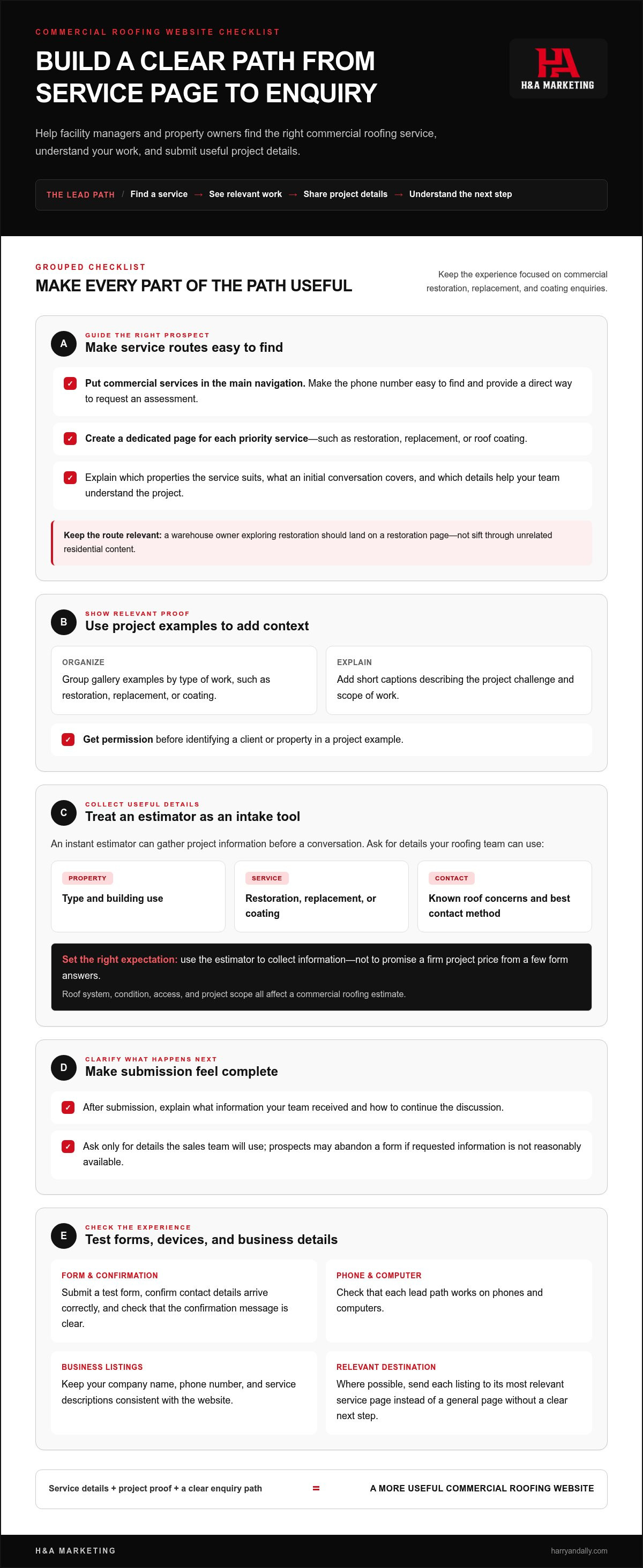
Your website should help commercial prospects find the right service and take action. A facility manager seeking roof replacement needs a clear path to replacement information, not a generic homepage. Put commercial services in the main navigation, make your phone number easy to find, and offer a direct way to request an assessment.
Create a dedicated page for each priority service, such as restoration, replacement, or roof coating. Explain which properties the service suits, what an initial conversation covers, and what details help your team understand the project. A warehouse owner considering restoration should land on a page about restoration, not sift through unrelated residential content.
Use a project gallery to give service pages real context. Group examples by type of work and add short captions explaining the challenge and project scope. A restoration gallery, for instance, could show a commercial roof before and after the work, with details that help prospects understand the project. Get permission before identifying a client or property.
An instant estimator can collect project information before a conversation. Use it as an intake tool, not as a substitute for a site review or final proposal. Ask for details that help your roofing team understand the request:
- Property type and building use
- Service interest, such as restoration, replacement, or coating
- Known roof concerns and the best contact method
After submission, explain the next step clearly. Tell visitors what information your team received and how to continue the discussion. Don’t display a firm project price based on just a few form answers. Roof system, condition, access, and project scope all affect a commercial roofing estimate.
Make every lead path work on phones and computers. Submit a test form, confirm the contact details arrive correctly, and check that the confirmation message is clear. Ask only for information your sales team will use. If prospects can’t reasonably provide details requested in a form, they may abandon it before submitting.
Keep directory information consistent with your website. Check that your company name, phone number, and service descriptions match across business listings. Where possible, link each listing to its most relevant page, so a commercial roof replacement search doesn’t send visitors to a general page without a clear next step.
Website design should make information clear and support lead capture. Use readable headings, consistent branding, and navigation that helps property managers find project examples quickly. Effective construction website design brings service details, project proof, and an enquiry path together without distracting visitors with competing calls to action.
3. Automated lead follow-up and review requests
Every commercial roofing enquiry needs a clear owner and next action. Assign each new lead in your CRM, record the service they’re interested in, and set a follow-up task. For example, a facility manager asking about replacement should receive a relevant acknowledgement, followed by a salesperson’s conversation about the property and project needs.
Automation can manage routine messages while your team handles the sales conversation. Send a confirmation that reflects the enquiry, such as a request about roof restoration, then remind the assigned salesperson to make personal contact. Keep the message useful: ask for details that help assess project fit instead of sending a generic sales pitch.
Email campaigns can keep past customers and active prospects engaged. Group contacts by relationship or interest, such as completed replacement projects, open proposals, or coating enquiries. Send each group a relevant project update or planning note. Give every email a clear reply path, and record responses in the contact history.
After a project is complete, invite the client to leave an honest review. Make the request straightforward and professional, without scripting the feedback. Respond to reviews in a measured tone. If a client raises a specific concern, acknowledge it and continue the conversation privately. This shows prospective buyers that your team takes feedback seriously.
Use a recurring planning and review cycle that fits your sales process. At the start of each cycle, confirm who owns enquiries, review CRM stages, and prepare messages for common situations. During the cycle, assess incoming opportunities and note where prospects pause. Regular reviews keep follow-up connected to sales activity rather than leaving old enquiries unattended.
Look for friction between enquiry and sale. Check whether prospects receive a clear response, complete the initial conversation, schedule an assessment, and receive a proposal. If proposals go out without a recorded next step, assign an owner and contact date. If enquiries lack useful project details, adjust the intake questions or the salesperson’s call prompts.
At the end of each review period, compare marketing sources with qualified opportunities and sales progress. A campaign may generate enquiries but attract the wrong building types or service requests. Record project fit, proposal status, and outcome alongside the source. Use these details to decide which messages and channels merit continued attention.
Keep each CRM record practical and current. Include the source, property type, service interest, last contact, and next action. When a prospect asks for an update, the salesperson can review the conversation history and respond with context. This also helps managers spot stalled opportunities and assign follow-up before a commercial project goes cold.
4. Google Business Profile optimization
Your Google Business Profile gives prospects a quick view of your company in local searches. Keep the business name, phone number, website, and service area accurate. Describe commercial roof restoration and replacement clearly, so facility managers can distinguish your work from residential roof repair. Keep the details current and consistent with your website and other listings.
Review the profile’s service information and business description for clarity. Name the commercial work you want, such as roof coating, replacement, or restoration. Avoid broad wording that attracts unrelated requests. Add a direct link to the matching service page, so someone researching warehouse roof replacement can find relevant project information.
Project photos help make the profile specific. Add 1–2 new job photos per week, showing completed commercial work and relevant details. Use accurate captions that identify the project type without sharing private client information. A consistent photo routine also gives your team a practical reason to gather jobsite images after completed restoration or replacement work.
How do commercial roofing companies identify and target ideal customers? Start with the projects you can deliver profitably, then define the property types, service area, and decision-makers that fit. Review past enquiries and completed jobs to see whether facility managers or property owners are more likely to request your target work.
Use Google Ads to reach searches in areas your crews can serve. Set geographic targeting around suitable markets, then review where calls and enquiries actually originate. If an area produces residential repair requests instead of commercial projects, refine the location settings and ad wording. Keep targeting aligned with service capacity and project fit.
Search ads need a landing page that matches the keyword and ad. A search for commercial roof restoration should lead to a restoration page, not a general homepage. Include the service area, relevant project examples, a clear phone number, and an enquiry form. This alignment helps visitors understand the offer before contacting your team.
Group keywords by service intent. Searches for “commercial roof replacement” differ from searches for “commercial roof coating,” so separate ad groups and landing pages can address each need directly. Review search terms regularly and remove irrelevant queries. This keeps advertising focused on commercial properties and the projects your company wants.
Track results by location and service, not just profile views or ad clicks. Record calls and forms in your CRM, then compare qualified enquiries, assessments, proposals, and sales. Search engine optimization can support the same local visibility by aligning website pages with the services and markets listed in your profile.
5. Search engine marketing
Search marketing can include both unpaid visibility and paid placements. For commercial roofers, the goal isn’t simply to get more clicks. It’s to reach property owners and facility managers searching for restoration, coating, or replacement. Connect each search term to a useful page, then track whether enquiries fit your target projects.
SEO starts with service pages that answer specific commercial questions. Create separate pages for roof restoration, replacement, and coatings, then explain the property types you serve and how assessments work. Use relevant keywords naturally in page titles, headings, and copy. Don’t repeat the same phrase without adding useful information for prospective clients.
How can commercial roofers generate leads through SEO and local search? Publish focused service pages, keep your Google Business Profile accurate, and add useful project examples. Make it easy to call or submit an enquiry, then track which organic searches bring qualified commercial opportunities.
Google Search Ads can reach people actively looking for a roofer. Separate campaigns by service and geography, such as commercial roof replacement in a target market. Compare campaign costs with lead quality, assessment bookings, proposals, and closed work before changing bids.
Google Local Services Ads offer another paid-search option for roofing businesses. The suggested advertising budget allocation is 40% to Google Local Services Ads and 20% to Google Search Ads. Treat these as starting allocations, not a substitute for tracking. Your budget should account for both media and fees, then shift as sales data shows what works.
Match each ad to its landing page. A search for roof coating should lead to a coating page with relevant project photos, service details, and a clear enquiry path. A replacement ad should lead to replacement information. This alignment helps prospects understand the offer and gives your team context when responding.
Optimize campaigns using search-term reports and CRM records. Remove irrelevant queries, refine geographic targeting, and compare leads by service and property type. A click from a residential roof repair search may not suit a commercial contractor. Track qualified opportunities and project outcomes, not just impressions or form submissions.
SEO can also strengthen referrals and relationships with past customers. Create pages that answer recurring questions, then share them in follow-up emails or client conversations. Add accurate photos and project examples that show the type of commercial work your company handles. Review these pages as your services, markets, and priorities change.
Keep the system connected: keyword, ad, landing page, call or form, and sales outcome. If results are difficult to interpret, review your commercial roofing marketing strategy.
Discuss a commercial roofing search strategy
H&A Marketing: Website Design
H&A Marketing helps commercial roofing contractors connect their website with the rest of their marketing. If prospects can’t quickly understand your restoration, replacement, or coating services, a website redesign can clarify your message and make the next step easier.
Website Design can bring service pages, project examples, and enquiry forms together in one clear path. Search Engine Optimization helps those pages reach relevant searches, while Lead Generation focuses on turning visits into useful enquiries. Logo Design & Branding can create a consistent identity across your website and sales materials.
Turn to H&A when your site isn’t supporting the projects you want, or when marketing efforts feel disconnected. Explore commercial roofing marketing and contact H&A Marketing to discuss your website and marketing needs.
Build the next stage of your growth
A commercial roofing marketing plan should support the work your company wants to win, not simply increase activity. Use what you’ve learned to choose the next improvement: sharpen your company’s presentation, improve visibility for priority services, or make it easier for qualified prospects to take action.
H&A Marketing can connect these priorities through Website Design, Logo Design & Branding, and Search Engine Optimization. The right starting point depends on where your marketing process needs the most attention. A clearer website, stronger brand presentation, or more focused search strategy can each help move your next steps forward.
Bring your goals, target projects, and current challenges to a conversation with H&A Marketing. A practical plan starts by understanding what you want to grow and how prospects find your company.
Your next opportunity can start with one focused improvement. Keep building a marketing system that supports the commercial roofing work you want to pursue.
Frequently Asked Questions
What’s the best way to advertise your roofing company?
Give commercial buyers a clear reason to remember your company. Choose one service and audience, such as roof restoration for facility managers, then tailor the message to their priorities. A short project example can describe the building type, challenge, and work completed. Start with a channel your team can manage consistently, and use the quality of the resulting conversations to guide your next move.
What should a commercial roofing marketing plan include?
A commercial roofing marketing plan should connect a business goal to an audience, message, channel, and sales process. Define the projects you want, who influences the buying decision, and what happens after an enquiry arrives. Include budget priorities, a content schedule, and a way to attribute opportunities. Set a regular review point so the plan can adapt as your project mix, sales capacity, or market focus changes.
Which marketing channels work best for commercial roofing contractors?
The right channels depend on how your target buyers research and choose contractors. Search can reach people actively looking for roofing work, while referrals and past-customer outreach support relationship-driven sales. Social media can demonstrate project experience and company expertise. Compare channels by the fit of the opportunities they generate, including property type and service interest, rather than audience size or engagement alone.
What should a commercial roofing website include to convert leads?
A conversion-focused website should help prospects decide whether your company fits their project. Include dedicated pages for priority services, relevant work examples, and a clear way to start a conversation. Prompt visitors to share their property type, project goals, and decision timeline. Keep navigation simple so a property manager can move from a service question to relevant project information without searching through unrelated content.
How can commercial roofing companies use email marketing and direct mail?
Use email to stay relevant to existing clients and active prospects. Send a project update, planning reminder, or service-specific note to a group with a shared interest. Direct mail can support targeted outreach with a concise message and one clear next step. Track responses by campaign, then tailor follow-up to each recipient’s property or project concerns instead of sending the same generic message to everyone.
How should commercial roofing contractors measure marketing ROI and lead quality?
Use your commercial roofing marketing plan to define a valuable opportunity before comparing channels. Record each enquiry’s source, project fit, proposal status, and outcome. Then compare the effort and media behind a campaign with the profit from the resulting work. This helps distinguish a high volume of low-fit enquiries from fewer opportunities that match your target services and operational capacity.
How can commercial roofing companies build trust with case studies, reviews, and certifications?
Use accurate proof to help buyers assess your work. A case study can explain the property challenge, your approach, and the completed project. Get permission before sharing identifying details. Request honest client reviews and respond professionally to feedback. Display certifications only when they apply to your company and work. Specific, verifiable evidence gives prospects useful context, while broad claims without examples give them little to evaluate.
