
Drone Footage for Construction: How Builders Use Aerial Video to Win Jobs

Article by
Harry Stanley III
Harry Stanley III is a construction marketing strategist and fractional CMO at H&A Marketing. He has helped construction companies grow through website strategy, SEO, paid advertising, branding, lead generation, CRM systems, and professional content. His past work includes helping Meraki Solar generate an additional $3.7 million in revenue in his first year and supporting American Builders as a fractional CMO. Today, Harry works directly with custom home builders and construction companies to build marketing systems designed to generate qualified leads and measurable growth.
A drone clip can make a project look impressive. A planned series of aerial captures can also show progress, explain site conditions, and give prospective clients a clearer reason to trust your team. That’s the difference between collecting visuals and using drone footage for construction as part of a sales and site communication plan.
If it’s difficult to show a project’s scale to remote stakeholders, keep a portfolio current, or hold a prospect’s attention through a long sales cycle, aerial video may help. But footage alone won’t win a high-value contract. It needs to support the story your website, marketing, and sales process are already telling.
This article explains how to plan drone coverage for progress updates, create polished visuals for bids, and turn raw footage into useful marketing assets. You’ll also see how a connected marketing system can bring strategy, professional video, website design, SEO, and lead capture together, so every view of the jobsite has a clear purpose.
Key Takeaways
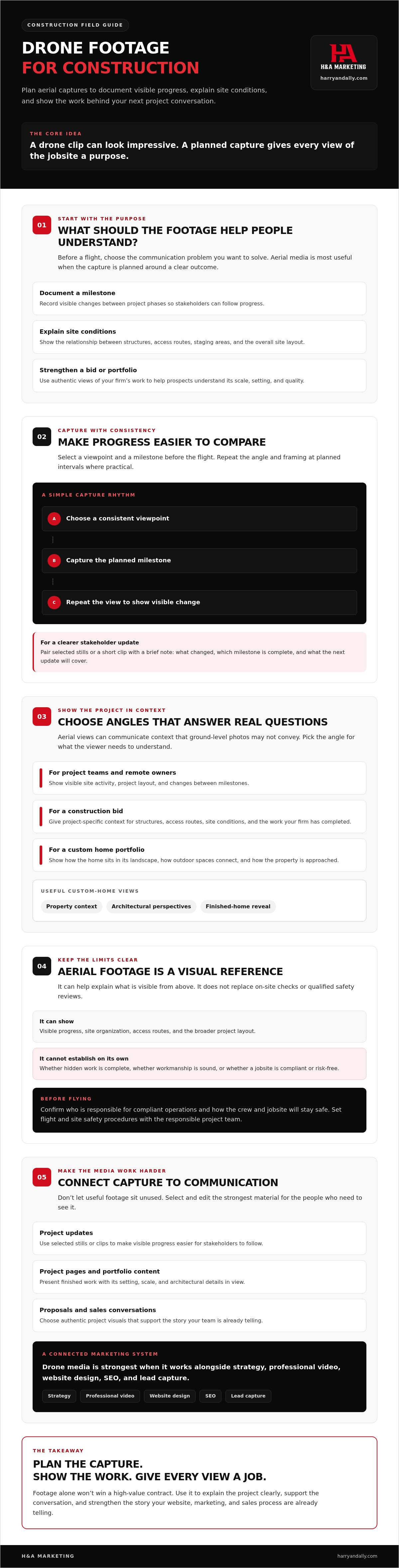
- Plan drone footage for construction around a clear purpose, such as documenting a milestone, explaining site conditions, or strengthening a bid.
- Use consistent viewpoints and planned capture dates to make progress easier for stakeholders to compare.
- Choose aerial angles that show a project’s scale, layout, and setting in ways ground-level photos can’t.
- Before flying, confirm who is responsible for compliant operations and how the crew and jobsite will stay safe.
- Adapt selected footage and stills for project pages, portfolio content, and social updates instead of letting valuable media sit unused.
The Strategic Value of Drone Footage in Modern Construction
Aerial media can do more than make a jobsite look impressive. It can help a construction firm explain project scale, show visible progress, and present real work to prospective clients. That makes drone footage a practical asset for project communication and marketing, provided each capture has a clear purpose.
Rather than treating aerial video as an optional extra, consider where it can solve a communication problem. A remote owner may need a clearer view of site activity. A prospective client may want evidence that your team can manage a complex build. The drone applications in construction include surveying, progress monitoring, and showcasing completed projects. A thoughtful capture plan can connect these uses to the story your firm tells about its work.
How Drone Footage for Construction Can Shorten the Sales Cycle
For stakeholders who can’t visit a site, an aerial view can provide context that scattered photos or written updates may not convey. A time-lapse or series of consistent views can show visible changes between project milestones, making progress easier to follow and discuss.
For custom home builders, a sweeping view can help a prospective homeowner understand how a residence relates to its landscape and outdoor spaces. That context can make a design easier to picture and give a sales conversation a concrete starting point. Visuals support the discussion, but they don’t replace clear answers about scope, budget, or schedule.
Building Authority in Competitive Bidding
Stock images can illustrate a general idea, but they can’t show that your firm completed a specific project. Site-specific aerial media gives prospects a view of your actual work. A carefully chosen angle may show how structures, access routes, and site conditions relate, while giving the project team useful context for explaining the work.
In a competitive bid, authentic visuals can help distinguish your experience from claims that are difficult to assess. They also let you present complex work with more context than a static image alone. The aim isn’t to appear modern for its own sake. It’s to make the quality and scale of your work easier to understand.
Plan each capture around its intended use, whether that’s a proposal or a project portfolio. When visuals are selected and edited to support a consistent story, they can strengthen how prospects evaluate your firm and its work.
Practical Applications: From Site Progress to Luxury Portfolios
The same aerial capture can serve two audiences: the project team that needs a clear view of site activity and the prospect deciding whether your firm is right for a high-value project. Plan each flight around a useful outcome, then organize the footage so it can support both operations and marketing.
Before a capture, choose a consistent viewpoint and identify the milestone you want to document. Repeat the angle at planned intervals, such as before and after a major phase, so stakeholders can compare visible changes. Drone footage can also help teams review access routes, staging areas, and the overall site layout from above. Treat it as a visual reference for planning, not a replacement for on-site checks or qualified safety reviews.
Site Progress and Stakeholder Communication
For remote owners, a regular aerial update can make a report easier to understand. Pair a short clip or selected stills with a brief note explaining what changed, which milestone is complete, and what the next update will cover. If a subcontractor milestone is visible from above, footage can help document its apparent status, but it can’t verify hidden work or workmanship on its own.
Use the same flight path and framing where practical. Consistency makes changes easier to review. Aerial views may also show visible site organization, but they don’t establish that a jobsite is compliant or risk-free. Set clear flight and site safety procedures with the responsible project team, and consult Nationwide’s guidance on FAA regulations for commercial drone use when reviewing operational considerations.
Creating the Luxury Homeowner Experience
For custom homes, aerial footage can show how the residence sits within its landscape, how outdoor spaces connect, and how the property is approached. A planned angle may reveal rooflines, courtyards, or the relationship between wings of the home more clearly than ground-level photos. Choose views that help a prospective homeowner understand the design, not just admire a dramatic flight.
Build a simple capture list for each project: the property context, a few architectural perspectives, and a finished-home reveal. Edit the strongest shots into a concise hero video for your website, while keeping selected stills available for project pages and stakeholder reports. On a construction company website, the video should support the project story and fit into a clear portfolio experience, not distract from the work itself.
To make footage useful beyond a single update, plan capture and editing together. Explore professional construction video and photo as part of a coordinated approach to jobsite documentation and brand storytelling.
Navigating FAA Regulations and Jobsite Safety Standards
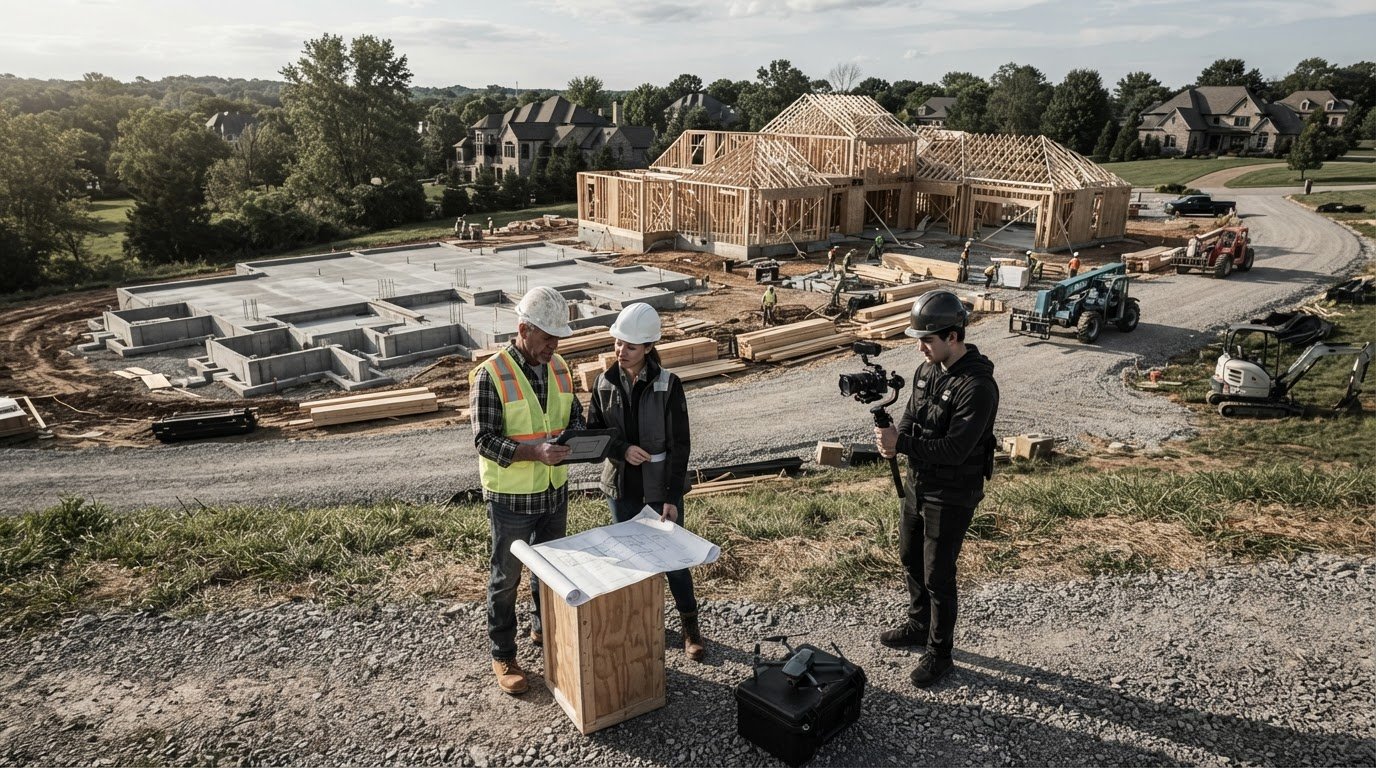
A drone flight over an active construction site is a work activity, not just a camera task. Before scheduling drone footage for construction, confirm who will operate the aircraft, whether the flight can take place in the planned airspace, and how the crew will avoid disrupting site work.
In the United States, commercial drone operations generally fall under FAA Part 107. The FAA requires a Remote Pilot Certificate for the person operating under those rules. Check current requirements and operating guidance directly with the FAA’s commercial drone operations resource, since permissions and restrictions depend on the planned operation and location.
Commercial Compliance vs. Recreational Flying
A worker’s recreational flying experience doesn’t establish that they’re qualified to conduct a commercial flight. If a company uses footage to market its services or support business operations, assigning an uncertified operator can create compliance and liability concerns. Don’t assume a flight is permitted simply because the drone can take off.
Before the shoot, have the pilot check applicable airspace restrictions and any temporary flight restrictions, then confirm whether authorization is needed. Clarify who is responsible for that check and what happens if the flight must be postponed. A production team can coordinate capture with the project schedule, but the builder should still confirm site access, project requirements, and insurance expectations.
Insurance needs can vary by project and contract. Ask your broker or risk adviser whether existing coverage addresses drone operations, and confirm any coverage requirements with the project owner before the flight. Insurance doesn’t replace compliant operations or site safety.
Safety Protocols for Active Construction Sites
Build drone flights into the jobsite’s normal coordination process. The pilot and site supervisor should agree on the flight window, launch and landing area, and any zones or activities to avoid. Schedule around lifts, deliveries, active equipment, and other work that could make the flight unsafe or distracting.
A practical standard operating procedure (SOP) can cover:
- Before flight: Confirm the pilot, site permission, airspace review, weather suitability, equipment condition, and planned route.
- During flight: Keep the supervisor informed, maintain separation from workers and equipment, and stop if site conditions change.
- After flight: Record any issues, secure the footage, and note whether the planned capture was completed.
Keep the operation controlled. The goal is to document the build without pulling workers off task or creating a new hazard. Clear responsibilities make aerial capture easier to repeat and help keep project documentation aligned with site procedures.
Integrating Drone Media into Your Connected Marketing System
Capturing aerial footage is only one step. To support business growth, plan where each asset will appear and what you want the audience to do next. A connected marketing system coordinates the creative with your website, search visibility, social channels, and lead capture, so footage serves a clear purpose instead of sitting unused.
Start by matching each asset to its audience. A project page can help a prospect evaluate the scope and quality of your work. A social post can introduce the project and guide interested viewers to the page. A stakeholder update has a different job: making progress easier to review. Don’t use the same edit everywhere without considering what each channel needs.
SEO and Website Conversion Benefits
Video can add context to a project page, but it doesn’t automatically improve rankings or keep visitors on a page longer. Pair it with useful written details, such as the project type, your role, and the work completed. Give the page a clear next step, too, so a qualified visitor knows how to start a conversation.
For aerial stills, use descriptive file names and accurate alt text that explains what’s visible. Avoid stuffing keywords into image descriptions. If you share project updates through a Google Business Profile, choose current, representative visuals and write a short caption that identifies the work without making unsupported claims.
Social Media and Lead Capture
One project can yield several edits for social channels. Select a short sequence that tells a specific story, such as the site taking shape or a completed design feature, and add concise context. A dramatic opening may earn attention, but useful details help viewers understand the work and decide whether it relates to their needs.
Connect each post or ad to a relevant destination and a clear inquiry path. A viewer interested in a commercial build should land on information about that type of work, not a generic page. Review the full path, from the post or ad to the project page and inquiry, to understand whether the media is supporting meaningful prospect conversations.
Keep the visual message consistent across channels, but tailor the format and next step to each audience. That coordination turns individual drone assets into working parts of your marketing rather than isolated clips.
Elevate Your Brand with Professional Construction Videography
Raw drone clips show what a camera recorded. A polished brand story shows a prospective client why the project matters, what your team delivered, and how the finished work reflects your standards. For high-value construction projects, that distinction matters. Prospects are evaluating more than a building. They’re considering the quality of the work and their confidence in the team behind it.
Editing gives footage a clear structure: establish the site, reveal key design or construction details, and finish with the completed project or a strong progress milestone. Thoughtful color correction can help shots look consistent, while deliberate pacing and selective music or captions keep the focus on the work. The goal isn’t to make every project look the same. It’s to present each one clearly while keeping your brand’s presentation consistent.
The H&A Production Workflow
Start with the purpose, not the flight. Decide whether the footage needs to support a bid, document progress, or introduce a finished project to future clients. That choice guides what to capture, which details matter, and how the final edit should be used.
H&A Marketing provides video and photo production for construction companies as part of a broader digital marketing offering. A production plan can account for the visual assets a project needs, then coordinate them with the wider marketing strategy. Learn more about construction video and photo services.
Beyond the Drone: A Complete Visual Identity
Aerial shots establish scale and setting. Ground-level footage can show materials, finishes, craftsmanship, and how spaces feel to use. Combining those perspectives gives a portfolio more dimension than a drone-only montage, while consistent editing and brand presentation help projects feel like part of the same company.
Build a reusable visual plan for each project: select the key aerial views, capture details that demonstrate workmanship, and decide where each finished asset belongs. A hero video might introduce the project on your website, while shorter edits support social media and sales conversations. Keep the story accurate and specific to the work shown.
H&A Marketing can connect creative assets with the rest of your marketing, including the channels that bring qualified prospects to your portfolio. If your visuals are strong but don’t support a clear path to inquiry, consider how your strategy, creative, and traffic can work together.
Turn Aerial Media into Your Next Advantage
Drone footage for construction works hardest when it does more than show a project from above. Planned captures can help stakeholders follow progress, while polished, site-specific visuals give prospects stronger evidence of your team’s work. To make that media count, connect it to your website, portfolio, and lead-generation process.
For builders pursuing high-value projects, the goal isn’t simply to attract attention. It’s to help qualified prospects understand the quality of your work and take a clear next step. H&A Marketing provides construction-focused digital marketing, including website design, branding, SEO, lead generation, social media management, and video and photo production. Any drone footage should be planned and produced with qualified operators who follow applicable FAA requirements.
With a clear plan behind each capture, project visuals can support stronger communication and more confident sales conversations. Start with one project and build from there.
Frequently Asked Questions
Do I need a special license to use drone footage for my construction business?
In the United States, the person flying a drone for most commercial purposes needs an FAA Remote Pilot Certificate under Part 107. If you hire a production team, you generally don’t need to hold the certificate yourself, but confirm who will operate the drone and that they’re qualified for the planned flight. Review the FAA’s commercial drone guidance and check applicable airspace restrictions before scheduling.
How much does professional construction drone photography cost?
Pricing depends on the scope of the shoot, travel, capture time, editing, and the final assets you need. A simple set of aerial stills differs from recurring progress documentation or a finished brand video. Ask providers to specify what’s included, such as edited photos, video clips, revisions, and usage needs. Compare proposals by deliverables and intended use, not shoot time alone.
What is the best time of day to capture drone footage on a jobsite?
The best time depends on the project, lighting, weather, and site activity. Early or late daylight can create softer shadows for portfolio footage, while a progress update may matter more than ideal lighting. Coordinate with the site supervisor to choose a window that avoids busy deliveries or equipment operations. The pilot should assess conditions before flying and postpone if the flight can’t be completed safely.
Can drone footage be used for official site inspections and safety audits?
Drone images can provide a visual record of accessible areas and help a project team review visible conditions. They shouldn’t be treated as a substitute for required inspections, qualified professional judgment, or the company’s formal safety procedures. Agree in advance on what the footage is meant to document and who will assess it. Aerial video may not show concealed work, fine defects, or every hazard on the ground.
How often should I have a drone fly over my construction project?
Set the flight schedule around reporting needs and meaningful project milestones, rather than flying just to collect footage. A team communicating weekly with remote owners may choose regular updates, while another project may benefit more from captures before and after key phases. Keep the viewpoint and framing consistent where practical. That makes changes easier to compare and helps each update serve a clear documentation or communication purpose.
Will drone footage help my construction company rank higher on Google?
Drone footage alone won’t guarantee higher Google rankings. It can make a project page more engaging and help explain the work, but search visibility also depends on useful page content, technical site quality, and other SEO factors. Add descriptive text and accurate image alt text, and make sure the page loads well and gives visitors a clear next step. Track qualified inquiries as well as page engagement.
What happens if a drone crashes on my jobsite during a shoot?
Pause nearby work if needed, alert the site supervisor and pilot, and keep workers clear of the aircraft until the operator confirms it’s safe to approach. Follow the jobsite’s incident procedures, document what happened, and notify the relevant project contacts. Before filming, clarify who handles incident communication and how insurance questions will be addressed. The pilot should determine whether any required reporting applies and manage it through the appropriate channels.
