
Email Marketing for Commercial Roofers: Stay in Front of Property Managers


Article by
Harry Stanley III
Harry Stanley III is a construction marketing strategist and fractional CMO at H&A Marketing. He has helped construction companies grow through website strategy, SEO, paid advertising, branding, lead generation, CRM systems, and professional content. His past work includes helping Meraki Solar generate an additional $3.7 million in revenue in his first year and supporting American Builders as a fractional CMO. Today, Harry works directly with custom home builders and construction companies to build marketing systems designed to generate qualified leads and measurable growth.
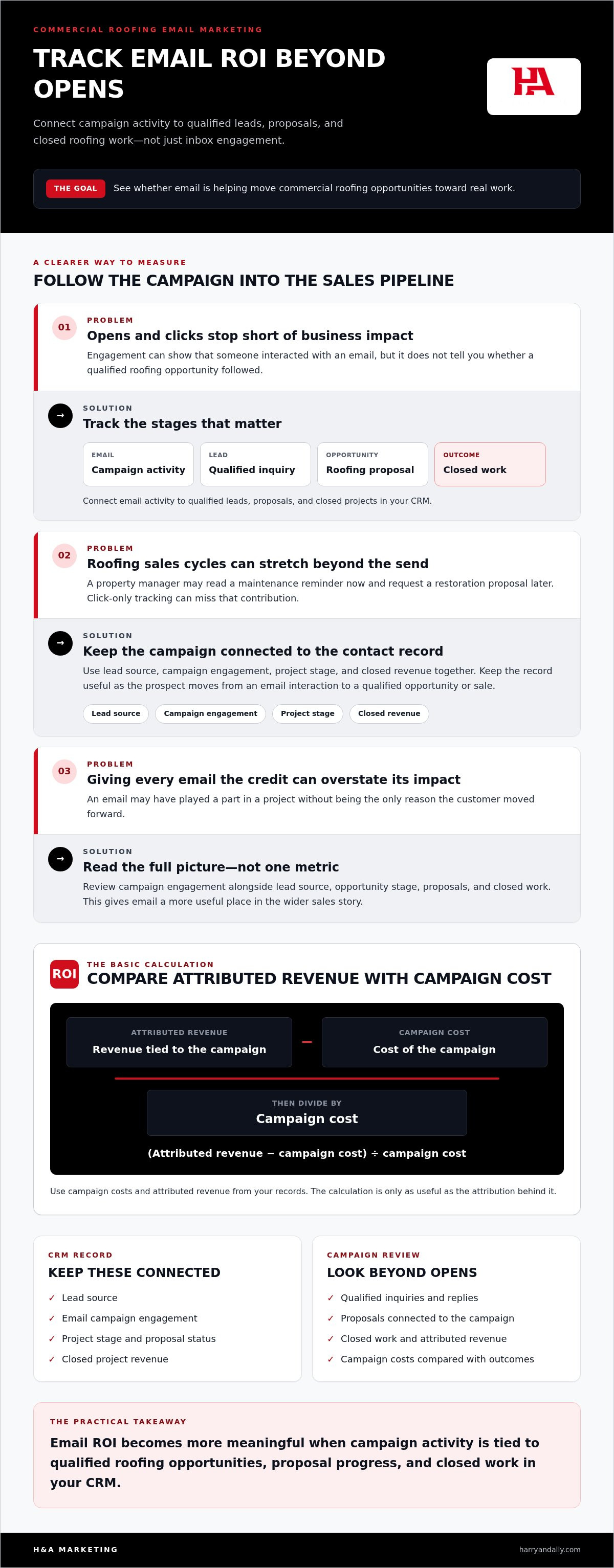
Open rates don’t show whether an email campaign helped win a roofing project. To track ROI from email marketing for commercial roofers, connect each campaign to qualified leads, proposals, and closed work in your CRM, then compare attributed revenue with campaign costs. The basic calculation is (attributed revenue minus campaign cost) divided by campaign cost.
Commercial roofing often involves a long sales cycle: a property manager may read a maintenance reminder now and request a restoration proposal later. Tracking only clicks can miss that contribution, while crediting every email with a sale can overstate its impact. Use lead source, campaign engagement, project stage, and closed revenue together for a more useful picture.
Learn how to organize contacts by role and preferences, use relevant offers and maintenance messages, follow up with prospects, and make referrals easy to share. You’ll also see how to assess these efforts against qualified opportunities and sales, so email supports a measurable pipeline instead of simply filling inboxes.
Key Takeaways
- Measure campaign ROI by connecting email activity to qualified leads, proposals, and closed roofing work in your CRM.
- Organize contacts by role, project history, and communication preferences so each message feels relevant to property managers.
- Use targeted offers and maintenance reminders to re-engage past customers and create timely conversations about roof needs.
- Build lead follow-up journeys that keep prospects moving through the sales pipeline without relying on memory alone.
- Make referral requests easy to act on by sharing clear details at the right point in the customer relationship.
1. Identifying roofing customers and their communication preferences
Effective email marketing for commercial roofers starts with useful contact records, not a large list. A property manager responsible for a warehouse may need restoration planning, while an office building owner may be weighing replacement options. Record each contact’s role, property type, location, project history, and preferred topics in your CRM. Collect these details through a website form or sales conversation.
Build your database from people who have contacted your roofing business, requested an estimate, or completed a project. Record each lead source, such as a website form, referral, or Google Ads, to compare which channels bring qualified prospects. Paid email lists may introduce new prospects, but those contacts can be less qualified. A focused list of facility managers in your service area is more useful than a broad list with no property or role details.
Which email platforms work best, and what do they cost? Choose a platform with contact segments, automated follow-ups, unsubscribe handling, and campaign reporting. Costs depend on the platform and its plan features, so compare options against the workflows your team needs.
Segment contacts by property type, location, buyer role, and relationship stage. For example, send warehouse roof coating information to facility managers with relevant project histories, and replacement planning content to owners who requested a replacement proposal.
Personalize messages with each recipient’s name, property type, location, and known project needs. A facility manager might receive a note about coordinating inspections across multiple sites, while an owner might get a clear explanation of restoration and replacement considerations.
Set a consistent email schedule based on the message’s value and the recipient’s relationship with your company. A monthly maintenance tip can keep your business visible, while a new lead needs follow-up tied to their inquiry.
For CAN-SPAM compliance, the Federal Trade Commission says commercial emails must use accurate sender information and non-deceptive subject lines, include a valid physical postal address and a clear opt-out method, and honor opt-out requests. Apply these requirements to promotional messages, including campaigns sent through an email platform.
Avoid broad, irrelevant sends that may prompt unsubscribes. Before sending, confirm the recipient segment, working links, and reply address. Track clicks alongside calls, qualified inquiries, proposals, and closed projects. For paid search, connect Google Ads conversion tracking to meaningful actions, such as a completed commercial roofing form or a call from a qualified prospect. This helps distinguish traffic from real sales opportunities.
Use the calendar to make messages timely: promote spring repair services in February or March, and send storm inspection information after severe weather in your area. A focused email can direct readers to a relevant service page; a clear commercial roofing marketing strategy can connect that message with your broader lead-generation efforts. Keep your business profile and contact details consistent across campaigns, your website, and Facebook.
2. Discounts to re-engage past customers
A past customer already knows how your crews handle commercial roofing work. A relevant offer can give that relationship a practical reason to restart. Instead of sending a general discount, tie the offer to a service the customer may need, such as a roof condition review or targeted repairs. Explain eligibility, included work, and the next step clearly, so the customer understands what the promotion covers.
Protect project quality and margin by defining the offer before sending it. For example, invite previous restoration customers to discuss a new issue or request an inspection, rather than discounting a full replacement without context. Limit the offer to a clearly described service or customer group. Explain the value without pressuring a property manager to approve work the building doesn’t need.
Use contact profiles to create a focused re-engagement segment. Sort past customers by completed project, property type, location, and last meaningful conversation. Then tailor the offer: a customer with a completed coating project might receive a message about assessing the roof’s current condition. Someone who postponed repairs could receive a direct invitation to revisit the scope.
Automated journeys help your team follow through consistently. Start a welcome sequence after a customer books a project, with a confirmation, a preparation note, and a clear way to ask questions. Later messages can share relevant updates or offers based on project history. Keep the sequence useful, and stop promotional messages when a customer replies, books, or opts out.
Customer reviews and testimonials can strengthen a re-engagement email when they address the recipient’s concern. Pair a short customer comment with a relevant project photo or explanation of the work completed. After finishing a project, send a separate review request with a straightforward next step. A review on your Google Business Profile can also help future prospects understand your roofing business and approach.
Measure each campaign by more than opens. Record replies, booked conversations, qualified opportunities, and resulting work. Compare those outcomes with campaign costs and the value of the customer relationship. If a message gets clicks but no relevant inquiries, revise the audience or offer before sending it again. This gives your marketing a practical feedback loop.
For customer nurturing, alternate offers with useful project information. A message might explain when a roof concern deserves attention, then invite past clients to discuss their specific property. This approach helps engage customers without turning every email into a promotion. A coordinated commercial roofing marketing strategy can connect those follow-ups with the rest of your sales pipeline.
3. Cross-sell and maintenance campaigns for past clients
A completed restoration can open a useful conversation about other roofing services. Review the project record, then suggest a related next step only when it fits the property. For example, a customer who hired your team for roof repairs may appreciate an inspection reminder or guidance on another roof area. Make the message specific to the building and its work history, not a generic cross-sell.
Build maintenance campaigns around the customer’s project date and roof needs. Send an annual roof checkup reminder, then explain what an inspection can help assess. Seasonal emails can share practical tips, such as watching for visible damage after severe weather or planning repairs before a known busy period. After a storm in the customer’s area, send a relevant post-storm inspection message instead of an unrelated service promotion.
Use each email to answer one clear question: what should the property manager do next? A maintenance note might invite them to schedule an inspection; a restoration follow-up might explain which conditions make a roof coating worth discussing. Keep the call to action direct, such as “Discuss a roof inspection for your property.” Don’t promise a particular result before the roof has been assessed.
What subject lines and calls to action get commercial roofing leads? Use a clear subject tied to the building need, such as “Planning a roof inspection for your warehouse?” Pair it with one relevant action, like “Request an inspection conversation” or “Review your maintenance options.”
Email can connect your campaigns with social media. Link to your Facebook, Instagram, or YouTube profiles so customers can see project updates and roofing information. Share a restoration story in the email, then direct readers to the related social post for more project context. Keep the email useful on its own for customers who don’t follow those channels.
Cold outreach can introduce your commercial roofing services to property managers who don’t know your company yet. Start with a relevant reason for contacting them, such as their property type or restoration planning. Avoid sending the same pitch to every prospect. A note to a facility manager can focus on coordinating roof work across buildings, while an owner may want to discuss replacement planning for one property.
Make each campaign measurable by recording replies, scheduled conversations, and qualified opportunities in your lead-generation process. Track which subject line and service message led to a real discussion, not just a click. If an email gets attention but no roofing conversation, adjust its audience, offer, or call to action before reusing it.
4. Email and text lead follow-up automations
Commercial roofing leads often need several conversations before a project reaches the proposal stage. Build an automation that acknowledges each inquiry, records its source, and assigns someone to respond. For example, a restoration request from a property owner can trigger a confirmation email, a CRM task, and a follow-up reminder for the estimator.
Keep the first message specific to the inquiry. If a facility manager asks about a roof replacement, confirm the property and requested work, then explain the next step. Don’t make a generic roofing newsletter the only response. A useful confirmation reassures the prospect that their request reached the right team and gives them a clear way to add project details.
Use a short sequence to keep the conversation moving while your team evaluates the opportunity. A follow-up can ask whether the prospect has roof reports, photos, or a preferred inspection window. Another message can share information about restoration versus replacement. Pause the sequence when someone schedules a conversation, replies, or is marked as unqualified.
Texts can support email when a prospect has provided a mobile number for project communication. Use them for practical updates, such as confirming an appointment or alerting an owner that an estimator needs site access. Keep messages concise and direct. Email works better for detailed scope questions, project documents, or explanations of roofing options.
Set up separate journeys for different lead stages. A new inquiry needs an acknowledgment and a clear next step; a prospect reviewing a proposal may need answers to scope questions. A lead that isn’t ready can receive occasional educational material about roof maintenance or commercial restoration planning. Track each stage in your CRM so prospects don’t receive mismatched messages.
Make automation useful to sales, not just active. Assign each inquiry to a team member, log calls and replies, and record whether it becomes a qualified opportunity. For example, a facility manager collecting estimates may need a different conversation than an owner with a defined replacement project. These details help your team prioritize roofing leads that are a real fit.
Review performance by source and message. Compare Google Ads inquiries with website forms, then note which messages lead to completed conversations, site assessments, and proposals. Test one subject line against another while keeping the audience and email content consistent. This helps show whether the subject line prompted engagement, rather than clouding the results with several changes.
After work is completed, automate an appointment confirmation, feedback survey, or review request at the appropriate stage. Stop messages when a customer responds, and route replies to someone who can act. A coordinated construction lead-generation process can connect email follow-up with lead capture and sales tracking, helping your team see how each channel performs.
5. Follow-up emails with referral details
A satisfied customer can introduce your commercial roofing team to another property decision-maker. Ask for a referral after a completed restoration, replacement, or repair, once the customer has had time to experience the work. Keep the request direct and easy to answer. For example: “Do you know another property manager who may need help planning roof work?” Make clear that an introduction is welcome, not expected.
Include the details a customer needs to make an introduction useful. Name the roofing work you handle, the area you serve, and the best way to connect a prospect with your team. A short referral email could mention commercial roof repairs and restoration projects, then invite the customer to forward your contact information. Don’t ask them to assess another building’s roof or make claims about its condition.
Make referrals easy. Give the customer a short email to forward, or ask whether they’d prefer to introduce you directly by email. A property manager might connect you with an owner planning a replacement; a facilities contact might know another manager coordinating repairs. Keep the message professional and specific, so the customer can share it without rewriting your pitch.
Choose the audience based on the relationship and project history. A customer who completed a roof restoration may know owners facing similar decisions, while someone who hired you for a repair may have contacts seeking ongoing roofing services. Keep referral requests separate from routine maintenance messages. That way, the request feels relevant instead of like an unexpected sales push.
Track each introduction in your CRM. Record the referring customer, new contact, property type, and opportunity stage. For example, note whether the introduction led to a conversation, inspection request, proposal, or closed project. This shows which customer relationships contribute to lead generation and helps your team follow up with both contacts appropriately.
Use a personal note rather than a broad campaign when the relationship calls for it. Mention the completed project and thank the customer for trusting your team. If you include job photos, choose images that clearly show the relevant work and that you have permission to share. Keep referral details visible, with one action the recipient can take, such as replying to arrange an introduction.
Digital marketing can support referrals when email, project content, and follow-up work together. Review referral sources alongside other lead sources, then refine the message around introductions that become qualified commercial roofing opportunities. A thoughtful request protects the customer relationship and gives your audience a clear way to connect others with your team.
Discuss a commercial roofing referral and lead-generation strategy
H&A Marketing: Website Design
H&A Marketing helps commercial roofing contractors connect email campaigns with a clear, credible online presence. If property managers click through but don’t find relevant restoration, replacement, or roof repair information, your website may interrupt the path to an inquiry. Website design can make services and next steps easier to understand, while search engine optimization supports visibility for relevant roofing searches. Consistent branding also helps prospects recognize your business across emails and landing pages. Lead generation strategy can connect campaign traffic with useful pages and inquiry paths, making it easier to assess whether email contributes to qualified opportunities. If your website and outreach need a more coordinated direction, visit H&A Marketing’s commercial roofing marketing page to start a conversation.
Make Every Follow-Up Part of a Clear Growth Plan
The next step is to make email a working part of your sales process, not a separate marketing task. Decide what a useful campaign should lead to, then connect its message, landing page, and sales follow-up. That gives your team a clearer way to assess how email marketing for commercial roofers supports qualified commercial roofing opportunities.
H&A Marketing can align website design, logo design and branding, and search engine optimization with how prospects discover and evaluate your roofing business. When outreach and your online presence tell a consistent story, property managers have a clearer path from first contact to a project conversation.
Build the system around the projects you want to win, and make each next step clear. A focused approach can give your team more confidence as you grow commercial roofing relationships.
Frequently Asked Questions
How do you track ROI?
Use one attribution method consistently, such as recording the first campaign that created an inquiry and separately noting later email influences. Include campaign expenses in the same reporting period as the revenue you attribute, and document how you handle projects that remain open. This gives owners a clearer campaign comparison without treating every email interaction as a separate sale.
How long does it take to see results?
Email engagement can happen well before a roofing contract. A recipient may reply or request information quickly, while a commercial project still requires internal review, budgeting, or proposal approval. Track early actions separately from completed sales, then assess each campaign against the decision stage it was designed to support. This keeps a slow procurement process from making useful outreach look ineffective.
What is email marketing?
Email marketing is business communication sent to a chosen audience for a defined purpose. It can be promotional, such as introducing a restoration service, or informational, such as sharing a project update with an existing customer. For a roofing contractor, the key distinction is the recipient and purpose: prospect emails support evaluation, while customer emails may support service coordination or an ongoing business relationship.
How can commercial roofing companies use email marketing to generate leads?
Give prospects a useful reason to start a conversation. A contractor could offer a concise guide to preparing building information for a roof assessment, then invite interested readers to discuss their property. Keep the resource focused on a real decision, not a broad sales pitch. Review which audience groups request the guide and whether those inquiries match the contractor’s preferred project types.
What email marketing strategies work best for commercial roofers?
Choose a message format that suits the information. A brief email from a named team member can work well for a direct proposal question, while a designed newsletter can organize project updates and educational material. Test the format with a defined audience, and review replies and qualified inquiries alongside engagement. Keep the campaign’s purpose consistent during the test so the results are easier to interpret.
How do commercial roofers build a compliant email list?
Build list quality into the intake process. Add a clear email preference choice to estimate and inquiry forms, and record where each address came from. Keep unsubscribed contacts on a suppression list so they aren’t accidentally re-added during a spreadsheet import. When several employees collect contacts, use the same CRM fields and procedures to track each record’s origin and communication status.
How do commercial roofers measure email marketing results and ROI?
Separate diagnostic metrics from business outcomes. Delivery failures can signal list-quality problems; clicks can show whether a link attracted attention; replies can indicate whether a message started a sales conversation. Review these measures by audience and campaign purpose instead of relying on one overall open rate. For financial ROI, use a documented attribution approach and compare attributed project value with the campaign’s associated costs.
What email campaigns help roofers win maintenance contracts and repeat business?
Help property teams organize decisions across their building portfolios. A useful campaign can invite facility managers to gather roof records, note known concerns, and identify sites needing review during budget planning. Follow with information tailored to the portfolio’s needs rather than a blanket service pitch. This makes the email a planning aid and gives the next conversation a clearer starting point.
