

Article by
Harry Stanley III
Harry Stanley III is a construction marketing strategist and fractional CMO at H&A Marketing. He has helped construction companies grow through website strategy, SEO, paid advertising, branding, lead generation, CRM systems, and professional content. His past work includes helping Meraki Solar generate an additional $3.7 million in revenue in his first year and supporting American Builders as a fractional CMO. Today, Harry works directly with custom home builders and construction companies to build marketing systems designed to generate qualified leads and measurable growth.
Commercial roofing leads aren’t residential leads with bigger roofs. Commercial projects can involve extended evaluation and approval processes, with property managers, facility directors, and building owners weighing in. To understand how to get commercial roofing leads, build trust with those decision-makers and make it easy for them to find and evaluate your company instead of relying only on shared lead lists.
A steadier pipeline can help you avoid paying for the same prospect as competing contractors. Commercial buyers may need time to assess a roof, coordinate stakeholders, and plan a restoration or replacement, so lead generation depends on consistent visibility and follow-up.
This article explains what distinguishes commercial roofing leads from residential inquiries and how relationships, an up-to-date Google Business Profile, and customer reviews can attract better-fit opportunities. You’ll also see how these elements work together to support a stronger pipeline for commercial roof restorations and replacements.
Key Takeaways
- Build familiarity with property managers and facility directors by staying visible and relevant to their building needs.
- Account for longer commercial buying cycles with consistent lead follow-up and clear next steps.
- Keep a Google Business Profile current with commercial roofing services, project photos, and accurate business details.
- Make it easy for satisfied customers to share reviews that reinforce trust with future prospects.
- Connect local visibility, referrals, and targeted marketing to attract better-fit restoration and replacement opportunities.
How a professional builds relationships with property managers and facility directors
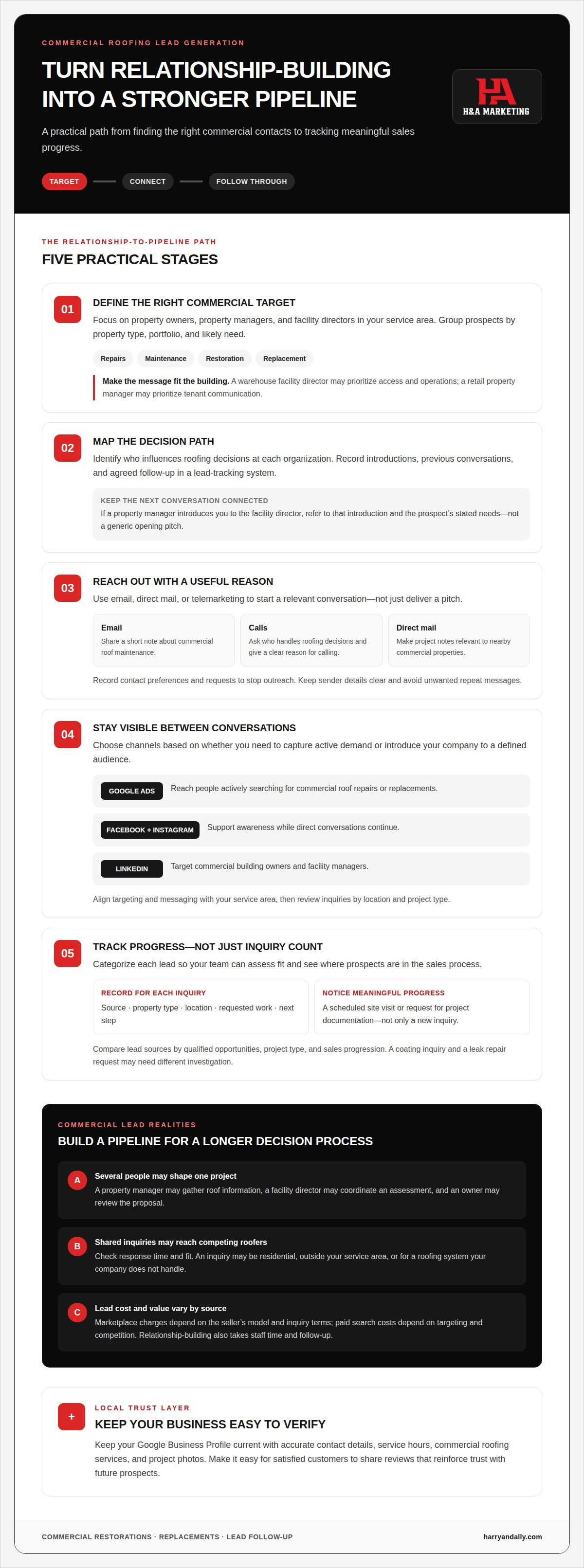
Start by defining your target: commercial property owners, property managers, and facility directors within your service area. Group prospects by property type, portfolio, and likely need, such as repairs, maintenance, restoration, or replacement. This helps you shape a relevant opening conversation. A facility director overseeing warehouses may care about coordinating access and operations, while a retail property manager may prioritize tenant communication. Targeting prospects this way is a practical step toward commercial roofing leads without relying on shared inquiries.
Build relationships through useful, consistent contact rather than a single pitch. Map who influences roofing decisions at each organization, then record introductions, previous conversations, and agreed follow-up in a lead-tracking system. For example, a property manager may introduce you to a facility director who handles building assessments. Your next message should reflect that introduction and the prospect’s stated needs, not restart the conversation with a generic sales pitch.
Email, direct mail, and telemarketing can support relationship building when each message has a clear purpose. Share a short note about commercial roof maintenance, ask whether the contact is responsible for roofing decisions, or offer to discuss a known building concern. Calls should open with a useful point and a clear reason for reaching out. Record contact preferences and requests to stop outreach so your team can avoid unwanted repeat messages and communicate respectfully.
Make direct mail and door hangers relevant to the recipient. After completing work at a commercial property, you might send nearby owners a concise note describing the project and the commercial roofing work you offer. A door hanger may suit a group of nearby business properties, but address owners or managers rather than imitating residential roofing promotions. Tailor the message and distribution area to the buildings that match your work.
Paid advertising can reinforce relationships by keeping your roofing business visible between direct conversations. Google Ads can reach people actively searching for commercial roof repairs or replacements. Facebook and Instagram can support awareness, while LinkedIn can target commercial building owners and facility managers. Choose channels based on whether you want to capture immediate demand or introduce your company to a defined audience. Align targeting and messaging with your service area, then review inquiries by location and project type.
2. Challenges of generating commercial roofing leads
Commercial roofing lead generation takes patience because projects can involve several decision-makers. The time from first contact to signed contract varies by project. During that time, a property manager may gather roof information, a facility director may coordinate an assessment, and an owner may review the proposal. Counting only new inquiries can obscure meaningful progress, such as a scheduled site visit or a request for project documentation.
Lead sources differ in intent and exclusivity. Commercial lead-generation companies and marketplaces sell prospect inquiries, while contractors can also attract prospects through search campaigns, referrals, and direct outreach. Shared inquiries may reach several roofers, so response time and fit matter. Even an exclusive inquiry can be unsuitable if it concerns residential work, falls outside your service area, or requires a roofing system your business doesn’t handle.
There isn’t one fixed value for a commercial roofing lead across every source. Marketplace charges depend on the seller’s model and inquiry terms; paid search costs depend on campaign targeting and competition. Relationship-based outreach also takes staff time and follow-up. Compare sources by qualified opportunities, project type, and sales progression, not inquiry count alone. A storm-damage inquiry and a planned restoration request may require different levels of investigation.
A website can lose a commercial prospect if it hides relevant services or makes contacting the contractor difficult. It should explain commercial repairs, restorations, and replacements, identify the areas served, and provide a clear inquiry path. A property owner researching a replacement should quickly find the contractor’s capabilities and a way to share project details. A professional handling construction website design can organize these elements around commercial buyers.
Connect campaign activity with useful lead records. Categorize each inquiry by source, property type, location, requested work, and next step. For example, distinguish a coating inquiry from a leak repair request. These records help your roofing team judge whether campaigns attract suitable commercial opportunities and identify where prospects pause before requesting an assessment or proposal.
Coordinate outreach across calls, email, and text. As a practical campaign standard, record how a contact entered your outreach list, note communication preferences, and honor requests to stop receiving messages. Clear sender details and relevant messaging help recipients understand why you contacted them. Consistent records also help prevent duplicate outreach when several people handle the same prospect.
How a professional optimizes a Google Business Profile and manages reviews
Treat your Google Business Profile as an important local reference point for commercial buyers. Keep your contact details, service hours, and description current, and make sure every entry reflects your commercial work. Explain services such as roof repairs, restoration, and replacement clearly. Accurate, specific details help property managers decide whether your company fits their facility’s needs.
Project photos give prospects a concrete view of completed work. Choose images that show commercial roofing projects, such as a low-slope repair or restoration, and add them to your profile. Each image should represent your actual work and help an owner understand the type of project you deliver. A current photo library gives your profile useful context beyond a logo and brief description.
Keep your profile consistent with the rest of your roofing business’s local presence. Align service-area wording and contact details across the profile and relevant website pages, and make commercial services easy to find. Location-specific pages can describe the areas you serve and the work available there. Coordinated search engine optimization helps organize these local signals around your commercial roofing services.
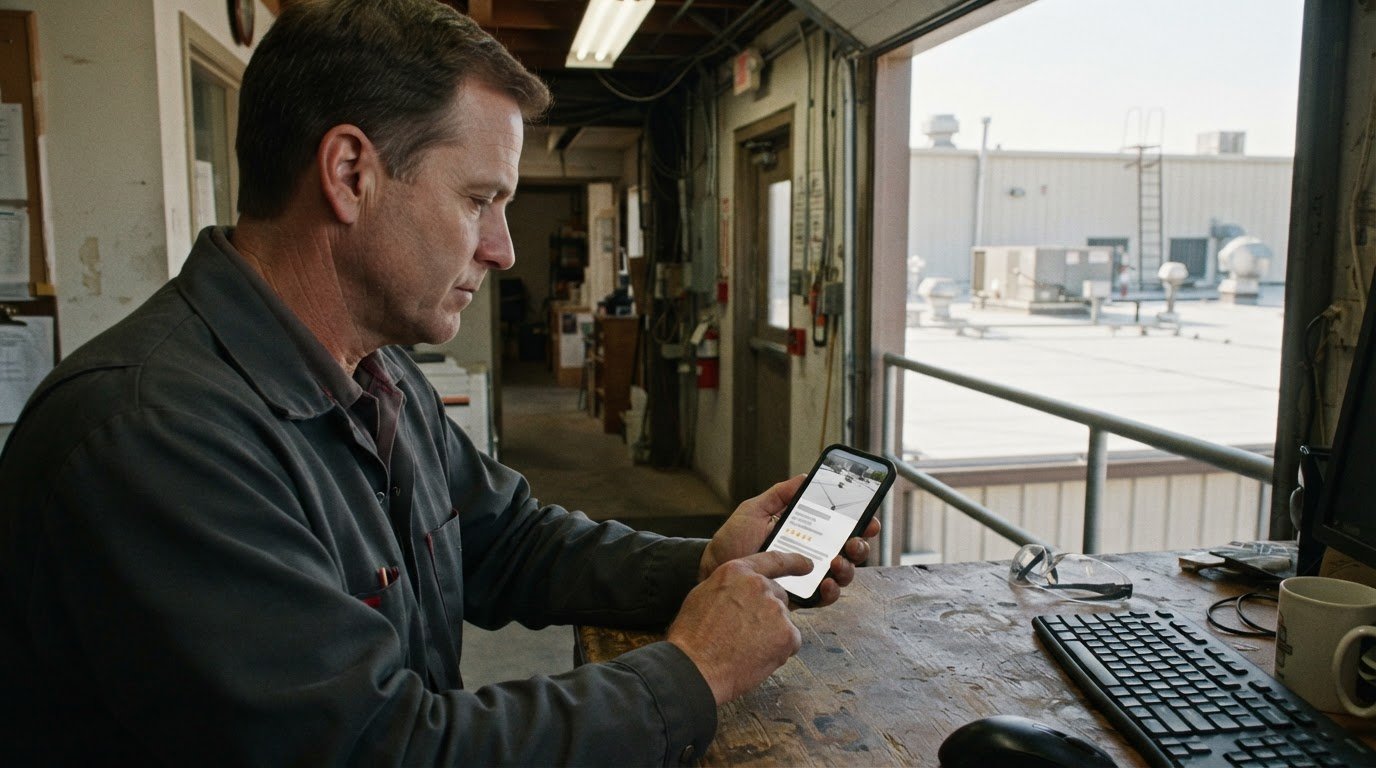
Make review requests a consistent part of job closeout. After completing a commercial roofing job, email the customer a direct review link or include a QR-code card with the warranty packet. Build the request into your follow-up process so customers receive a clear, pressure-free invitation. Make it simple for them to share feedback about the completed repair, restoration, or replacement.
Manage reviews thoughtfully. Monitor new feedback, respond with a courteous, specific message, and avoid sharing private details about a building or project. If a review mentions a repair, acknowledge the customer’s feedback without disclosing site information. This shows property managers and facility directors that you pay attention after the work is complete.
Connect profile activity with lead tracking. Review which calls, messages, and website visits lead to qualified commercial conversations, then use those patterns to refine descriptions, photos, and follow-up. Referrals and reviews can reinforce each other: a satisfied customer’s feedback gives a prospective owner another reason to consider your company. Aim for a profile that accurately represents your roofing business and supports meaningful inquiries, not just more views.
How a professional handles Google Business Profile setup, updates, and customer reviews
Before managing a Google Business Profile, decide who in your roofing company owns decisions and approvals. The business should retain account control, while designated staff handle routine updates and review management. This avoids confusion if a marketing contact changes or a branch manager submits an edit. A documented approval path also helps prevent a temporary campaign message from becoming permanent profile information.
Create a change log for significant profile edits. Record what changed, why it changed, who approved it, and whether inquiries shifted afterward. For example, if you revise your commercial service wording, compare later inquiry descriptions with earlier ones. This makes profile management an ongoing business process rather than a series of undocumented edits.
Customer reviews can also reveal patterns that deserve attention beyond public replies. A professional can group feedback by themes such as scheduling, communication, site coordination, or the clarity of project handoffs. If several commercial customers mention difficulty arranging roof access, that theme gives the contractor a specific internal process to review. The feedback becomes useful operational input, not merely a collection of star ratings.
Tailor review responses to the situation and protect customer privacy. Use a simple approach: acknowledge the feedback, address the concern at a high level, and move detailed project discussions to a private channel. If a reviewer raises a scheduling concern, for instance, your public reply can recognize the issue without identifying the facility or discussing contract details.
Set a clear escalation route for profile activity. Send routine questions about commercial services to the person who handles inquiries, while complaints about completed projects should reach the appropriate company lead. Assigning these paths helps prevent reviews from sitting unanswered or receiving a response from someone without project context. A shared record can track the date, responsible person, and follow-up status.
Evaluate profile activity alongside actual sales conversations. The useful question is not simply whether views or interactions changed, but whether inquiries fit your commercial work and advance to a meaningful next step. A review mentioning clear project communication may help build trust, while an inquiry about an unsuitable job may reveal a messaging gap. Use these observations to refine the customer experience and local presence.
What are the best ways for a professional to generate commercial roofing leads?
Strong lead generation combines channels that reach commercial buyers at different stages. A property owner searching for a roof replacement needs clear service information; a facility manager who isn’t ready to bid may respond to useful project updates. Coordinate local search, paid campaigns, referrals, and follow-up around commercial restorations and replacements.
Local SEO helps contractors appear in searches tied to specific locations and services. Create location-specific pages that explain the commercial work available in each service area. A page for commercial roof restoration in a target city should describe the service, show relevant project examples, and make it easy to contact you. This gives searchers more context than a generic page listing every service area.
Paid campaigns can capture active demand and introduce the roofing business to decision-makers. Google Ads can target searches for commercial roof repairs or replacements, while LinkedIn ads can reach building owners and facility managers. Facebook video campaigns offer another way to build awareness: a 30-45-second video can explain a commercial roofing issue or show a completed project. A professional can run targeted campaigns at least monthly, then assess which messages lead to qualified conversations.
Time local advertising to the need. After storm damage, a campaign can address commercial roof inspections and repairs. Before winter, messaging can focus on planned roof assessments and maintenance. Align the offer and creative with the seasonal need, then track whether inquiries concern commercial properties and suitable project types. This ties campaign results to real opportunities, not clicks alone.
Referrals can complement paid and organic campaigns. Create a simple referral process for past customers and industry contacts, such as property managers, real estate agents, and insurance adjusters. You may offer a customer incentive for a successful referral, with clear terms and appropriate outreach. Jobsite signs can also make nearby commercial owners aware of an active project and your work.
Lead quality depends on what happens after the first response. Record each inquiry’s source, property type, location, requested work, and next step in a lead-tracking process. For example, don’t group an inquiry about a coating project with an urgent leak repair. Reviewing these records helps you see which campaigns generate relevant opportunities and where follow-up needs attention.
Discuss a commercial roofing marketing strategy
H&A Marketing: Lead Generation
H&A Marketing helps commercial roofing contractors build a lead generation approach focused on restoration and replacement opportunities, not just inquiry volume. If your pipeline relies heavily on shared leads or referrals, a coordinated strategy can connect your website, local search visibility, and lead capture around the projects you want.
H&A Marketing supports that foundation with lead generation, website design, search engine optimization, and logo design and branding. The right mix depends on where prospects currently find your business and where qualified inquiries are being lost. Your commercial roofing website, for example, should make your services and next step clear to property owners and facility managers.
If you’re ready to strengthen your commercial roofing pipeline, contact H&A Marketing to discuss your strategy.
Build a pipeline around the projects you want
Start by defining what a qualified opportunity means for your roofing business. Consider project type, service area, building ownership, and whether the prospect is planning a repair, restoration, or replacement. Clear criteria help your team assess marketing by fit and sales progress, not inquiry count alone.
The lasting answer to how to get commercial roofing leads is a system that supports the full path from discovery to conversation. H&A Marketing can connect lead generation with website design and search engine optimization, while logo design and branding help create a consistent identity. That coordinated foundation gives commercial roofing contractors a practical way to build visibility around the work they want to win.
Use your pipeline criteria to guide your next marketing discussion. A focused plan can reveal where commercial prospects find your business and what information they need before reaching out.
With a clear direction and consistent follow-through, you can build a stronger path to the commercial projects that fit your business.
Frequently Asked Questions
What makes commercial roofing leads different from residential leads?
Commercial inquiries often involve larger buildings, operational constraints, and several people influencing the decision. A facility manager may coordinate roof access, tenant needs, and maintenance records before an owner approves work. The first conversation may therefore focus on documentation, disruption, and project scope, not just a repair estimate. Record these details in your lead process so the sales team can respond to the building’s actual requirements.
How much is a commercial roofing lead worth?
A lead’s value depends on its fit and likelihood of becoming profitable work, not just its potential contract size. Estimate what the opportunity could contribute after project delivery and sales costs, then account for the chance of winning it. For example, a large replacement inquiry may be less valuable than a smaller restoration opportunity if the first falls outside your capabilities or is unlikely to progress.
How can a professional use SEO and local search to get commercial roofing leads?
Organize your site around distinct commercial services, with dedicated pages for restorations, replacements, coatings, and repairs. Each page should answer a buyer’s questions about that service and guide visitors toward a relevant inquiry. Clear page titles, useful headings, and links between service pages help visitors and search engines understand the site. Tracking calls and form submissions by page shows which topics attract qualified prospects.
How can a professional find commercial property owners and facility managers to support roofing lead generation?
Build a focused prospect list from commercial property management firms, real estate contacts, and business property portfolios. Identify the organization, relevant decision-maker, property type, and a business contact channel. For example, a portfolio of industrial facilities may point to owners with similar roof maintenance needs. Group prospects by property type to shape relevant outreach and prioritize accounts that match your commercial work.
What rules apply to commercial roofing sales outreach, calls, email, and text marketing in the United States?
Use these practical campaign standards: record how contacts entered your outreach list, note communication preferences, honor requests to stop, and provide clear sender details and relevant messages. This article does not provide specific United States legal rules for calls, email, or text marketing.
