

Article by
Harry Stanley III
Harry Stanley III is a construction marketing strategist and fractional CMO at H&A Marketing. He has helped construction companies grow through website strategy, SEO, paid advertising, branding, lead generation, CRM systems, and professional content. His past work includes helping Meraki Solar generate an additional $3.7 million in revenue in his first year and supporting American Builders as a fractional CMO. Today, Harry works directly with custom home builders and construction companies to build marketing systems designed to generate qualified leads and measurable growth.
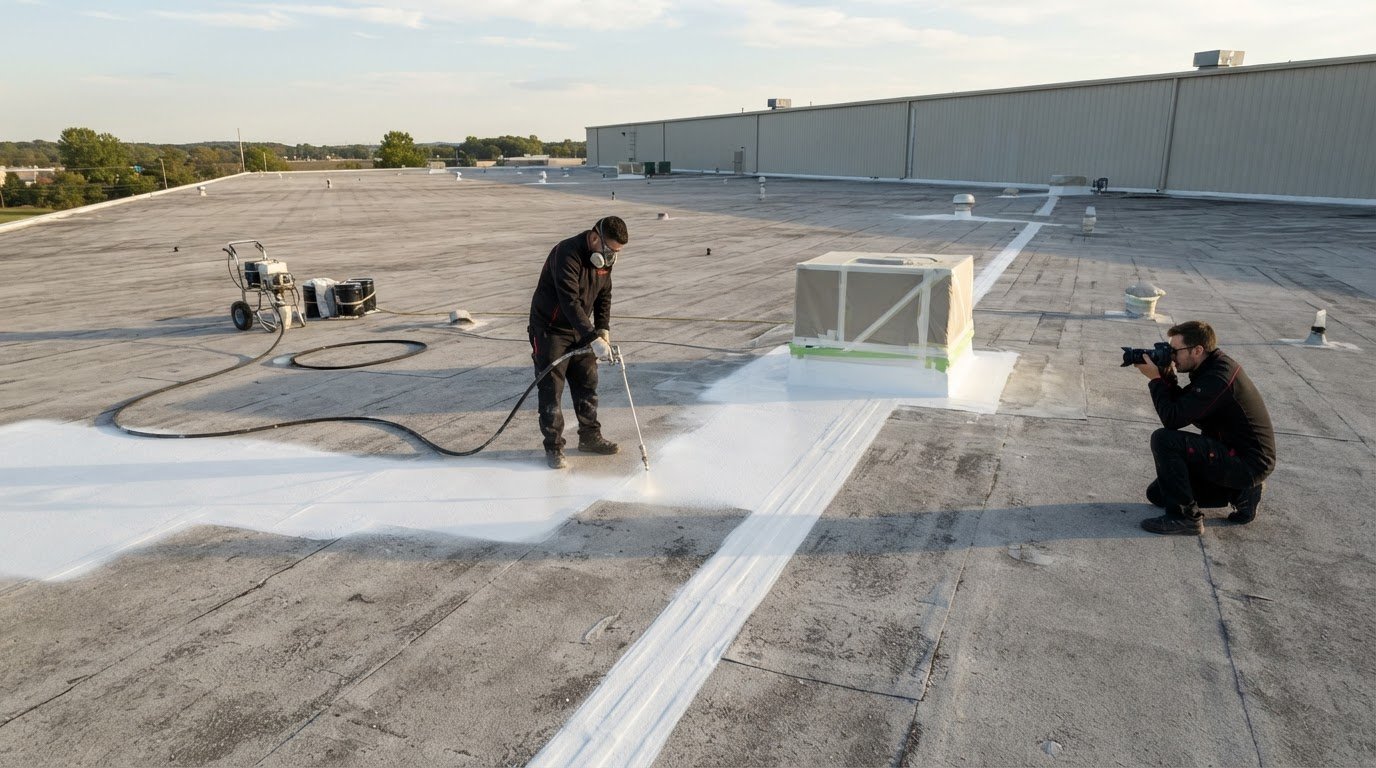
Roof coating projects don’t come from visibility alone. They come from reaching facility managers and property owners, then giving them a clear reason to consider restoration. Effective roof coating contractor marketing combines targeted promotion with sales materials and follow-up that move qualified opportunities forward.
It’s understandable to rely on referrals and repeat business, especially when commercial roofing sales involve long conversations and careful planning. But relying on one source can leave gaps in your pipeline. A coordinated approach keeps you visible to prospects before they’re ready to discuss a roof and helps them understand when coating or restoration may suit their building.
This article explains how paid ads capture active interest, commercial targeting reaches relevant decision-makers, and project photos, proposals, and sales materials support the conversation. It also covers how professional relationships and referrals can complement digital marketing. The goal isn’t simply more inquiries. It’s a steadier flow of qualified restoration and coating opportunities that fit your commercial roofing business.
Key Takeaways
- Connect paid promotion to a conversion-focused website so commercial prospects can move from finding your company to starting a project conversation.
- Use Google Ads, local search, and paid social to reach prospects through different channels, then track which ones bring relevant inquiries.
- Focus campaigns on commercial property owners and facility managers by role and location, rather than treating every roofing prospect alike.
- Keep branding and sales materials consistent so prospects can quickly understand your restoration and coating capabilities.
- Build referral relationships with relevant business and community networks to complement your digital outreach.
Why Paid Marketing Matters for Commercial Roof Coating Contractors
Paid marketing helps commercial roofing contractors reach property owners before a leak triggers an urgent replacement discussion. One campaign can target facility managers exploring restoration, while another introduces coating options to owners planning building improvements. A focused roof coating contractor marketing strategy creates business development opportunities beyond referrals and bid invitations.
A marketing campaign can speak to commercial decision-makers, explain coating and restoration options, and direct prospects to a clear next step. For example, an ad can lead a facility manager to a project page that outlines the evaluation process and invites an inquiry.
Paid promotion works best when the website supports the same strategy. A conversion-focused page should name the commercial roofing problem, explain the relevant service, show credible project photos, and make the inquiry process straightforward. A facility manager researching an aging low-slope roof needs a clear path to share the building type, location, and concern. A concise form can capture those details for follow-up. Commercial roofing marketing connects that visibility with a stronger path from first visit to sales conversation.
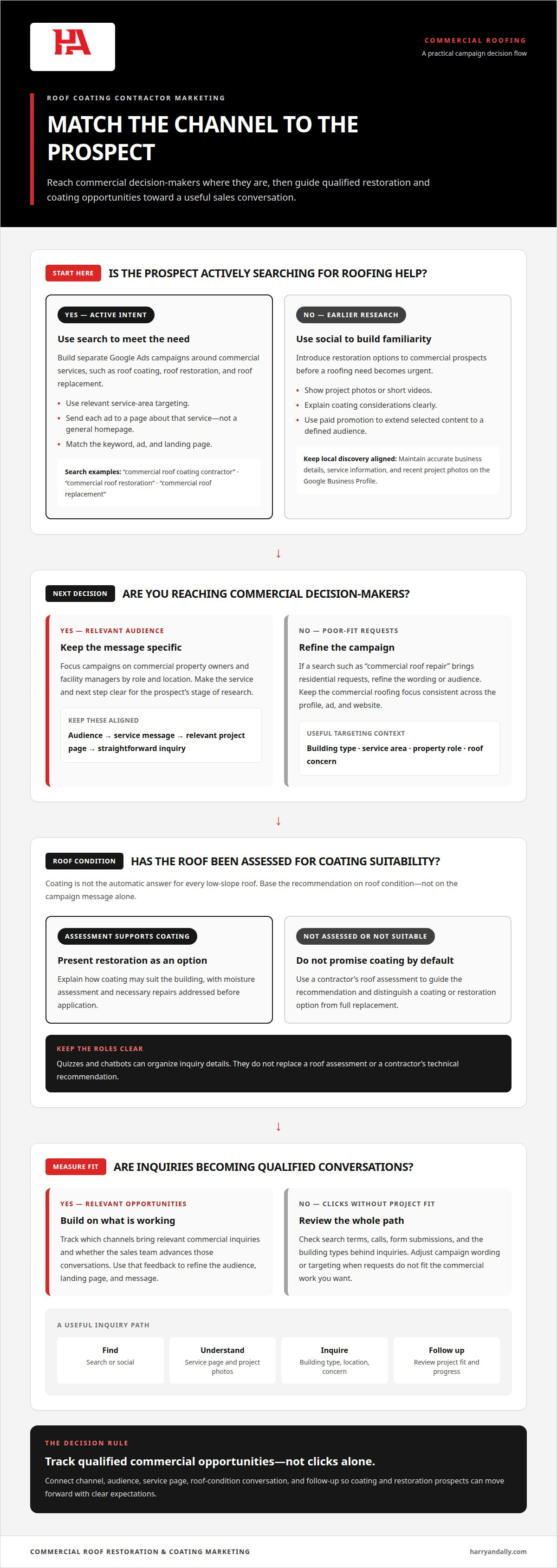
Fluid-applied roofing systems give contractors a specific restoration topic to market, rather than a broad promise to “fix roofs.” A campaign can explain how coating may suit an aging roof and distinguish that option from full replacement. The distinction matters: not every low-slope roof is suitable for coating. Moisture assessment and necessary repairs come before application. Present coating as an option based on roof condition, not the automatic answer for every building.
Roofing estimators, quizzes, and chatbots can help qualify interest before a sales call. A short quiz might ask whether the prospect manages a warehouse, office, or retail property, then collect the roof concern and preferred follow-up method. A chatbot can direct a restoration inquiry to the appropriate contact form. These tools organize information; they don’t replace a roof assessment or technical recommendation from a contractor.
Measure the pipeline by source and project fit, not clicks alone. Track whether a paid campaign brings coating inquiries from commercial properties, whether prospects complete the form, and whether the sales team advances those conversations. This feedback helps refine the audience, landing page, and message while connecting restoration and replacement opportunities. Effective roof coating contractor marketing uses these signals to improve campaign decisions over time.
Google Ads, Local Search, and Social Media for Commercial Roofing
The right channel mix depends on how commercial prospects search for roofing help. Google Ads can reach a property owner researching roof coating, while social media can introduce restoration options before a project becomes urgent. Keep the message consistent across channels, and make the service and next step clear. Plan each channel around the prospect’s stage of research.
For Google Ads, build separate campaigns around commercial intent. Examples include “commercial roof coating contractor,” “commercial roof restoration,” and “commercial roof replacement.” Use relevant service-area targeting and send each ad to a page about that service, rather than to a general homepage.
Google Ads and map visibility work together but serve different moments. A search ad can reach someone seeking a coating estimate. A well-maintained Google Business Profile supports local discovery with accurate business details, service information, and recent project photos. Keep the profile consistent with the website, including the business name, phone number, and commercial roofing focus.
Pay-per-click advertising also needs active measurement. Review search terms, calls, form submissions, and the building types behind inquiries. If “commercial roof repair” brings residential requests, refine the wording or audience. If “warehouse roof coating” attracts relevant facility contacts, develop that campaign and landing page further. Track qualified conversations, not just impressions and clicks.
Social media advertising has a different role. Facebook and Instagram campaigns can introduce a restoration project through jobsite photos, short videos, or a clear explanation of coating considerations. For example, a post can show a completed commercial project and invite facility managers to learn about restoration options. Organic posts support credibility; paid promotion helps extend selected content to a defined audience. Social media marketing can keep that content coordinated.
What strategies work best? Pair Google Ads and local search for active demand with paid social content that builds familiarity. Which channels generate the most coating leads? Search advertising can capture immediate intent, while social campaigns reach prospects earlier. Compare both by qualified inquiries to see what works in your market.
Which keywords should a provider target? Use phrases tied to the service and commercial building type, such as “commercial roof coating,” “flat roof restoration for warehouses,” and “commercial roofing contractor.” Match the keyword, ad, and landing page so prospects find the information they expect.
Targeting Commercial Property Owners and Facility Managers
Commercial roofing campaigns work better when they reflect who influences a building decision. A property owner may approve a restoration budget, while a facility manager reports recurring leaks and coordinates inspections. Tailor each message to the role: owners need clear restoration and replacement options, while facility managers need a practical way to discuss roof condition and next steps. These aren’t homeowner campaigns; the audience, building context, and sales conversation differ.
Location can further focus a strategy. A campaign aimed at industrial properties in a contractor’s service area can feature warehouse restoration examples. A separate campaign can address retail property managers in nearby cities, with language relevant to occupied buildings and maintenance planning. Align the service area, ad copy, landing page, and follow-up so inquiries fit the contractor’s actual work.
Build campaigns around decision-makers’ needs. A facility manager searching for commercial roof coating, for example, may respond to a page explaining restoration considerations. A property owner researching replacement options may need a comparison of project paths and a clear inquiry form. LinkedIn can support professional connections and thought leadership, while search advertising reaches prospects expressing active interest.
Regional conditions should shape commercial roof coating and restoration messages. In colder climates, address how seasonal weather can affect planning for commercial roof restoration. For coating campaigns, tailor content to the existing roof and avoid suggesting that every low-slope roof is suitable for restoration.
Make investment choices measurable without treating clicks as the finish line. Separate campaigns by role, location, and service, then compare qualified inquiries, requested assessments, and sales conversations. If a warehouse-focused campaign brings relevant facility contacts, evaluate its budget against those opportunities. If a location brings homeowner inquiries instead, refine its targeting and message before increasing spend.
Roof condition, climate, and region change the emphasis, not the need for accurate positioning. Tailor campaign language, audiences, and landing pages to local commercial properties and the roofs contractors restore or coat. This helps distinguish commercial decision-makers from homeowners and gives each inquiry a clearer path into the sales process.
Branding and Sales Materials for Commercial Roofing Contractors
A facility manager may encounter a roofing company through a project photo, proposal, or referral. Consistent branding connects those touchpoints. Use the same company name, logo, colors, and service language on the website, estimate, truck, and email signature. When a prospect sees “commercial roof restoration” across those materials, the offer stays clear instead of shifting between unrelated descriptions.
Practical sales materials make the next conversation easier. A one-page overview can explain restoration and replacement services, outline the assessment process, and show relevant commercial project photos. A proposal can distinguish observed conditions, recommended work, and project scope. These materials help property owners understand the contractor’s recommendations and give facility managers useful information to share internally.
Roof coating materials should explain the decision, not promise a universal fix. For example, a leave-behind can describe coating as one possible restoration approach and note that roof condition matters. A project profile can show the building type, original concern, and completed work. This gives prospects context without implying that every roof qualifies for the same system.
Branding supports lead generation before a sales meeting. A clear service page, branded project sheet, and consistent call to action help prospects find the right inquiry path. A property owner comparing restoration and replacement options, for example, should quickly find a way to discuss the building’s needs. Each asset should reinforce the same commercial roofing focus.
Roofing companies can make materials more useful by matching them to the audience. A facility manager may value a concise inspection summary and next-step options. An ownership group may need a proposal that clearly separates scope and assumptions. A property manager overseeing several sites may prefer a reusable overview explaining how to start a conversation about each building.
No logo, brochure, or campaign can guarantee a project. Strong materials instead help prospects recognize the company, understand its work, and take a relevant next step. Track which assets appear in qualified inquiries, sales conversations, and proposals. That feedback helps refine the message and supports a more consistent path from first impression to commercial roofing opportunity.
Building Commercial Roofing Referrals Through Business Networks
Commercial roofing referrals often begin with people who already work around buildings. Property managers, commercial real estate brokers, building engineers, and facility service firms may hear about roof concerns early. Make the referral relationship useful by explaining which projects you handle, such as coating evaluations, restorations, or replacements. A clear description helps partners connect the right property owner with your team.
Build a focused network instead of collecting contacts without a plan. Identify property management firms, commercial brokers, and facility maintenance companies in your service area. Share a concise introduction to your commercial roofing work and the building situations you address. Follow up with relevant project examples or a practical resource, not a generic sales pitch.
LinkedIn can support professional connections and thought leadership. Share a post explaining how contractors evaluate whether restoration or replacement suits a commercial roof. Comment thoughtfully on updates from property management groups and commercial real estate professionals. Facebook can help maintain visibility with local business communities, while direct conversations create an opportunity to learn what partners need from a roofing contractor.
Local commercial real estate associations and facility management groups can also help you build relevant relationships. Attend events where property owners, facility managers, and commercial real estate professionals connect. Choose activities that fit your team’s schedule and capabilities. Consistent participation, clear communication, and dependable project delivery give people concrete reasons to remember your company.
Make referrals easier to manage. Record the partner, property, project type, and next step in a lead-tracking process. If a broker introduces a facility manager seeking a coating assessment, acknowledge the introduction, keep the partner appropriately informed, and follow up with the prospect. Tracking referral sources shows which relationships bring relevant opportunities and where follow-up needs attention.
Referrals complement paid campaigns and search visibility; they don’t replace a consistent business development strategy. A partner may introduce your company before a roof project enters a formal bid process, while a strong reputation supports the first conversation. In a competitive market, useful expertise and reliable follow-through improve the partner experience and help keep relationships active beyond one project.
H&A Marketing
H&A Marketing helps commercial roofing contractors connect the tactics in this article into a practical business development system. When paid campaigns attract attention but inquiries stall, the gap may involve the website, the message, or the path from first visit to follow-up. Coordinating those pieces helps keep restoration and replacement opportunities moving.
Website design supports this system by giving commercial prospects a clear place to understand services and take the next step. A property owner researching roof coatings should find relevant service information, project details, and a straightforward way to inquire. A facility manager researching replacement options needs a page focused on that decision, not a generic message aimed at every customer.
Search Engine Optimization helps contractors build visibility for relevant commercial roofing topics over time. A focused content strategy can distinguish coating, restoration, and replacement services while answering questions property owners and facility managers have during their research. Paid campaigns and organic search can then direct prospects to pages that match their needs.
Branding makes these touchpoints recognizable and consistent. Logo Design & Branding can align a company’s identity across its website, proposals, and marketing materials. A facility manager who sees a project post and later receives a proposal, for example, should encounter the same professional identity and a clear description of the contractor’s commercial work.
Lead Generation connects visibility with measurable inquiry opportunities. Judge campaigns by the relevance of incoming projects, not just traffic or form submissions. Tracking which sources lead to qualified conversations helps contractors understand where prospects enter the pipeline and where follow-up needs improvement. No marketing approach can guarantee a specific project outcome, but a coordinated system makes it easier to see what is working and refine the strategy.
H&A Marketing’s support can fit different points in that process, whether a contractor needs a clearer website, stronger brand materials, better search visibility, or a more organized approach to generating leads. The right starting point depends on where prospects currently lose momentum. Contractors can discuss how their marketing should support commercial roof coating and restoration opportunities through commercial roofing marketing.
If you’re ready to strengthen your commercial roofing pipeline, contact H&A Marketing to discuss your goals.
Frequently Asked Questions
Why Is Paid Marketing Useful for Roofing Business Owners?
Paid marketing gives owners more control over which services receive attention and how campaigns are adjusted. It can also show whether prospects respond to a coating message, a restoration comparison, or a replacement offer. Use the results to make informed decisions about messaging and sales capacity. The value isn’t simply more exposure; it’s learning which commercial project conversations deserve more attention.
How long before I see results from marketing campaigns?
Early indicators and business outcomes emerge on different timelines. Ad clicks and inquiries can show activity soon after launch, while organic visibility and brand recognition take longer to develop. Qualified opportunities also depend on project timing and internal approval processes. Review performance regularly, but judge progress by whether suitable commercial prospects advance through conversations, assessments, and proposals, not by traffic alone.
Is it better to hire a specialized roofing marketing agency?
A specialist may help if your marketing team struggles to distinguish commercial restoration opportunities from residential repair inquiries. Look for an understanding of facility managers, property ownership groups, bid processes, and longer sales cycles. Ask how campaign reporting connects to your pipeline and how messaging reflects your actual project capabilities. The right partner should make the work easier to coordinate, not add layers between marketing and sales.
How can a marketing provider help roof coating contractors improve local SEO and Google Business Profile visibility?
Keep your profile and local search presence accurate as your services change. If your company adds a dedicated coating service page, for example, update the profile’s service details and project updates to support the same focus. Review calls and inquiries for mismatched service expectations. This feedback can reveal whether local searchers understand your commercial work or confuse it with residential roofing.
How should roof coating contractors compare marketing agencies and lead-generation services?
Compare how each option defines a qualified lead, reports its source, and handles records after an inquiry arrives. Ask whether you can see the original campaign or referral source and whether your sales team receives enough context to respond appropriately. Consider how the work fits your current capacity, too. A high inquiry count has limited value if the contacts don’t match your commercial project scope.
What website and sales materials help convert roof coating leads?
Materials should help prospects move from initial interest to an informed sales discussion. A project brief can document the property type, the customer’s stated concern, and the questions that remain for a technical assessment. Keep marketing language aligned with the details your estimator and proposal will use. This reduces confusion between the first conversation and formal scope, especially when several stakeholders review the opportunity.
How can roof coating contractors get reviews and referrals?
Ask for honest feedback after a customer has experienced the completed project, and never script or condition the request. Make referrals easy by giving professional contacts a concise description of the commercial projects you handle. Follow up with the person who made an introduction and share an appropriate update. Get permission before using a customer’s name or project details publicly.
