
Lead Generation for Custom Home Builders: Proven Guide

Article by
Harry Stanley III
Harry Stanley III is a construction marketing strategist and fractional CMO at H&A Marketing. He has helped construction companies grow through website strategy, SEO, paid advertising, branding, lead generation, CRM systems, and professional content. His past work includes helping Meraki Solar generate an additional $3.7 million in revenue in his first year and supporting American Builders as a fractional CMO. Today, Harry works directly with custom home builders and construction companies to build marketing systems designed to generate qualified leads and measurable growth.
More inquiries won’t help if they’re the wrong fit. For custom home builders, lead generation works when it attracts homeowners whose project goals, expectations, and budget align with the work you want to build. That’s the difference between chasing a busy inbox and creating real sales conversations.
Referrals can be valuable, but they’re difficult to predict. And when your website, advertising, and follow-up operate separately, it’s harder to tell which efforts are reaching the right prospects or what should happen after someone gets in touch. A practical approach to lead generation for custom home builders connects each step, from first impression to follow-up.
This guide shows you how to build that system. You’ll learn how to clarify your ideal project, use your portfolio and online presence to earn trust, attract prospects through local SEO and advertising, and track inquiries through sales conversations. The goal isn’t simply more leads. It’s a steadier path to qualified opportunities, supported by coordinated strategy, creative, traffic, and lead capture.
Key Takeaways
- Define a qualified prospect by how well their goals and project expectations match the homes you build.
- Give each channel a clear role, from helping homeowners discover your business to building trust and capturing inquiries.
- Use a short qualification sequence and focused questions to assess fit without making the first conversation feel like a barrier.
- Measure lead generation for custom home builders by tracking inquiry source, project fit, follow-up, and progress toward a sales conversation.
- Connect strategy, creative, traffic, and lead capture so your website, SEO, ads, CRM tracking, and project media support one consistent prospect journey.
Why custom home builders need qualified leads, not just more inquiries
A full inbox can look like progress, but inquiry volume alone doesn’t show whether the right homeowners are finding you. A custom project takes substantial planning and trust. Before a prospect is ready to discuss a build, they may need to understand your design approach, review completed homes, and decide whether your process fits their expectations.
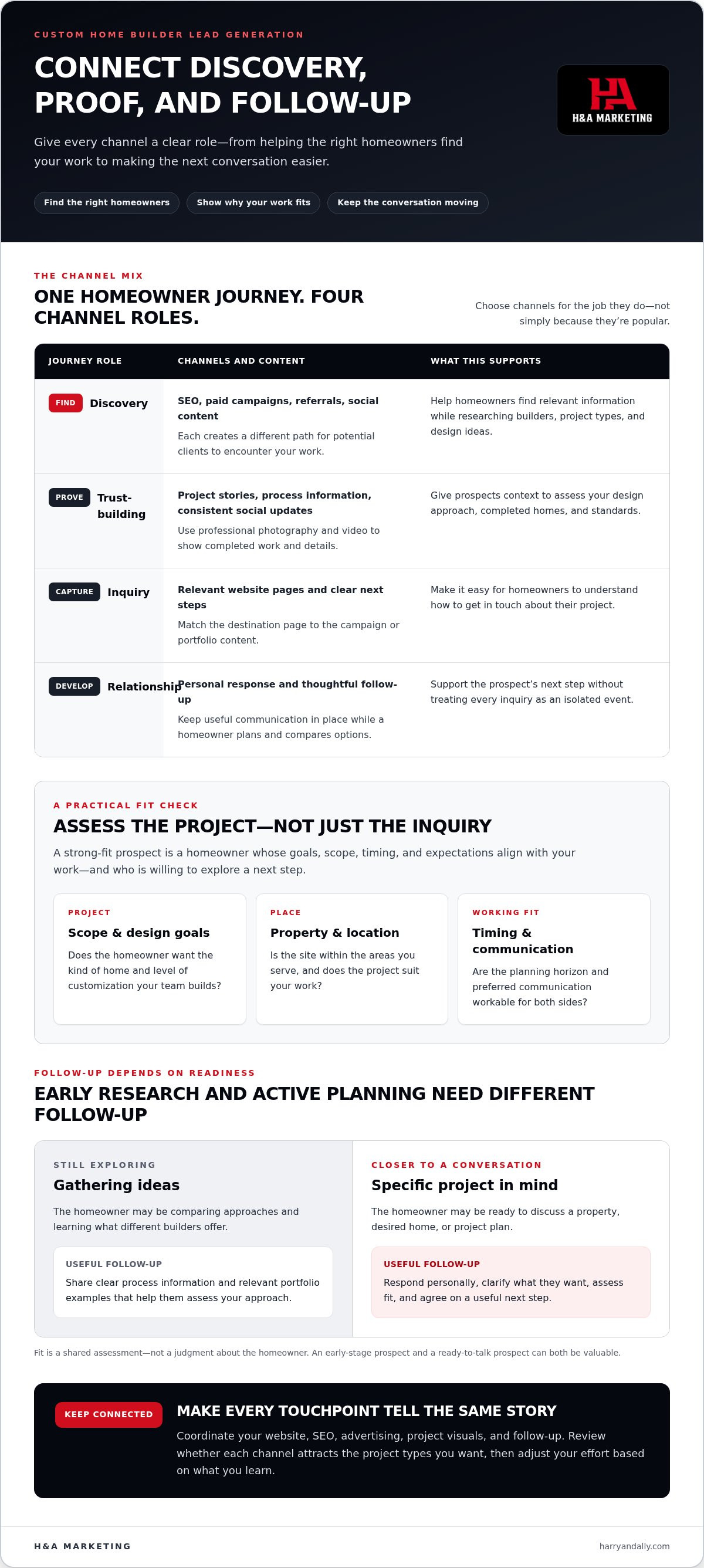
A qualified custom-home lead is a homeowner whose project goals, scope, timing, and expectations align with the builder’s work and who is willing to explore a next step. That definition shifts the focus from counting form submissions to understanding whether an inquiry could develop into a productive conversation. Attracting interest is only the start; qualification helps determine what to do with it.
What makes a custom home builder lead a strong fit?
Fit is a shared assessment, not a judgment about the homeowner. A prospect may be a good match even if they’re early in the process, while someone ready to build may have a project outside your scope. Consider the details together:
- Project scope and design goals: Do they want the kind of home and level of customization your team builds?
- Property and location: Is the site within the areas you serve, and does the project suit your work?
- Timing and communication: Are their planning horizon and preferred way of communicating workable for both sides?
An early-stage researcher may be gathering ideas and comparing approaches. A prospect ready to talk through a specific property, desired home, or project plan may be closer to a sales conversation. Both can be valuable, but they need different follow-up.
Why custom-home prospects need more than one touchpoint
One ad click or inquiry form captures only a moment of interest. Homeowners may return to a portfolio, read about your process, compare project examples, and form practical questions before they feel ready to talk. Consistent, useful information across those touchpoints gives them more context to judge whether your work fits.
That’s why lead generation for custom home builders should connect discovery, trust-building, and follow-up instead of treating each inquiry as an isolated event. A portfolio can show design quality; clear website content can explain your approach; a timely response can help move the discussion forward.
How to build a custom home builder lead generation mix
Don’t choose channels because they’re popular. Give each one a job in the homeowner’s journey: help the right people find you, show them why your work fits, make it easy to inquire, then stay useful while they consider a major project.
A connected channel mix beats disconnected tactics because discovery, proof, and follow-up work together instead of leaving homeowners to bridge the gaps. For lead generation for custom home builders, the right mix depends on your team’s capacity, ideal audience, portfolio, and business goals. A builder with strong project photography but limited time for social posting may prioritize search visibility and a focused portfolio. A builder seeking a specific project type may use targeted campaigns to reach that audience, with a landing page built around the relevant work.
Which channels help homeowners discover a custom builder?
SEO helps homeowners find relevant information as they research builders, project types, and design ideas. Paid media can bring targeted traffic to a specific offer or portfolio page, but the destination needs to match the ad. Referrals introduce prospects through existing relationships; social content can reinforce that recommendation and keep your work visible. These channels support different discovery paths, so assess them by fit and follow-through, not by activity alone.
Map your channels by role:
- Discovery: SEO, paid campaigns, referrals, and social content put your work in front of potential clients.
- Trust-building: Project stories, process information, and consistent social updates help prospects assess your approach.
- Inquiry capture: Clear calls to action and relevant website pages make the next step easy to understand.
- Relationship development: Thoughtful follow-up keeps the conversation open while a homeowner plans and compares options.
How do project visuals support lead generation?
Professional photography and video let prospective clients examine completed work, from the overall design to details that reflect your standards. Use those visuals on portfolio pages, in social posts, and in campaign creative so each channel presents a consistent picture of your capabilities. Strong visuals can make the work easier to assess and give homeowners useful context as they consider whether your approach suits their project.
Keep the mix manageable. Choose channels you can support with relevant content, timely inquiry handling, and clear next steps. Review whether each one attracts the project types you want, then adjust your effort based on what you learn.
How to qualify custom home builder leads without adding friction
Qualification should help both sides decide whether a project is worth discussing. Keep the process simple: clarify what the homeowner wants, assess whether the project fits your work, respond personally, and agree on a useful next step. Don’t make a prospect complete a lengthy questionnaire before they can speak with someone.
A practical first-pass sequence looks like this:
- Clarify the project: Understand the type of home, the homeowner’s goals, and what stage they’re at.
- Assess fit: Consider scope, property location, timing, and whether expectations align with your approach.
- Respond: Acknowledge the details they shared and invite a conversation that moves the project forward.
- Agree on a next step: Set an introductory call or project discussion, or offer relevant information if they’re still researching.
Clear expectations can help prevent mismatches. Explain the kinds of projects you build, the areas you serve, and what an initial conversation can cover. This lets homeowners decide whether to reach out without making serious prospects feel they need to prove themselves first. For lead generation for custom home builders, an inquiry is the start of a conversation, not a complete project brief.
What should a custom builder ask on an inquiry form?
Ask only for details that help you understand the project and respond usefully. A concise form might ask what the homeowner hopes to build, whether they have a property, what design goals matter most, and their preferred timing. Include contact details and space for any additional context. Keep each question clear, relevant, and appropriate for a first conversation.
More fields can provide more context, but they also ask prospects to do more before making contact. Start with the essentials. Save detailed discussions about plans, selections, or project requirements for follow-up when they’re relevant.
How should builders respond after an inquiry?
Respond promptly with a personal message that reflects the prospect’s stated project. Mention the type of home they described, address a question they raised, and suggest a clear next step, such as an introductory conversation. A direct response shows that a real person has read the inquiry and makes it easier for the homeowner to continue.
If they’re not ready to meet, share relevant information and invite them to reconnect as their plans develop. Record the response and next action so the conversation doesn’t get lost. Consistent follow-up helps you support prospects at different stages without pushing them into a conversation before they’re ready.
How to measure lead generation for custom home builders
Measure the path from first contact to a meaningful sales conversation, not just the number of people who submit a form. A source that brings fewer inquiries may still be worth attention if those prospects match your project scope and continue to engage. Activity metrics show what marketing is doing; qualified project outcomes show whether it’s reaching the right homeowners.
Use a consistent record for every inquiry. Track where the prospect found you, the project type, whether it fits your work, when and how your team responded, and what happened next. This gives marketing and sales a shared view of lead generation for custom home builders, from initial visibility through follow-up.
Which lead generation metrics matter most to builders?
Separate indicators into two groups. Visibility and engagement metrics, such as website visits, search activity, and interaction with project pages, help explain whether people are finding and exploring your business. They provide context, but they don’t prove that an inquiry is a fit.
For business decisions, focus on qualified inquiries and their progress toward a substantive project discussion. Review whether prospects match your project type and served locations, whether they respond to follow-up, and whether a next conversation is agreed. Interpret results against your own goals and capacity rather than applying a universal benchmark.
- Visibility: Are the right audiences finding your website and project content?
- Fit: Do inquiries align with your scope, design strengths, and service area?
- Follow-up: Was each prospect contacted, and is the next action recorded?
- Progress: Did the inquiry move into a useful sales conversation?
How can builders connect marketing sources to sales follow-up?
Ask each prospect how they found your business, then record the answer alongside available website or campaign source information. Keep source labels consistent, such as organic search, paid campaign, referral, or social media. Note the first response and later progress in the same tracking process. If a homeowner mentions several touchpoints, record those too rather than forcing the journey into a single channel.
Review the information together with whoever handles marketing and sales. If paid traffic reaches a project page but inquiries don’t match your work, revisit the audience, message, or page. A well-matched construction website and landing page should carry the campaign promise through to a clear next step. Look for patterns, then adjust one part of the journey at a time.
Discuss a connected lead generation strategy
Turn custom home builder lead generation into a connected marketing system
Good marketing isn’t a stack of separate tasks. It’s a clear path from the right homeowner seeing your work to understanding your approach, reaching out, and receiving a useful response. For lead generation for custom home builders, strategy, creative, traffic, and lead capture should all support that same journey.
Start with the projects you want to build and the reasons homeowners should choose your firm. Use those priorities to shape your message, portfolio, and channel plan. Then make sure each piece connects: search visibility and ads bring relevant visitors to pages that match their interests; professional photography and video show the quality of your work; inquiry forms capture useful context; and CRM tracking helps the team record the source, response, and next step.
What does a connected marketing system include?
Each part has a role. Positioning clarifies who you serve and what makes your approach distinct. Creative turns that strategy into consistent project messaging and visuals. SEO and paid campaigns bring qualified audiences to relevant content, while website and landing pages give those visitors a clear next step. Lead capture and tracking then help the team follow each inquiry through the sales process.
For example, an ad promoting a particular style of home should lead to a page featuring relevant projects and a direct inquiry option, not a generic page with no connection to the message. The prospect’s source and follow-up can then be recorded in one process. This makes it easier to see where the journey is working and where it breaks down.
When should a custom builder bring in marketing support?
Consider outside support when campaigns feel disconnected, you can’t tell which sources lead to useful conversations, or inquiries aren’t receiving consistent follow-up. A construction-focused marketing partner can coordinate website design, SEO, ads, social content, professional media, and lead tracking while your team contributes its project knowledge and expertise. The aim is not to replace the builder’s voice, but to make sure every marketing touchpoint reflects it.
H&A Marketing works as a collaborative partner, connecting strategy and execution into a marketing system shaped around construction businesses. If your current efforts feel scattered, begin by mapping the prospect journey: what attracts the right homeowner, what helps them trust your work, where they inquire, and how your team follows up. That map can reveal which handoffs need attention before you add another channel.
Discuss a connected construction marketing strategy
Build a steadier path to the right projects
Effective lead generation for custom home builders isn’t about filling your inbox. It’s about attracting homeowners whose goals fit your work, giving them useful reasons to trust your team, and making the next step clear.
Build your marketing mix around the homeowner’s journey. Use search, referrals, paid campaigns, social content, and project visuals for distinct purposes, then make sure they lead to relevant information and easy inquiry options. Keep qualification straightforward, respond personally, and track each opportunity from its source through follow-up and sales conversations.
That takes coordination. H&A Marketing brings construction-focused website design, SEO, lead generation, and social media together with professional photo, video, and drone production. The goal is a connected marketing system that supports your portfolio, attracts suitable prospects, and helps your team see how marketing activity connects to real conversations.
With a clear process behind every touchpoint, you can spend less time sorting through mismatched inquiries and more time building the projects your team is best suited to deliver.
Frequently Asked Questions
What is lead generation for custom home builders?
Lead generation for custom home builders is the process of attracting, capturing, and developing homeowner inquiries that may fit a builder’s projects. The goal isn’t simply to collect names and contact details. You need enough context to decide whether a conversation makes sense, such as the project type, goals, and property situation. Search visibility, referrals, project content, and follow-up work together, while a good fit depends on your scope and business goals.
How do custom home builders get more qualified leads?
Make your work easier to find, show relevant examples, and give interested homeowners a clear next step. Align search visibility, paid traffic, referrals, and project visuals with the types of homes you want to build. Then ask a few clear questions about the project and follow up consistently. This helps you understand fit and readiness without treating every inquiry as a sales opportunity or promising a particular lead volume.
Which marketing channels work best for custom home builders?
No single channel is automatically best for every builder. Search visibility can help homeowners find useful information, while paid campaigns can direct attention to a specific project or service. Referrals introduce prospects through trusted relationships, and social content can reinforce interest and showcase your work. Choose channels based on your goals, capacity, portfolio, and audience. Track qualified inquiries and sales progress, not channel activity alone.
What information should a custom home builder lead form collect?
Ask for a few details that will help you give a useful first response: the project type, the homeowner’s main goals, whether they have a property, and their preferred timing. Include contact information and a space for any helpful context. Each added question asks the prospect to do more before reaching you, so keep the form focused. Gather detailed plans and requirements during follow-up when they’re relevant.
How can custom home builders tell whether their marketing leads are qualified?
Review whether each inquiry matches your project scope, expectations, and service area, then note how the homeowner responds to follow-up. A form submission alone doesn’t show project fit or sales progress. Keep a simple record of the lead source, project context, response, and agreed next step. Over time, this can help you see which marketing activity is contributing to worthwhile conversations and where prospects tend to disengage.
How long does lead generation take for a custom home builder?
Timing varies with your market, goals, current visibility, offer, and chosen channels. A paid campaign may bring attention sooner, while building organic search visibility generally takes ongoing work. Neither guarantees a set inquiry schedule. Set regular points to review qualified inquiries, follow-up, and progress toward sales conversations. Use what you observe to adjust the system, rather than relying on assumptions or a fixed timetable that may not fit your business.
Can referrals and digital marketing work together for custom home builders?
Yes. Referrals can introduce homeowners to your business, and a clear website with relevant project examples can help them learn more and assess your work. Useful social content can keep your projects visible to people who are still researching. Treat referrals and digital marketing as complementary sources, not competing approaches. Where practical, record how each prospect heard about you, including referrals and any online touchpoints they mention.
How should custom home builders measure lead generation success?
Measure more than total inquiries. Track where prospects came from, whether their projects fit, how your team responded, and whether the conversation moved to a meaningful next step. Website engagement and campaign activity can help explain what people are seeing, but they don’t prove sales impact on their own. Review the full path with your marketing and sales teams, and interpret progress against your builder’s goals and project capacity.
