
Luxury Home Builder Photography: Shoot Standards That Sell Multimillion-Dollar Homes

Article by
Harry Stanley III
Harry Stanley III is a construction marketing strategist and fractional CMO at H&A Marketing. He has helped construction companies grow through website strategy, SEO, paid advertising, branding, lead generation, CRM systems, and professional content. His past work includes helping Meraki Solar generate an additional $3.7 million in revenue in his first year and supporting American Builders as a fractional CMO. Today, Harry works directly with custom home builders and construction companies to build marketing systems designed to generate qualified leads and measurable growth.
What if the homes you build look ordinary online, even when every detail is exceptional? Luxury home builder photography should make the craftsmanship, scale, and design choices visible at a glance. Generic images can flatten a multimillion-dollar project into a collection of rooms, giving prospective clients little reason to see what sets your work apart.
A strong shoot takes more than showing up with a camera. It needs a plan that respects the homeowner’s schedule, prepares the space, and gives every image a job. Without that plan, photography can become an expensive one-off instead of a useful asset for your portfolio, website, and sales conversations.
This guide explains how to set shoot standards that support premium positioning and help attract the right clients. You’ll learn how to prepare a home, coordinate timing, capture finished details, and plan images for your portfolio, website, SEO, and social channels. The goal is a repeatable visual system, not just a folder of beautiful pictures.
Key Takeaways
- Set portfolio standards that make craftsmanship, materials, and architectural details look as considered as they are in person.
- Use luxury home builder photography to build visual trust and help prospective clients understand the value behind premium pricing.
- Use architectural images to showcase design and construction precision, then add lifestyle photography to help homeowners picture living in the space.
- Coordinate staging, homeowner access, and the shot list before shoot day to keep the process organized around move-in plans.
- Plan how each image will support your website, search visibility, and marketing so the gallery works as part of a connected system.
Why Mediocre Photography is Costing You High-Ticket Contracts
A custom home can be built to an exceptional standard and still look average online. If your portfolio doesn’t show the care behind the plans, materials, and finish work, prospective clients have little visual evidence to support your premium positioning. For buyers comparing builders, that gap can create doubt before they ever book a conversation.
Luxury home builder photography isn’t just a record of completed work. It helps prospects assess your design judgment, consistency, and attention to detail before they meet you. Controlled lighting and careful composition make materials easier to read and spaces easier to understand. The result feels considered rather than accidental, giving the quality of the build a chance to speak for itself.
The Cost of the “iPhone Portfolio”
A phone is useful for quick jobsite updates, but it’s not a substitute for planned portfolio photography. Wide-angle phone lenses can exaggerate perspective, especially when you’re close to a wall or doorway. Vertical lines may lean, rooms can feel stretched, and mixed or harsh lighting can change how finishes appear. Those details can make careful work look less precise than it is.
The Visual Trust Gap is the difference between the quality of a builder’s projects and the quality prospects perceive from the builder’s online images.
That gap can send an unintended message: the presentation may not receive the same care as the construction. For buyers considering a major investment, consistent imagery and branding help communicate that your team is deliberate at every stage. Professional architectural photography uses techniques that reveal structure and design intent, as outlined in this overview of Architectural Photography.
Visuals as the Foundation of Your Lead Engine
Photography can do more than make a gallery attractive. Useful project images help visitors understand what you build, explore relevant work, and decide whether your approach fits their goals. Images alone don’t guarantee longer visits or higher search rankings. Search visibility also depends on useful page content, site structure, and other factors.
For a high-ticket build, strong visuals can help answer questions before a sales call: How do you handle complex spaces? What level of finish do you deliver? Does your work match the client’s taste? Addressing these questions early can make initial conversations more focused and help prospects arrive with a clearer sense of fit. Pair photography with a search strategy through SEO for construction companies, so prospective clients can find the portfolio pages most relevant to their plans.
Shift from documentation to marketing. Don’t just show that a home was completed. Show the precision, materials, and lived experience that make your work worth considering.
5 Non-Negotiable Elements of Luxury Home Builder Portfolios
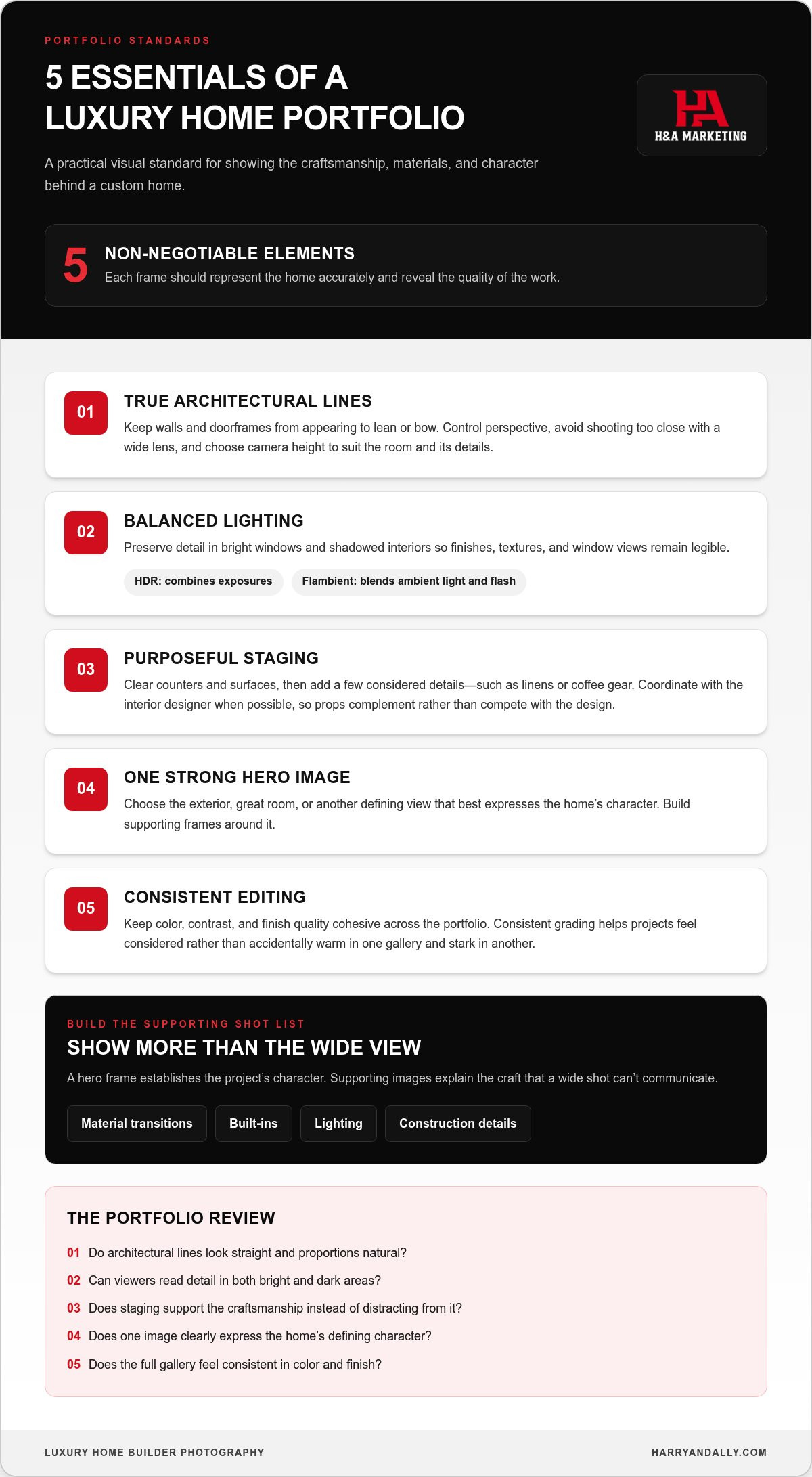
A polished portfolio needs more than attractive rooms. Each image should represent the home accurately, reveal the quality of the work, and feel consistent with your brand. Use these five standards to guide the shoot and review the final gallery:
- True architectural lines: Keep walls and doorframes from appearing to lean or bow.
- Balanced lighting: Preserve detail in bright windows and shadowed interiors.
- Purposeful staging: Add considered details without competing with the craftsmanship.
- A strong hero image: Choose one frame that captures the project’s defining character.
- Consistent editing: Keep color, contrast, and finish quality cohesive across the portfolio.
Mastering Architectural Lines in Luxury Home Builder Photography
Architectural photography relies on controlled perspective. Tilt-shift lenses let a photographer adjust framing while keeping vertical lines straight, which matters in rooms with tall cabinetry, windows, or columns. Camera height matters too. Eye level may work for a broad room view, while a slightly lower or higher position may better show counters, ceiling details, or a bathroom’s layout. Avoid shooting too close with a wide lens, which can stretch nearby features and distort proportions.
Lighting needs the same care. HDR combines exposures to retain detail in both bright and dark areas. A flambient approach blends ambient light with flash to balance the room’s natural atmosphere with clearer color and detail. The goal isn’t an obviously processed image. It’s a natural-looking frame where finishes, textures, and window views remain legible.
Staging for the High-Net-Worth Persona
Luxury should feel welcoming, not overdecorated. Clear counters and surfaces first, then add a few intentional details, such as well-chosen linens or coffee gear, to suggest how the space might be lived in. Coordinate with the interior designer when possible so props complement the design rather than compete with it. For practical guidance on planning and presentation, see Zillow’s Luxury Real Estate Photography Best Practices.
Build the shot list around a hero image: the exterior, great room, or another view that best expresses the home’s character. Then add supporting frames for material transitions, built-ins, lighting, and details a wide shot can’t communicate. Consistent color grading ties those images together, so one project doesn’t look warm and inviting while the next appears cool and stark without a clear reason.
These standards make your portfolio more useful on your website and in sales conversations. For a coordinated plan for professional construction photos and video, explore construction photo and video services.
Architectural vs. Lifestyle Photography: Which Drives More Leads?
Neither style does the whole job. Architectural photography shows how the home is built: its form, materials, proportions, and details. Lifestyle photography helps a prospective client picture the experience of living there, from gathering in an open kitchen to looking out toward a landscaped property. A strong portfolio uses both, with each image serving a clear purpose.
Match the visuals to the questions a prospect is asking. Architectural images help demonstrate design and construction quality. Lifestyle images add context and emotion. A twilight exterior can create a memorable first impression, while drone photography can show how the home sits within its site. Together, these perspectives make luxury home builder photography more useful throughout a long decision process.
The Power of the Twilight Hero Shot
During blue hour, the brief period after sunset, the sky retains color while the home’s interior lights begin to glow. A balanced exposure can show both, creating a warm exterior without losing the shape of the building or the surrounding landscape. The effect depends on preparation: turn on the planned interior and exterior lights, clear the entry and windows, and agree on the key camera angles before the light changes.
Twilight images can stand out in a social feed because they combine a distinct sky, illuminated architecture, and atmosphere. But no image style guarantees a higher click-through rate. Treat the hero shot as one part of a portfolio, then track how different visuals perform across your website and campaigns.
Using Drone Media to Show Scale
A ground-level frame may show the façade beautifully but leave the property’s full setting unclear. Drone stills and footage can establish the home’s scale, reveal outdoor spaces, and show its relationship to features such as water, hills, or a golf course. Use a wider view to orient the viewer, then a closer, controlled path to connect the home to its grounds. The aim is clarity, not height for its own sake.
Give each format a role:
- Architectural: Show lines, materials, craftsmanship, and spatial relationships.
- Lifestyle: Suggest how rooms and outdoor areas support daily routines and entertaining.
- Twilight: Lead with a distinctive exterior view that conveys mood and curb appeal.
- Drone: Explain the property’s footprint and setting in a way ground-level views can’t.
Plan the shot list around the story you want a qualified prospect to understand, then coordinate stills and aerial coverage as one visual package. Explore professional drone photography for construction projects as part of that plan, brought to you by H&A Marketing.
The Pre-Shoot Blueprint: Preparing Your Project for the Lens
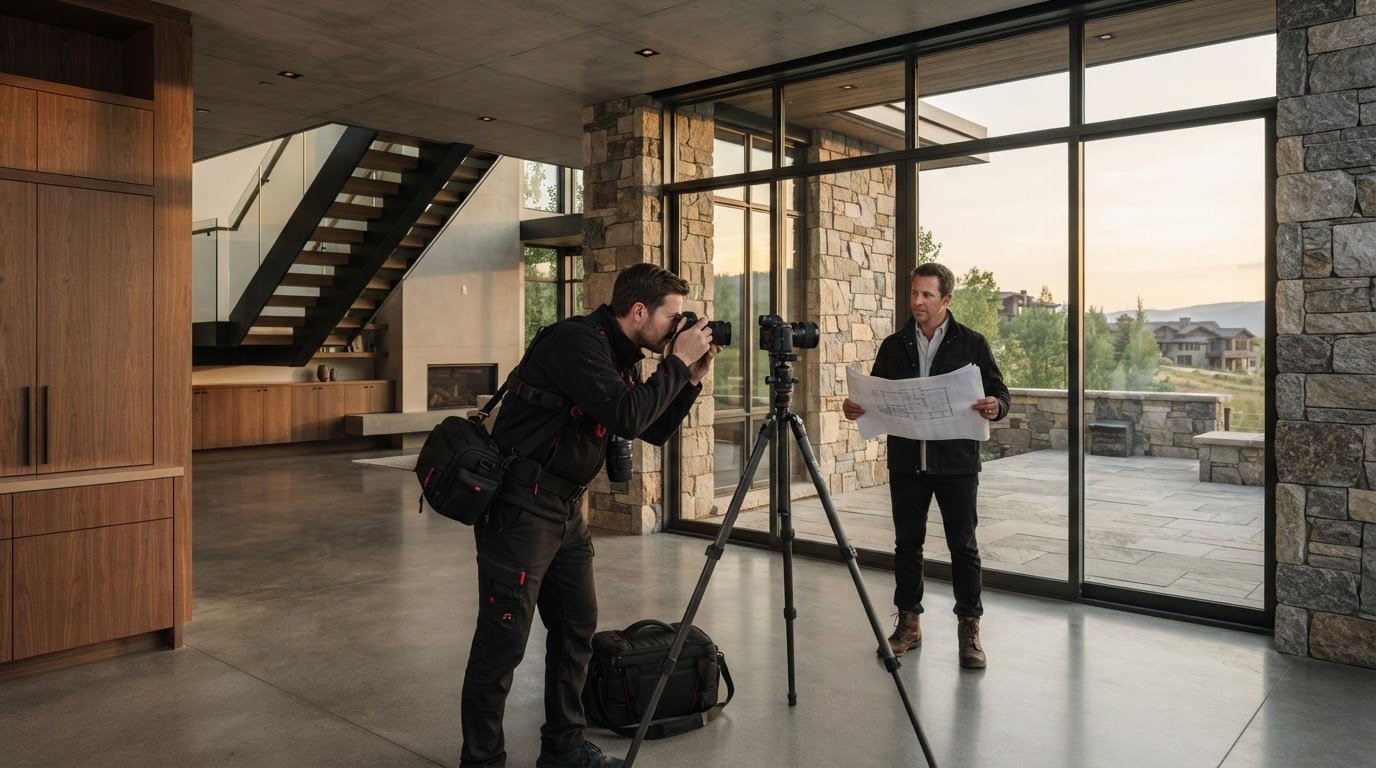
A smooth shoot starts before the camera arrives. For luxury home builder photography, preparation means coordinating access, assigning cleanup tasks, choosing the right light, and deciding where each image will be used. A clear plan matters even more when the homeowner has moved in and the house is no longer an empty jobsite.
Builder-Homeowner Coordination Tactics
Set expectations early. Discuss photography and image usage during the project agreement process, and have an appropriate legal professional review any contract language. A homeowner’s cooperation and permission still matter, especially for an occupied home. Explain what the shoot involves, which rooms will be accessed, and where images may appear.
If the homeowner is open to a post-move-in shoot, make participation easy: agree on a date, share a short preparation list, and schedule around household routines. Discuss any incentive clearly and document the agreement. Assign cleanup responsibilities in advance too. Confirm who will arrange window washing, landscaping touch-ups, and interior tidying so those tasks don’t fall between the builder, homeowner, and design team.
The Essential Shot List for Luxury Websites
Use a wide-medium-tight approach in each priority room. A wide frame explains the layout, a medium view focuses on a key area, and a tight frame captures details such as custom millwork, stone joins, or hardware. Add both horizontal and vertical compositions where practical, giving your team flexibility for website banners, project galleries, and social posts. Plan a variety of images for your custom home builder website design, rather than relying on one framing style throughout.
Work backward from the shoot date:
- Two days ahead: Confirm homeowner access, room priorities, staging, and the shot list. Check the weather and planned light window.
- The day before: Finish cleaning, clear counters and walkways, and make agreed landscaping touch-ups.
- Before the shoot: Check windows, lights, reflections, and visible personal items. Keep a point person available to coordinate access.
Schedule exterior views around the sun, not just the calendar. An east-facing façade may catch direct morning light, while a west-facing one may be better later in the day. The best window depends on the site, weather, and desired look, so confirm timing with the creative team. H&A Marketing can coordinate the visual plan while you focus on the build.
Plan professional construction photography around your project’s defining features and the images your website and sales process need.
Beyond the Gallery: Building a Lead Engine with H&A Marketing Visuals
A finished photo gallery is only the starting point. To support qualified inquiries, each image needs a role in the path from first impression to sales conversation. H&A treats luxury home builder photography as part of a connected marketing system, aligning creative with your website, search visibility, marketing traffic, and lead capture.
Maximizing Visual Asset ROI
Build a simple asset plan before the shoot. Match images to the places prospects encounter your business, then keep files organized so your team can reuse them with purpose:
- Website: Use project galleries to show the type of work you want to win, with clear project descriptions and inquiry paths.
- Ads and social: Test different project angles and formats in your campaigns. Review qualified inquiries and conversion data rather than judging performance by likes alone.
- Email and sales: Add relevant project examples to nurture emails and sales decks, so prospects can see craftsmanship that matches their goals.
- Active jobsites: Share planned progress updates to communicate process, care, and quality while a home is being built.
Repurpose finished photography into short-form video and social stories by pairing detail shots with concise project context. That gives the same project more than one useful format without treating every post as a new production. For more ideas on using construction visuals across marketing, read Visual Storytelling for Home Builders.
The H&A Strategy: Creative Meets Traffic
Strong images don’t guarantee search rankings or campaign conversions on their own. They need to sit on useful pages, connect to relevant search intent, and lead to a clear next step. Project photography can support local visibility when it appears on detailed project pages with accurate descriptions and relevant service-area context. In campaigns, focused visuals give prospective clients a clearer reason to visit, while conversion tracking helps show which pages and campaigns generate inquiries worth following up.
H&A coordinates creative with traffic and lead capture, producing photo, video, and drone assets for builder marketing. The goal is to give each visual a job, from establishing portfolio credibility to helping a prospect take the next step, while you stay focused on construction.
Discuss a visual plan that connects your project photography to your website and lead generation.
Explore construction photo and video services
Make Every Project Image Work Harder
Premium visuals do more than show a finished home. They help prospective clients see the quality behind your work, understand the experience your projects offer, and feel more confident taking the next step. A consistent shoot plan, thoughtful staging, and a mix of architectural, lifestyle, twilight, and aerial perspectives give your portfolio more ways to support that decision.
With luxury home builder photography, the opportunity is to connect each asset to a clear purpose. H&A Marketing provides digital marketing for builders across the country, coordinating creative, website design, SEO, lead generation, and visual content as one connected marketing system. Your team can focus on building while your visuals support the path from first impression to qualified inquiry.
Your best projects deserve a presentation that reflects the care behind them. Start with a plan, and build a portfolio that gives the right clients a reason to look closer.
Frequently Asked Questions
How much should a luxury home builder spend on professional photography per project?
Set the photography budget around the project’s scope and how you’ll use the images. A full-home portfolio shoot requires different planning from a small set of detail images. Before booking, define the rooms and exterior views you need, whether you want twilight or drone coverage, how many finished images you expect, and what usage rights are included. Compare proposals by deliverables and intended uses, not just shoot time.
What is the best time of day to photograph a custom luxury home?
The best time depends on the home’s orientation, the weather, and the look you want. Morning light may suit an east-facing façade, while a west-facing exterior may photograph better later in the day. Interior rooms also vary as sunlight moves across the home. For a twilight exterior, coordinate interior and exterior lighting and prepare the property before the brief window after sunset begins.
Should I hire a general real estate photographer or a specialized architectural photographer?
For a builder’s long-term portfolio, specialized architectural photography is usually the better fit. Real estate photography often prioritizes clear coverage for a property listing, while architectural work gives more attention to design intent, materials, proportions, and controlled lighting. That distinction matters when images need to demonstrate craftsmanship and support premium positioning. Choose the approach that matches your goal: documenting a sale or showcasing the quality of your work.
How do I get permission from homeowners to photograph their private residence?
Ask for permission directly and explain the shoot plan before setting a date. Clarify which rooms and exterior areas will be photographed, how the images may be used, and whether personal items or identifying details can be removed. Put the agreed usage terms in writing. Discuss photography rights early in the project, then reconfirm access and timing with the homeowner before the shoot, especially if the family has moved in.
Do I need to stage a home if it's already furnished by the owners?
Yes, plan a camera-ready review even if the home is furnished. Owner-selected furniture can make rooms feel warm and lived in, but personal items, busy surfaces, or mismatched accessories may distract from the architecture. Ask the homeowner to clear counters and put away private belongings. Then make small adjustments to furniture, linens, and lighting so the room feels natural while the craftsmanship remains the focus.
How many photos do I actually need for a high-converting website portfolio?
There’s no fixed image count that guarantees a higher-converting portfolio. Include enough variety to explain the project without making visitors sort through repeated angles: a strong exterior, key rooms, supporting views, and close details of distinctive work. Consider how the gallery will display on desktop and mobile, and choose images that help prospects assess whether your design approach and finish quality fit their goals. Review performance using website inquiry and engagement data.
What is the difference between a “hero shot” and a standard wide-angle photo?
A hero shot is the lead image chosen to express a project’s character and draw attention. It might be a carefully composed exterior at twilight or a distinctive view of the great room. A standard wide-angle frame is primarily meant to show more of a space in one image. A hero image still needs accurate proportions and a clear focal point; a wide view alone doesn’t make a strong lead image.
Can drone photography really help sell more custom home builds?
Drone photography can help prospects understand a home’s scale, grounds, and relationship to its surroundings, details that may be difficult to show from the ground. It can strengthen a project story, but it can’t guarantee more sales or inquiries on its own. Use aerial views alongside architectural and lifestyle images, and connect them to a clear project page or campaign. The goal is to help qualified prospects picture the full scope of your work.
