

Article by
Harry Stanley III
Harry Stanley III is a construction marketing strategist and fractional CMO at H&A Marketing. He has helped construction companies grow through website strategy, SEO, paid advertising, branding, lead generation, CRM systems, and professional content. His past work includes helping Meraki Solar generate an additional $3.7 million in revenue in his first year and supporting American Builders as a fractional CMO. Today, Harry works directly with custom home builders and construction companies to build marketing systems designed to generate qualified leads and measurable growth.
Commercial roofing SEO should bring facility managers and property owners to your business, not fill your pipeline with residential repair inquiries. Effective SEO for commercial roofers connects the services you want to sell, such as roof restorations and replacements, with the searches commercial buyers use to find contractors.
That means more than adding “commercial roofing” to a homepage. An effective strategy connects commercial-focused keywords to dedicated service pages, clear project information, local visibility, and a website that makes it easy for qualified prospects to take the next step.
This guide explains how SEO for commercial roofers works, why commercial keywords and website content need a different focus from residential roofing, and how SEO compares with paid ads and lead services. It also shows how these channels can support a longer sales process: SEO builds visibility over time, while paid channels can put your business in front of prospects sooner. The aim is a coordinated approach that attracts better-fit commercial opportunities and creates a clear path from search to sales follow-up.
Key Takeaways
- Use your Google Business Profile to make your services, locations, and completed commercial roofing work easier to find.
- Build keyword research around commercial services and buyer intent, not residential repair terms.
- Give commercial restorations and replacements dedicated website content that speaks to property owners and facility managers.
- Choose marketing channels based on timing and lead quality: paid ads can support immediate visibility, while organic search builds over time.
- Connect lead generation with clear tracking and follow-up so qualified inquiries have a path into your sales pipeline.
1. Do reviews help my roofing company rank on Google?
Yes. Reviews can support local visibility and help commercial buyers evaluate your roofing business. A Google Business Profile lets you respond to reviews and can help your company appear on Google Maps. Reviews are one local ranking factor, alongside accurate business details, relevant services, and a strong location match.
Start with a complete profile. Add your business name, phone number, hours, service details, and photos of completed commercial projects. Choose categories that accurately describe your work, such as commercial roof restoration or replacement, when they reflect your services. A facility manager searching for a contractor should quickly understand what your team handles and where you work.
Reviews give prospects useful context when comparing local roofers. Ask customers to share honest feedback after a completed project, then respond to positive and negative reviews professionally. You might acknowledge a successful restoration or address a concern about project communication. Keep replies factual, protect private project details, and avoid using the same canned response for every customer.
Location signals matter, too. Keep your business name, address, and phone number consistent across your website and online listings. If you serve several cities, create useful location pages explaining the commercial roofing services available in each market. A page for a metro area can describe restoration and replacement work without implying that you have a branch there. Businesses with multiple branches should keep each location’s details current on Google Maps.
Check that the profile’s map location matches the business location and that its service information reflects actual coverage. Incorrect addresses, outdated phone numbers, and broad or inaccurate categories can confuse searchers and weaken local relevance. A profile update does not guarantee ranking movement within one to two months; local competition and the quality of the website also influence ranking. Add a meaningful Google Business Profile update every week, such as a completed project photo or a service update.
What SEO mistakes or risks should commercial roofers avoid? Don’t use an inaccurate address, choose misleading categories, or let business details differ across listings. Treating reviews as a shortcut is another mistake: even a profile with positive feedback needs accurate information and relevant roofing content.
For a focused local strategy, connect your profile to location-based pages and technical SEO. A technical SEO strategy can help align site structure, local service information, and search visibility. Keep the community context specific: explain which commercial roofing services you offer in each market, rather than repeating a city name across thin pages.
2. How do commercial roofing keywords differ from residential?
SEO for commercial roofers targets different buyers and project needs than residential roofing SEO. Commercial buyers search for building systems, project scopes, and contractor capabilities. Terms such as “commercial roof replacement,” “flat roof restoration,” and “TPO roofing contractor” signal different needs from “roof leak repair near me.” A company serving both markets needs separate keyword groups that reflect the work it wants to win.
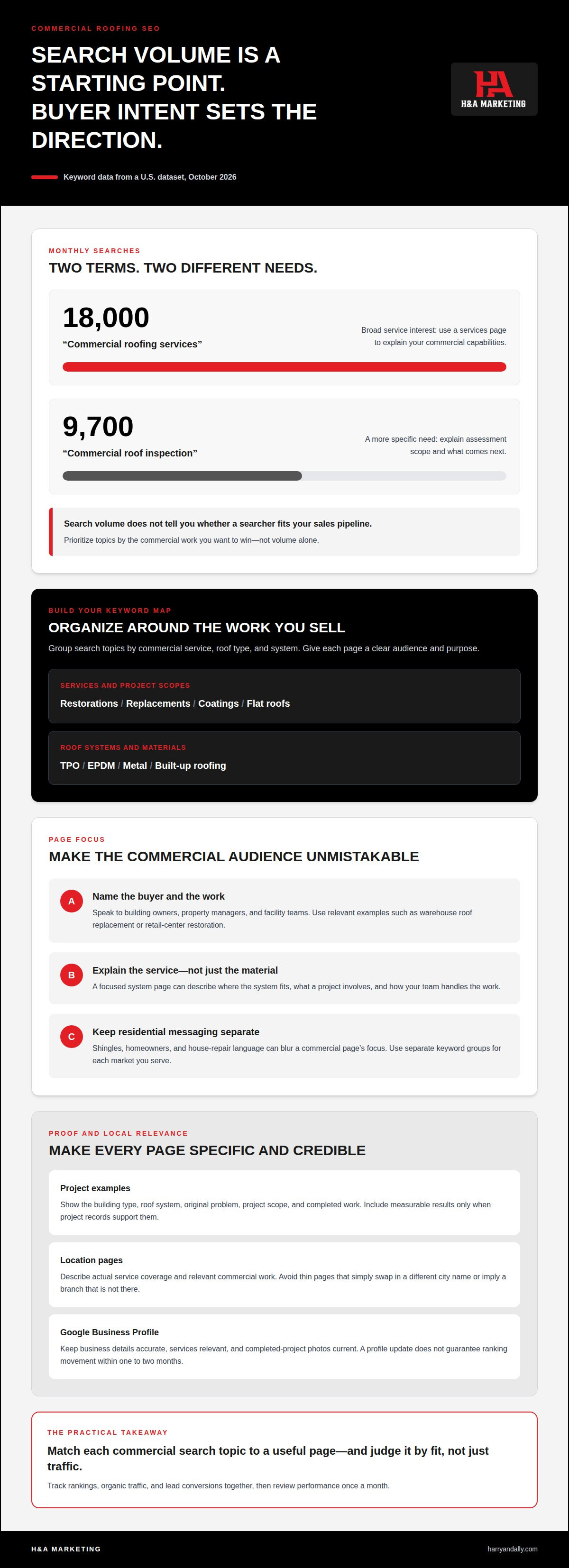
Search demand can help prioritize topics, but volume alone doesn’t show whether a searcher fits your sales pipeline. In a US dataset from October 2026, “commercial roofing services” had 18,000 searches per month, while “commercial roof inspection” had 9,700 searches per month. Those terms suggest different needs. A broad services page can address general capabilities; an inspection page can explain assessment scope and next steps.
Group keywords around restorations, replacements, coatings, flat roofs, and metal systems. Then create focused pages for technical services and materials, including TPO, EPDM, metal, and built-up roofing. A TPO page can explain where the system fits, what a project involves, and how your team handles the work. Make each section useful to property owners and facility managers rather than repeating material names without explaining the service.
Separate commercial pages from residential messaging. A commercial page should speak to building owners, property managers, and facility teams, with examples such as warehouse roof replacement or retail-center restoration. Residential language about shingles, homeowners, and house repairs can blur the page’s focus. Dedicated pages make the distinction clear to visitors and help search engines understand each page’s purpose.
Case studies make technical claims tangible when they use documented project details. A useful example identifies the building type, roof system, original problem, project scope, and completed work. Include measurable results only when project records support them, such as a documented schedule outcome or energy change. Don’t present a general capability as a proven result. Property owners comparing contractors need accurate, specific information about relevant projects.
How can an SEO professional improve pages for services, industries, and locations? They can map each keyword group to a dedicated page, clarify its audience and service scope, and connect related pages through navigation and internal links. Location pages should describe actual coverage and relevant commercial work, not repeat the same copy with city names swapped in.
How should performance be measured? Track rankings, organic traffic, and lead conversions together, then review results once a month. Separate commercial inquiries from residential requests and assess whether calls or forms match target services, markets, and project types.
Strong keyword planning ties search visibility to qualified project opportunities. A commercial roofing marketing strategy can connect service pages, audience intent, and lead tracking.
3. Separating commercial and residential website content
A roofing website should make commercial and residential services easy to distinguish. Give commercial restorations, replacements, coatings, and inspections their own navigation path, and keep residential shingles and home repairs in a separate section. This helps facility managers find relevant information without sorting through homeowner messaging. It also gives search engines clearer page topics to match with relevant searches.
Build commercial pages around the buyer and building. A replacement page can address property owners, facility managers, warehouses, and retail properties. Explain the project scope, roof systems you handle, and how prospects can request an assessment. A separate residential repair page should speak to homeowners and houses. Calls to action such as “Discuss a commercial roof replacement” make the next step relevant to each audience.
Mobile usability matters for roofing searches, including searches containing “near me.” Most searches originate from mobile devices, so menus, contact details, and forms should work on smaller screens. Use responsive design so content adjusts across screen sizes. Test a project inquiry form on a phone, including its fields and submission confirmation. A prospect viewing a roof replacement page should be able to call or send an inquiry without zooming or hunting through menus.
Speed affects that experience. A website taking longer than three seconds to load is associated with bounce rates rising to 53%. Compress large project photos, limit unnecessary page elements, and check that forms load correctly on mobile. Google’s recommended targets for Core Web Vitals are under 2.5 seconds for Largest Contentful Paint, under 200 milliseconds for Interaction to Next Paint, and under 0.1 for Cumulative Layout Shift.
Technical SEO connects site structure with usability. Make commercial service pages easy to find through clear navigation, use descriptive page titles, and link related content. For example, a commercial restoration page can link to coating and flat-roof service pages. Structured data can help identify business and service details, but accurate page content remains essential. Conversion-focused design should also use specific forms that ask whether the inquiry concerns a commercial building, its location, and the requested roofing work.
Measure traffic by page and audience, not only as a single sitewide total. Compare commercial page visits with qualified calls and form submissions, then review where visitors leave. If a residential page attracts the wrong inquiries, clarify its wording and navigation. If a commercial page gets visits but few inquiries, improve its project examples, service explanation, or contact path. The commercial roofing website design should support both search visibility and a clear path to action.
4. SEO compared with Google Ads and lead services
SEO, Google Ads, and lead services reach prospects in different ways. SEO builds organic visibility through useful pages, technical improvements, and local relevance. Google Ads can place a commercial roofing business in paid search results for selected searches. Lead services may deliver inquiries from people comparing contractors, but those inquiries may also go to competing businesses.
For a commercial roofer, the right mix depends on timing, service area, and lead quality. Ads can support visibility while organic pages develop. SEO can build a foundation for searches such as “commercial roof replacement” or “flat roof restoration.” Lead services may add inquiries, but each opportunity still needs qualification: building type, location, scope, and decision timeline.
Local SEO can help a roofing business appear on Google Maps and in the Map Pack for relevant searches. Accurate business details, appropriate profile categories, and service-area information support that presence. A profile should describe commercial roofing services clearly, without implying coverage in places you don’t serve. Because people searching for roof repair may have residential needs, clear service descriptions can help distinguish commercial inquiries.
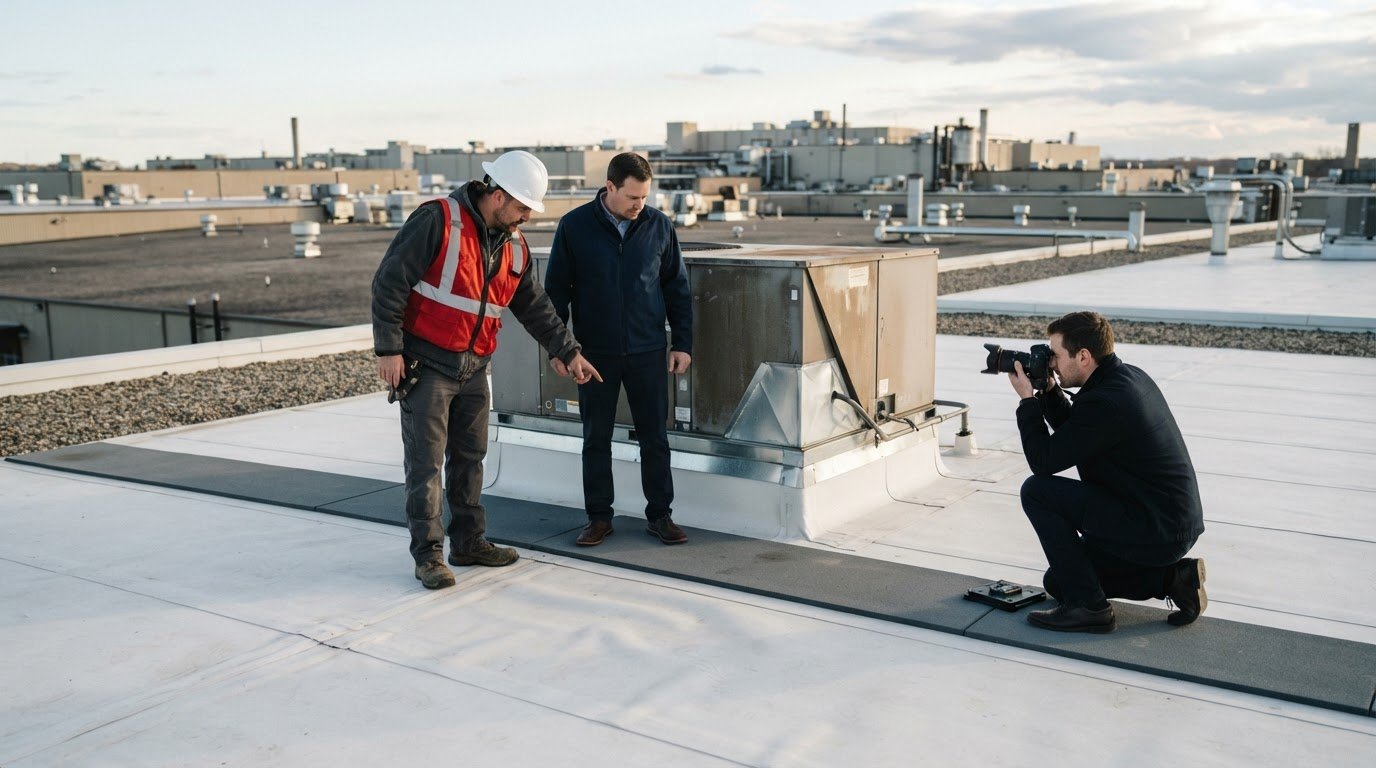
Google reviews and project photos give prospects context before they contact a contractor. Reviews can help buyers evaluate customer experiences, while photos show completed work such as a commercial restoration or replacement. Use genuine customer feedback and images that accurately represent the work. A focused project gallery can support relevant service pages and help prospects understand the contractor’s experience. Commercial roofing photography can help present completed work clearly.
Measure each channel by qualified opportunities, not just clicks or total lead count. Track whether inquiries come from organic search, paid ads, or a lead service. Then compare their fit: commercial property, target location, requested service, and progress toward a site visit or proposal. This helps show which channels attract the owners and facility managers your sales team wants to reach.
What Google guidelines and legal rules apply to roofing SEO and customer reviews? Keep feedback genuine, respond professionally, and make accurate claims about your services and completed projects. These practices support trustworthy marketing without relying on unsupported legal claims.
Choose optimization priorities based on the gap in your pipeline. If qualified local searches aren’t finding your pages, strengthen organic and map visibility. If you need search exposure sooner, consider paid ads alongside SEO. If lead services produce poor-fit inquiries, improve qualification and assess how those leads contribute to your commercial bid pipeline.
5. SEO lead generation and other marketing channels
For commercial roofing contractors, SEO works best as part of a lead-generation system, not as an isolated source of website traffic. A warehouse roof replacement page can attract a relevant search, while a clear inquiry form captures building type, location, and project need. Those details help your sales team distinguish a commercial opportunity from a homeowner’s repair request.
Start with your sales pipeline. Match each marketing channel to a clear role: organic content explains services, email keeps your company visible to known prospects, and social posts can showcase completed work. Google Ads can support active demand, while lead services may provide additional inquiries. Track the source and quality of each lead to see which channels create qualified conversations, not just form submissions.
Local presence also needs a practical structure. If you serve several cities or metro areas, create a dedicated landing page for each area. Each page should explain actual service coverage and include relevant commercial work, rather than swapping city names into identical copy. Local directories, such as chambers of commerce and local newspapers, can add visibility. Professional memberships, supplier relationships, and respected industry guest posts can also support relevant backlinks.
Content should help buyers move forward. A facility manager researching roof coatings may need a clear explanation of the service, project examples, and an easy way to discuss the building. A commercial case study can show the original challenge, scope, and completed work. Use project photos and documented outcomes to make the example concrete. Keep residential topics, such as homeowner shingle repairs, separate from commercial messaging.
Review performance once a month. Compare organic visits, calls, and form submissions with the services and locations your team wants to grow. Then follow leads through the sales process: Was the inquiry commercial? Did it fit your service area? Did it progress to a site visit or proposal? That conversion view helps identify whether a channel attracts the right prospects, even when the sales cycle continues beyond the initial inquiry.
SEO needs ongoing improvements as search engines update their algorithms. Refresh pages when services, project examples, or target markets change. Make sure new content links to relevant service pages and inquiries reach the right follow-up process. Broad claims are easy to copy; specific project details and clear commercial expertise give your website more substance.
Connect your commercial roofing content and inquiry flow with a commercial roofing lead-generation system.
H&A Marketing
H&A Marketing helps commercial roofing contractors connect search visibility with pages and lead paths that support restorations and replacements. If your website mixes residential and commercial messaging, or organic traffic isn’t turning into relevant inquiries, a coordinated strategy can clarify your positioning and help prospects move from search to contact.
That strategy can bring SEO, website design, branding, and lead generation together. Commercial service pages can speak directly to property owners and facility managers, while focused lead capture helps your team identify project type, location, and fit. The aim is a clearer path to qualified opportunities, not simply more traffic.
Contact H&A Marketing to discuss your commercial roofing marketing strategy.
Build a marketing system around the projects you want
For commercial roofers, SEO works best when it supports a clear business direction: the restoration and replacement projects you want, the markets you serve, and the prospects your team can follow up with. A focused SEO for commercial roofers strategy connects those priorities with useful website content and a clearer path from search to inquiry.
H&A Marketing brings that strategy together through search engine optimization, website design, and logo design and branding. The right mix depends on what your business needs next, whether that’s clearer commercial messaging, stronger search visibility, or a website designed to support qualified inquiries. The goal is a practical foundation your team can use to grow its commercial pipeline.
Take the next step by focusing your marketing on the work you want to win, then build a connected path for the right prospects to reach your team.
Frequently Asked Questions
What is roofing SEO?
Roofing SEO improves a contractor’s visibility in unpaid search results and helps turn relevant visits into inquiries. It can include service-page planning, local business information, technical site improvements, and useful project content. For example, a page about commercial roof coatings can explain the service, identify suitable building types, and give property managers a clear way to discuss a project. The aim is to attract prospects who fit your work.
What Is Local SEO and Why Is It Important for Commercial Roofers?
Local SEO helps commercial roofing businesses appear in searches tied to their service areas. It matters because property owners often need a contractor who works in their market and handles their type of building. A strong local presence connects accurate business details with relevant service information. For example, a contractor serving several metro areas can make each area’s coverage and commercial roofing capabilities clear to prospective clients.
What are the best keywords for roofers?
The best keywords match the roofing work you want to sell and the language prospective buyers use. Commercial examples include “commercial roof restoration,” “flat roof replacement,” and “metal roof contractor.” Add service and location terms when they accurately describe your coverage. A keyword list should also distinguish research needs, such as learning about roof coatings, from contractor-ready searches, such as finding a company for a commercial replacement.
Should commercial roofers hire an SEO agency or have a professional manage SEO in-house?
Choose an SEO approach with clear ownership and access to roofing expertise. In-house management can work when a team member has dedicated time, technical skills, and input from sales and operations. An agency can coordinate research, website improvements, content, and performance reporting. Either way, provide accurate service details, project information, and target markets so the SEO work reflects the jobs your company wants.
Do reviews help my roofing company rank on Google?
Reviews can support local visibility and help prospective customers evaluate a roofing company. They also give your team a chance to show how it handles feedback. Ask customers for honest reviews after completed work, and respond professionally and specifically. For example, acknowledge a client’s comments about communication without exposing private project details. Reviews complement accurate business information and relevant website content; they don’t replace them.
How can SEO help me get clients for my roofing business?
SEO can connect your company with people researching a roofing need and guide them toward an inquiry. A commercial replacement page, for example, can explain the project scope and offer a clear contact path for building owners. Track calls and forms by source, then qualify inquiries by property type, service area, and requested work. This helps show whether search visibility is producing sales conversations that fit your business.
How do commercial roofing keywords differ from residential?
Commercial searches focus more on building systems, property needs, and larger project scopes. Terms such as “warehouse roof replacement” or “commercial TPO roofing” reflect different needs from “shingle repair for my home.” Separate keyword groups help keep the right audience on the right pages. Use the language facility managers and property owners use, and avoid relying on broad roofing terms that may attract mostly residential inquiries.
Is SEO better than Google Ads for roofers?
Neither channel is automatically better; they serve different needs. Google Ads can place a business in paid search results for selected searches, while SEO builds unpaid visibility through website content and improvements. A contractor seeking earlier exposure may use ads alongside longer-term SEO work. Compare channels by qualified inquiries, project fit, and progress through the sales pipeline, not just clicks or total lead volume.
