

Article by
Harry Stanley III
Harry Stanley III is a construction marketing strategist and fractional CMO at H&A Marketing. He has helped construction companies grow through website strategy, SEO, paid advertising, branding, lead generation, CRM systems, and professional content. His past work includes helping Meraki Solar generate an additional $3.7 million in revenue in his first year and supporting American Builders as a fractional CMO. Today, Harry works directly with custom home builders and construction companies to build marketing systems designed to generate qualified leads and measurable growth.
Roof restoration is easier to sell when building owners understand what a coating can do for their property. Effective silicone roof coating marketing connects restoration to practical priorities, including energy efficiency, sustainability, and resistance to mold, mildew, and staining.
Building owners need a clear reason to consider restoration rather than see a coating as just another product. This article explains how to present silicone coatings’ benefits in ways that matter to facility managers and property owners, while keeping claims grounded in the building’s needs. Clear service pages, useful project content, and focused outreach can help commercial roofing contractors turn interest in restoration into more informed sales conversations.
Key Takeaways
- Explain how silicone coatings can protect suitable existing roofs from ponding water and ultraviolet exposure.
- Connect restoration to building owners’ priorities, including energy efficiency and reducing tear-off waste.
- Describe resistance to mold, mildew, and staining as practical benefits without overstating what a coating can do.
- Build clearer restoration messaging around the building’s needs, the roof’s condition, and the owner’s goals.
- Use focused website content, branding, SEO, and lead generation to support better conversations with commercial property owners.
What Are Silicone Roof Coatings?
Silicone roof coatings are fluid-applied membranes contractors use to restore structurally sound existing roofs. Their resistance to ponding water and ultraviolet light can make them an option for commercial roofing systems exposed to those conditions. They can be used on metal, modified bitumen, single-ply, EPDM, TPO, built-up, concrete-deck, and spray polyurethane foam roofs.
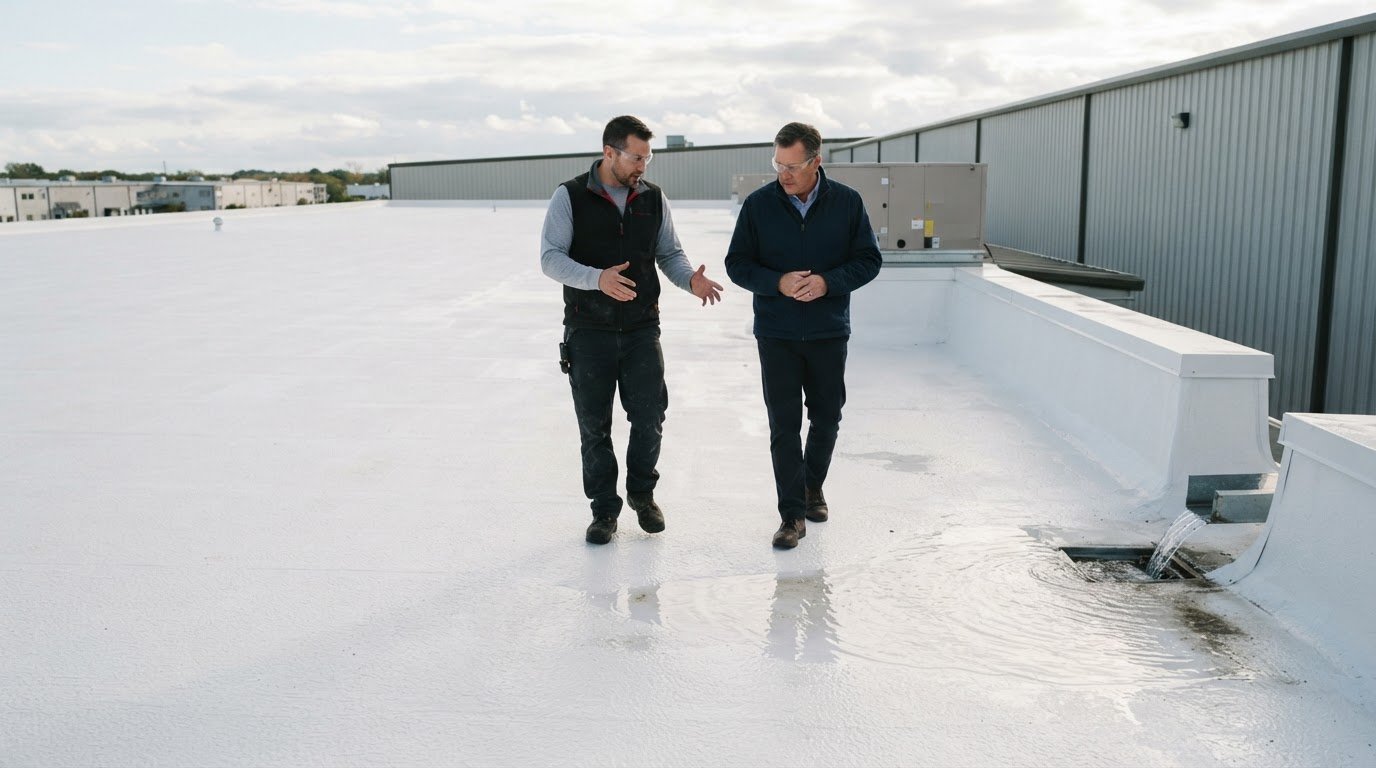
Ponding water is water that remains on a roof after rainfall instead of draining away. Silicone coatings resist degradation in ponding areas, a detail contractors can explain when discussing restoration with building owners. That resistance does not repair a failed drain, damaged insulation, or a roof that has lost structural integrity. A coating restores the surface; it does not replace repairs to underlying problems.
Ultraviolet exposure also affects roofing materials over time. Silicone is UV stable and does not require a top coat, so the coating itself can serve as the exposed protective surface. In a sales conversation, contractors can explain how the roof’s condition, existing material, drainage, and exposure inform restoration recommendations. For example, a metal roof with ponding near a drain needs a different assessment from a sloped roof with intact drainage.
Water-based and solvent-based silicone coatings differ in their carriers and product requirements. These differences can affect application and curing, so contractors should follow the product’s technical instructions when planning the work. Neither type is automatically suitable for every roof. The substrate, surface preparation, weather, and specified application method all affect the finished system.
For example, if a proposal names Lucas #8000, explain how that specific product addresses ponding-water exposure and what conditions its instructions require for curing. Don’t infer a product’s ponding rating or cure schedule from the word “silicone” alone. Identify the coating system, explain how the roof will be prepared, and connect the proposed application to the manufacturer’s product instructions.
Most modern silicone coating formulations typically have solids content exceeding 90%. Solids content describes the portion of the coating that remains after volatile components evaporate; it is one detail, not a stand-alone measure of whether restoration suits a particular roof. In sales materials and proposals, put this detail in context alongside the roof’s seams, penetrations, existing coating, surface contamination, and areas where moisture may be trapped.
Before coating, the roof should be clean, dry, and sound. Explain that proper preparation helps the coating adhere to the intended surface, not to dirt or loose material. Rust on a metal roof also needs attention: light rust can be brushed away, while heavier rust needs spot treatment before coating. These preparation steps do not mean every metal roof is ready for restoration.
When presenting a silicone roof coating proposal, specify the coating and substrate preparation, explain how the work will address ponding areas, and identify which product instructions govern curing. Clear answers help building owners understand the scope and whether restoration suits the roof’s condition.
Clear explanations of roof type, ponding-water resistance, and preparation help commercial roofing contractors communicate restoration value to building owners. A commercial roofing marketing strategy can turn those job-specific details into useful sales content without promising that one coating solves every roofing problem.
Silicone coatings resist degradation in areas where water ponds, which can matter when discussing restoration for a roof that retains water. In an assessment, identify where water remains, how widely the condition affects the roof, and whether the proposed coating system is specified for the surface. Explain this resistance as one factor, not a blanket assurance about every roof or installation. Product selection and application must still follow the requirements of the particular system.
When reviewing a proposal with a building owner, explain how the chosen system accounts for ponding areas. Distinguish the coating’s resistance to degradation from the intended results of the work. If the assessment finds persistent water, describe that exposure rather than relying on a general claim about silicone. This keeps recommendations tied to the roof’s actual condition and makes proposals easier to compare. Resistance to ponding-related degradation is most useful as part of the overall assessment, not as a reason on its own to approve restoration.
Sustainability and energy efficiency
A reflective silicone roof coating changes how the roof surface responds to sunlight. A light-colored coating reflects more sunlight instead of absorbing as much solar energy. This may reduce heat transfer through the roof and lower cooling demand inside a commercial building. The effect depends on the roof assembly, insulation, climate, building use, and HVAC operation.
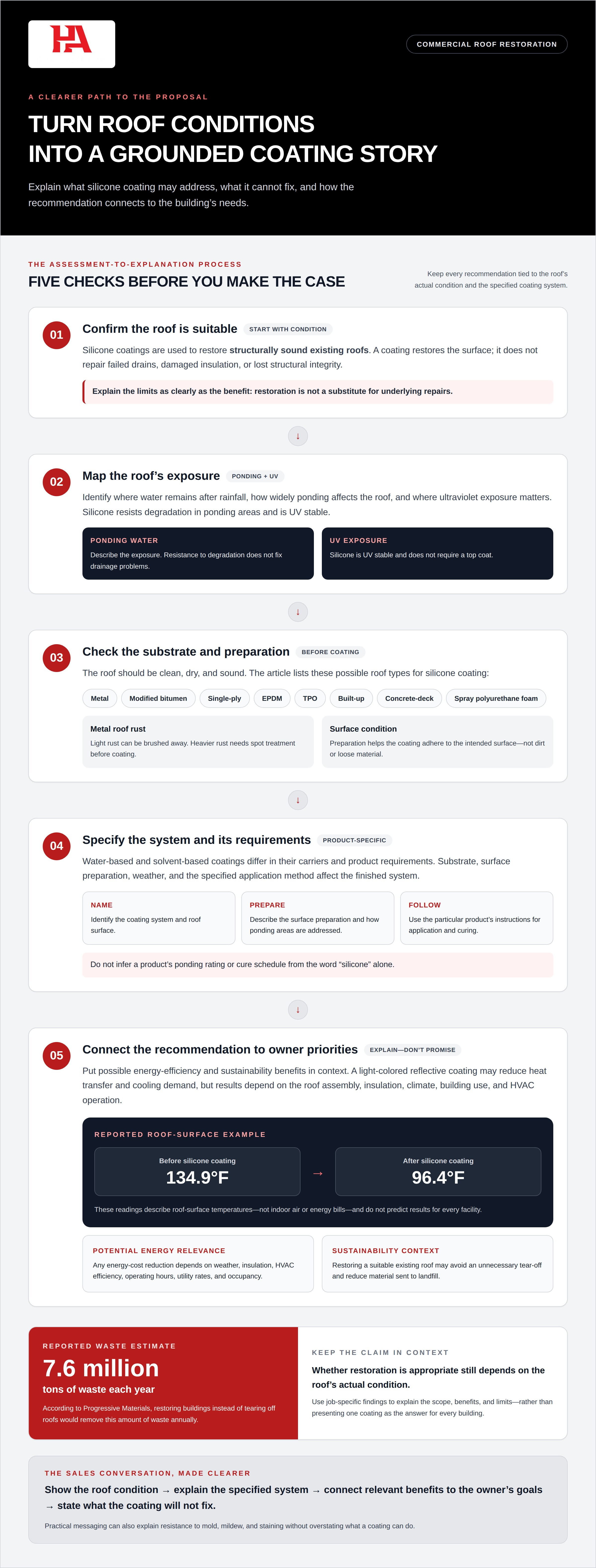
A reported example illustrates the surface-temperature difference: a roof measured 134.9°F before silicone coating and 96.4°F after coating. Those readings describe roof-surface temperatures, not indoor air or energy bills. They show why reflection can be a useful part of an energy-efficiency conversation, but they don’t predict the result for every facility. A concrete-block warehouse and an occupied office can respond differently.
For building owners, the practical question is how a cooler roof surface may affect energy use. If less heat enters the building, air-conditioning equipment may need to remove less heat during sunny periods. Any reduction in energy costs depends on local weather, existing roof insulation, HVAC efficiency, operating hours, utility rates, and building occupancy. A coating alone cannot establish the savings.
Roof restoration can also support sustainability by extending the use of an existing roof when its structure remains suitable. According to Progressive Materials, restoring buildings instead of tearing off roofs would remove 7.6 million tons of waste each year. For a facility considering restoration, avoiding an unnecessary tear-off may reduce material sent to landfill. The roof’s actual condition still determines whether restoration is appropriate.
Silicone’s reflective properties address sunlight, while its moisture resistance supports protection in wet conditions. These are separate benefits: reflecting UV rays can reduce solar heat absorption, while resistance to ponding water helps the coating withstand areas where water remains. Drainage problems may still need to be addressed as part of a sound restoration plan.
Application quality affects durability and the performance owners expect. The surface needs suitable preparation and adhesion, and the coating must be applied according to product instructions. Seams, penetrations, and transitions need careful attention: a smooth-looking roof surface cannot make up for poorly treated details. Curing conditions matter too, so the product needs the conditions specified to reach its intended performance.
Water-based and solvent-based coatings may have different application and curing requirements. Choose a system to suit the roof surface and project conditions, rather than relying on a broad claim that one type is always more sustainable or energy efficient. A proposal should identify the coating system and explain its preparation and application approach, giving owners a clearer basis for comparing restoration scopes.
Commercial roofing contractors can make the sustainability case more useful by connecting each benefit to the property. Explain how reflection may affect heat gain, why restoring a suitable roof can avoid tear-off waste, and which conditions shape the work plan. Do not present a temperature example as a guaranteed energy result. Clear distinctions build credibility with facility managers weighing restoration against replacement.
Use specific project details in materials for owners: roof type, current condition, restoration scope, and the role of reflective properties. This turns broad sustainability language into a practical discussion of the building, its energy use, and its maintenance goals.
Planning is part of the sustainability decision. Owners can assess whether the existing roof suits restoration, identify potential repairs, and confirm that the proposed coating system fits the roof’s condition. A careful review also separates possible benefits from reflection or moisture resistance from outcomes that depend on the building and its operation. Following product instructions and allowing suitable curing conditions are important to carrying out the work as intended.
Roof tear-off puts 8 million tons of waste into landfills every year. When the roof remains suitable for restoration, retaining it can be an alternative to removing and replacing it, while also allowing reflective properties to be considered as part of the project. That does not make coating the right choice for every roof: condition, preparation, drainage, and application all remain relevant. Facility teams can weigh those considerations together when deciding whether restoration aligns with their building needs and sustainability goals.
H&A Marketing
H&A Marketing helps commercial roofing contractors turn coating expertise into clear, credible messages for building owners. A focused silicone roof coating marketing strategy can explain how restoration may fit a property’s needs without promising the same result for every roof.
Website design, search engine optimization, lead generation, and branding can work together to support that message. Effective silicone roof coating marketing connects useful service information to a clear way for property owners to inquire, helping your sales team start conversations with better context.
For a coordinated approach to reaching commercial property owners, explore commercial roofing marketing. If you’re ready to discuss your restoration message, contact H&A Marketing.
Build a Stronger Restoration Pipeline
Make your next step a clearer message for the building owners you want to reach. A focused silicone roof coating marketing plan can help prospects understand why restoration merits consideration and give your sales team a stronger starting point. Keep the message consistent from the first search result through the sales conversation.
Start by identifying where your current marketing leaves property owners unsure about restoration. Is the project scope difficult to understand? Do prospects struggle to tell restoration from replacement? Use those gaps to guide your next improvement and make outreach more relevant to commercial property decision-makers.
A deliberate approach takes time to develop, but clear explanations can support stronger conversations with the right prospects. Keep refining your message around the projects your team wants to win.
Your roofing expertise deserves a message property owners can understand and act on.
Frequently Asked Questions
How can a marketing agency promote silicone roof coating services effectively and avoid misleading claims?
A marketing agency can promote silicone roof coatings effectively by grounding each message in the contractor’s documented scope and project evidence. A landing page, for example, can explain which roof conditions the contractor evaluates, show approved project photos, and distinguish restoration inquiries from replacement requests. Describe energy benefits as potential outcomes, not guaranteed savings, and avoid universal claims about suitability or lifespan. Clear wording helps building owners understand what the service may address and what needs a roof-specific assessment.
