


Article by
Harry Stanley III
Harry Stanley III is a construction marketing strategist and fractional CMO at H&A Marketing. He has helped construction companies grow through website strategy, SEO, paid advertising, branding, lead generation, CRM systems, and professional content. His past work includes helping Meraki Solar generate an additional $3.7 million in revenue in his first year and supporting American Builders as a fractional CMO. Today, Harry works directly with custom home builders and construction companies to build marketing systems designed to generate qualified leads and measurable growth.
Social media won’t replace referrals or a strong sales process, but it can help commercial roofing contractors stay visible while facility managers and property owners assess their options. Effective social media marketing for commercial roofers makes project experience, restoration and replacement work, and local expertise easier to see and trust.
It’s reasonable to question whether posting is worth the time when roofing projects have long sales cycles and a single post may not generate an immediate inquiry. The value comes from building a consistent presence that supports trust before a prospect reaches out, while showing your team which content resonates.
This guide explains why social media matters for commercial roofers and how to use it purposefully. You’ll learn what to post, how to plan a practical content calendar, respond to reviews, reach relevant audiences, and track performance against meaningful business goals, not just likes and follows.
Key Takeaways
- Build a practical content calendar around commercial roofing projects, seasonal needs, and questions facility managers ask.
- Use project photos and customer feedback to demonstrate your work, and respond to criticism professionally.
- Choose platforms and post topics based on the property owners and facility managers you want to reach.
- Pair relevant local hashtags with targeted paid campaigns to improve visibility among nearby prospects.
- Measure meaningful outcomes, such as qualified inquiries and sales conversations, rather than judging performance by likes alone.
1. Consistent posting, content calendars, and audience engagement
What social media content attracts commercial roofing leads? Share project walkthroughs, practical roof education, and clear examples of restoration or replacement work. These posts help facility managers understand your capabilities before discussing a building’s needs. Include a direct next step, such as inviting property owners to request an assessment.
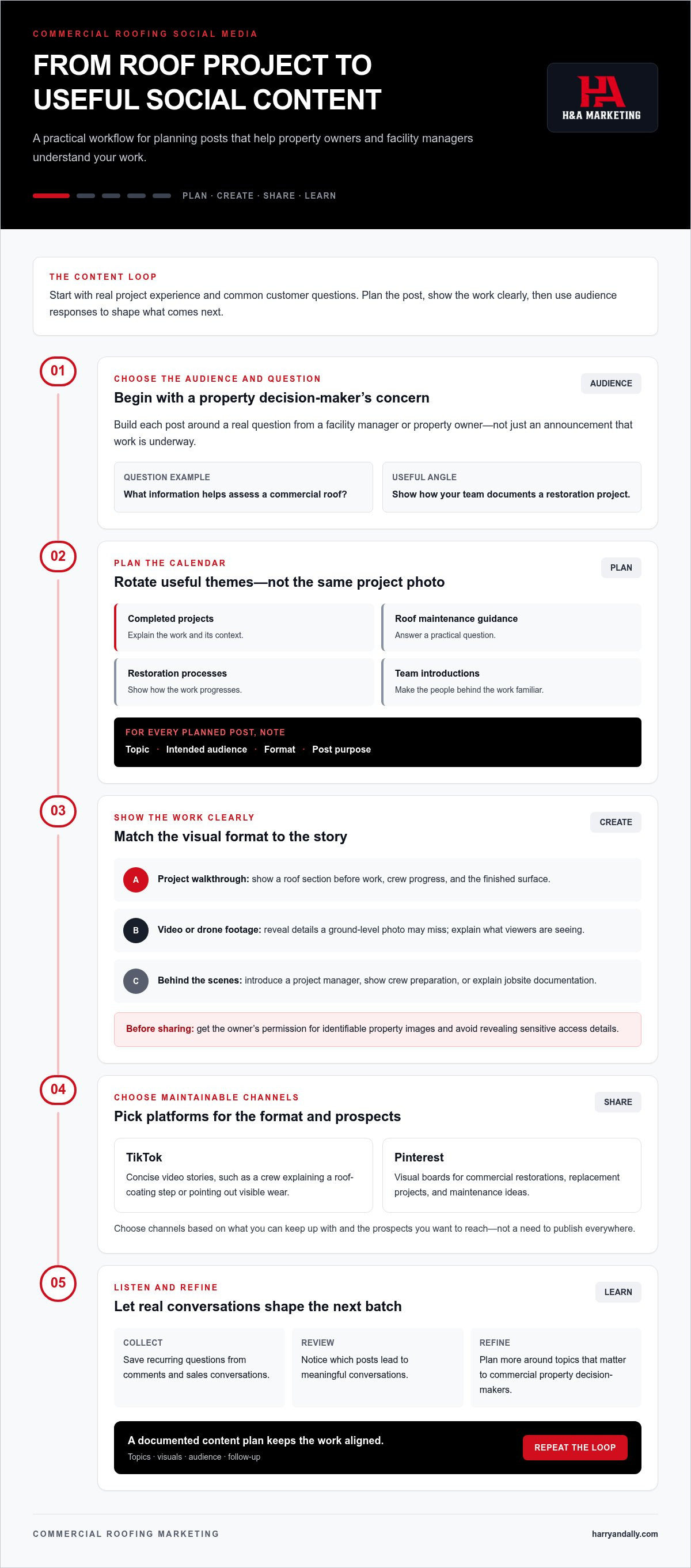
Consistency comes from planning, not posting whenever crews have spare time. Build a calendar around recurring themes: completed projects, roof maintenance guidance, restoration processes, and team introductions. For each post, note its topic, intended audience, format, and next step. Planning also helps you avoid repeating the same roof replacement photo without useful context.
Build each post around a real question from a property owner or facility manager. For example, explain what information helps assess a commercial roof, or show how your team documents a restoration project. Keep the answer focused and practical, then invite readers to ask a relevant question or contact your team about a similar building concern.
Video and drone footage can show details a ground-level photo misses. A short walkthrough might show a roof section before work, the crew’s progress, and the finished surface. A time-lapse can make a long restoration easier to follow. Add a brief explanation of what viewers are seeing, so the project is clear rather than just a sequence of moving images.
Use TikTok for concise video stories, such as a crew explaining a roof-coating step or pointing out visible wear. Pinterest can organize visual examples into boards for commercial roof restorations, replacement projects, and maintenance ideas. Choose platforms based on the formats you can maintain and the prospects you want to reach, rather than trying to publish everywhere.
Behind-the-scenes posts make the people and work behind a proposal more familiar. Introduce a project manager, show a crew preparing materials, or explain how your team documents a jobsite. Get the owner’s permission before sharing identifiable property images, and avoid revealing sensitive access details. Use a specific caption to explain the project context, not simply announce that work is underway.
Use audience responses to improve the calendar. Save recurring questions from comments and sales conversations, then turn them into future posts. A documented social media content plan helps keep topics, visuals, and follow-up aligned. Review which posts lead to meaningful conversations, then refine the next batch around the subjects that matter to commercial property decision-makers.
2. Customer testimonials and responding to negative reviews
A facility manager comparing commercial roofers may want more than project photos. A genuine customer review can offer a first-hand perspective on communication, scheduling, or how a team handled questions during a replacement. Share feedback from Google, Yelp, or another review platform, with enough context for readers to understand the work involved.
Choose reviews that illustrate different parts of the customer experience. One property owner might mention clear updates during a restoration, while another describes how the team explained next steps after reviewing a roof. Preserve the original meaning. A short introduction can identify the service discussed, but don’t turn a customer’s opinion into a guarantee about every project.
Customer stories can add useful detail beyond a quote. With the customer’s approval, describe the building’s challenge, the work your team performed, and the customer’s feedback. For example, explain that a facility manager wanted to understand restoration options, then share their approved comment about project communication. Don’t add technical outcomes or claims the customer didn’t make.
Respond to a negative review calmly and specifically. Acknowledge the stated concern, avoid arguing publicly, and offer a direct way to continue the discussion. If a property owner says project updates were confusing, recognize the concern and say you’d like to discuss the communication. Don’t share private project details or speculate about what happened.
Manage your online reputation as a routine, not a reaction to one complaint. Assign someone to monitor review platforms, prepare replies, and route project questions to the right team member. Keep a record of recurring concerns, such as unclear proposal details or delayed updates. Use that record to guide internal follow-up and identify where customer communication needs attention.
Risks include fake reviews, selective editing that changes a testimonial’s meaning, unsupported claims, and public disputes. Don’t pressure customers to leave only positive feedback. If a review raises a technical issue, acknowledge the concern without debating roof conditions in a public thread. Take sensitive details to a direct conversation and follow up with the team responsible for the work.
Use a consistent voice across Google, Yelp, and social channels. A measured reply can show prospective property managers that your company takes feedback seriously, even when a concern calls for private discussion. Keep responses clear and professional, and don’t promise a specific resolution before understanding the project details. This helps keep the exchange from becoming a public argument.
Organized social media management can help keep review sharing and responses consistent. Treat customer feedback as a way to demonstrate how your company communicates, not as a substitute for explaining its process. Accurate stories and thoughtful replies give commercial prospects a clearer sense of what working with your team may involve.
3. Why social media?
Social media helps commercial roofing contractors stay visible between sales conversations. A facility manager researching roof replacement may look up your company before requesting a proposal. Useful posts make your services, project approach, and commercial focus easier to understand. Treat each platform as a way to build familiarity, not as a substitute for direct sales or a clear website.
Choose platforms based on your audience and the formats your team can maintain. Facebook can carry company updates, project explanations, and community discussions. Instagram suits visual storytelling, such as showing a commercial roof before, during, and after restoration. LinkedIn offers a professional setting for project insights aimed at property managers, facility managers, and commercial real estate contacts.
How can commercial roofers use LinkedIn to reach property managers and facility managers? Share a practical observation about roof planning, restoration, or replacement, and address it to the professionals who manage buildings. Engage with relevant property management posts by adding useful comments instead of sending an immediate sales pitch.
Seasonal guidance gives prospects a reason to revisit your content as building needs change. For example, publish a post before a rainy period explaining what roof information helps your team evaluate a commercial property. Keep guidance focused on what readers can observe and when to discuss concerns with a roofing professional.
Discounts and giveaways need clear, accurate terms. If you run a contest, follow the platform’s promotion rules and explain how to enter, what the offer includes, and when it ends. Make sure the promotion suits your commercial audience. A giveaway aimed at homeowners may attract attention without reaching facility managers or property owners.
What social media rules apply to roofing ads, testimonials, and project photos? Keep advertising claims accurate, present testimonials without changing their meaning, and get the property owner’s permission before sharing identifiable project photos. Follow each platform’s promotion rules for contests or giveaways.
Social posts can also support search visibility when they use specific, natural descriptions. More than 50% of roofing-related searches use long-tail keywords, so address detailed needs in captions and linked website content. Phrases such as “commercial roof coating for a warehouse” describe an actual service and property type more clearly than generic wording.
Show completed projects with details that help decision-makers assess relevance. Identify whether the work involved commercial restoration, coating, or replacement, then explain the context without disclosing sensitive information. Property managers responsible for similar buildings can better understand your experience when a post describes the project type and work involved.
Match the message to the audience. A property owner considering replacement needs different information from a facility manager planning maintenance. Specific content helps each reader see whether your company handles the commercial roofing work they’re considering.
4. Paid ads and organic reach through local hashtags
Paid social can put a commercial roofing offer in front of people in your service area. Start with one campaign goal, such as attracting facility managers interested in roof restoration, then align the audience, creative, and landing page. A broad “roofing services” ad may attract homeowners, so clearly name the commercial service and intended property audience.
How much should a commercial roofing company spend on social media marketing? Set a working budget based on your campaign objective, available marketing funds, target area, and ability to follow up. Start with a defined test, then compare qualified inquiries and sales conversations before adjusting spend.
Social media marketing and lead costs for commercial roofers depend on the audience, competition, creative, offer, and conversion path. A campaign that generates clicks but sends visitors to a generic page may produce different lead quality from one focused on commercial roof restoration with a relevant inquiry form. Track these factors instead of treating one cost-per-lead figure as universal.
To target campaigns by service area, define the locations your crews can serve, then create separate audiences or campaigns for distinct markets. For example, run one campaign for commercial roof replacement prospects in a metro area and another for coating projects in nearby communities. Review lead locations and project fit, then refine geographic targeting to match your pipeline.
Organic posts can reinforce local relevance without relying on paid reach. Use location names naturally in captions, describe the commercial project, and add focused hashtags such as #RoofingTips, #RoofMaintenance, and #RoofRepair. Pair a local tag with useful content, such as a photo of a completed warehouse restoration and a brief explanation of the work.
Hashtags alone won’t qualify a prospect. Make each post specific by identifying the building type, service, and next step. “Commercial roof coating project in [City]” offers more context than a caption filled with generic tags. Don’t add unrelated city names to chase reach; the content should match the market and work your team can pursue.
For paid campaigns, test one meaningful change at a time. Compare a project-focused video with a clear roof assessment offer, or test two versions of a restoration message. Keep the audience and destination consistent during each comparison. Then review inquiries for building type, location, project need, and sales relevance, not just impressions or reactions.
Use social media campaign planning to keep paid promotion and organic posts aligned. When the campaign promises a commercial roof solution, send prospects to a page that explains that service and provides a clear inquiry step. That connection helps distinguish attention from a genuine opportunity.
5. Setting social media marketing goals and tracking performance
Social media marketing for commercial roofers works best when goals connect to business outcomes, not just platform activity. Choose an observable result, such as qualified inquiries for roof restorations, visits to a replacement-service page, or conversations with facility managers. A clear goal helps you decide what to publish and which signals matter.
Start by mapping the path from post to project opportunity. A facility manager might see a restoration case study, visit your website, and submit an inquiry later. Record the post or campaign that began the interaction, then track whether the inquiry fits your service area, building type, and project focus.
Separate visibility measures from lead measures. Reach, video views, comments, and profile visits show whether people engage with your content. Form submissions, calls, and qualified sales conversations show whether that attention is contributing to the pipeline. For example, a popular roof walkthrough can attract views without generating relevant commercial inquiries.
Use a consistent tracking process for every campaign. Give posts a clear destination, such as a commercial roof coating page or project inquiry form. Add campaign tags to links where your analytics tools allow, and ask new prospects how they heard about your company. Compare that information with website analytics and lead records.
Define a qualified lead before reviewing results. An inquiry about a commercial property and a service you provide differs from a residential repair request. Note the prospect’s location, property type, requested work, and next sales step. This context shows whether a campaign attracts the projects your team wants, not just more contacts.
Commercial roofing decisions can take time, so don’t judge a campaign only by immediate inquiries. Track progress through the sales process, including scheduled conversations, site assessments, proposals, and follow-up. If a post generates interest but few relevant opportunities, review its audience, message, landing page, and response process before increasing promotion.
Review performance regularly and record the decision each review informs. For instance, if a roof restoration video draws relevant profile visits but few inquiries, test a clearer next step in the caption. If a campaign produces poor-fit leads, adjust the audience or clarify that the offer concerns commercial properties.
Keep a simple report with the goal, content or campaign, audience, engagement, inquiries, lead quality, and resulting sales activity. That record helps distinguish a useful post from a vanity metric and guides future investment. Track how social media marketing for commercial roofers contributes to the broader pipeline, then use those findings to refine the next campaign. A coordinated commercial roofing marketing strategy can connect social activity with the rest of your lead pipeline.
Discuss a measurable commercial roofing marketing strategy
H&A Marketing: Website Design
H&A Marketing helps commercial roofing contractors connect social activity with a website designed to support the next step. If posts earn attention but prospects can’t quickly understand your restoration, replacement, or coating services, focused website design can make your capabilities and inquiry path clearer.
H&A can also align that experience with search engine optimization, lead generation, and logo design and branding. The aim is a connected presence: social content draws attention, service pages explain your work, and clear inquiry options help turn relevant interest into sales conversations.
If you’re ready to strengthen the connection between social media and your project pipeline, visit H&A Marketing’s commercial roofing marketing page or contact H&A Marketing.
Turn your marketing activity into a clear next step
Choose the commercial projects you want your company to be known for, then make that priority visible across your marketing. A contractor focused on restoration, for example, can strengthen its position by aligning its message, project examples, and online presence around that work. Clear priorities help your team make purposeful decisions.
That’s the strategic role of social media marketing for commercial roofers: supporting recognition throughout the long sales cycle, not just producing a post or immediate inquiry. Treat each interaction as part of the prospect’s experience, from first seeing your company to deciding whether to discuss a building’s needs. A coordinated plan keeps that experience consistent.
H&A Marketing works with commercial roofing contractors to connect brand presence with business goals. Take the next step when you’re ready to shape a clearer direction for your company’s growth.
Start your next project with a more focused marketing plan.
Frequently Asked Questions
Why social media?
Social media gives commercial roofing companies a public place to show how they think and work. A facility manager may not need a replacement today, but a clear explanation of restoration options can make your company easier to remember later. Use each post to reinforce a capability, answer a real prospect concern, or make your project approach more familiar. This supports credibility between direct sales conversations.
Which social media platforms work best for commercial roofing companies?
Facebook and Instagram work well for company updates and visual project content, while LinkedIn can help you engage with commercial property professionals. Choose platforms based on the people you want to reach and the content your team can produce consistently. For example, share a project overview on LinkedIn, then adapt its photos and concise process details for Instagram instead of copying the same post everywhere.
What social media advertising strategies generate commercial roofing leads?
Build campaigns around a defined commercial service and a useful next step. An ad about roof restoration, for instance, can lead to a page explaining the process and inviting property owners to describe their building’s needs. Align the message, audience, and landing page. Review incoming inquiries with your sales team to identify which campaign details attract serious commercial prospects rather than unrelated requests.
How can commercial roofers measure social media marketing ROI and lead quality?
Connect campaign activity to sales records, then assess opportunity quality and progress. Record each inquiry’s source, property type, requested service, and sales status. If a prospect first engaged with a project post and later submitted a website form, note that influence in your tracking. Compare these records with campaign effort to see whether social activity supports suitable opportunities, even when it wasn’t the final touchpoint.
What social media posting schedule works for commercial roofing businesses?
Use a repeatable schedule your team can sustain alongside active projects. Rotate project lessons, seasonal roof guidance, team updates, and answers to common facility-manager questions. Plan posts around available jobsite material and sales conversations, then prepare drafts in batches. If weather or project demands disrupt production, a prepared educational post can keep your presence active without needing a new photo or video.
