

Article by
Harry Stanley III
Harry Stanley III is a construction marketing strategist and fractional CMO at H&A Marketing. He has helped construction companies grow through website strategy, SEO, paid advertising, branding, lead generation, CRM systems, and professional content. His past work includes helping Meraki Solar generate an additional $3.7 million in revenue in his first year and supporting American Builders as a fractional CMO. Today, Harry works directly with custom home builders and construction companies to build marketing systems designed to generate qualified leads and measurable growth.
A roof proposal is stronger when it shows how the plan fits the building, not just which system it specifies. The most useful commercial roofing case studies connect project constraints to decisions: how a team handled a retrofit, addressed energy-code requirements, worked through a challenging climate, or coordinated a large roof area. They help owners, facility managers, and bid reviewers see how the proposed scope fits the building’s needs.
Buyers need more than broad promises. They want evidence that a contractor understands occupied facilities, complex scopes, and the demands of commercial roof restoration or replacement. A clear project example explains the challenge, the approach, and the documented result without relying on sales language. It also gives your sales team a concrete way to discuss similar projects with prospects.
This article explores commercial, industrial, school, and municipal roofing projects across the United States. You’ll see what each example can communicate about planning, system selection, energy performance, weather exposure, safety coordination, and scale, along with ways to turn those lessons into case studies that strengthen your bids.
Key Takeaways
- Show the building challenge, roofing approach, and project outcome so bid reviewers can see how the work addressed real constraints.
- Use examples from industrial, school, municipal, and commercial properties to demonstrate experience with different scopes and facility needs.
- Explain how energy goals, code requirements, and climate conditions shaped roofing decisions instead of listing materials without context.
- For large roofs, make the scale and coordination demands clear to help prospects understand the project’s complexity.
- Turn completed restoration and replacement projects into focused marketing content that helps qualified prospects assess your capabilities.
Commercial, industrial, school, and municipal projects
Roofing examples become useful bid evidence when they show the building, constraint, work, and documented outcome. A school roof replacement has different operational demands from an industrial facility restoration. A strong project record names the property, explains the roofing scope, and shows how scheduling accounted for the site’s use. Those details help owners compare the proposed approach with a real building challenge.
Michigan school restoration: Harbor Springs Middle School
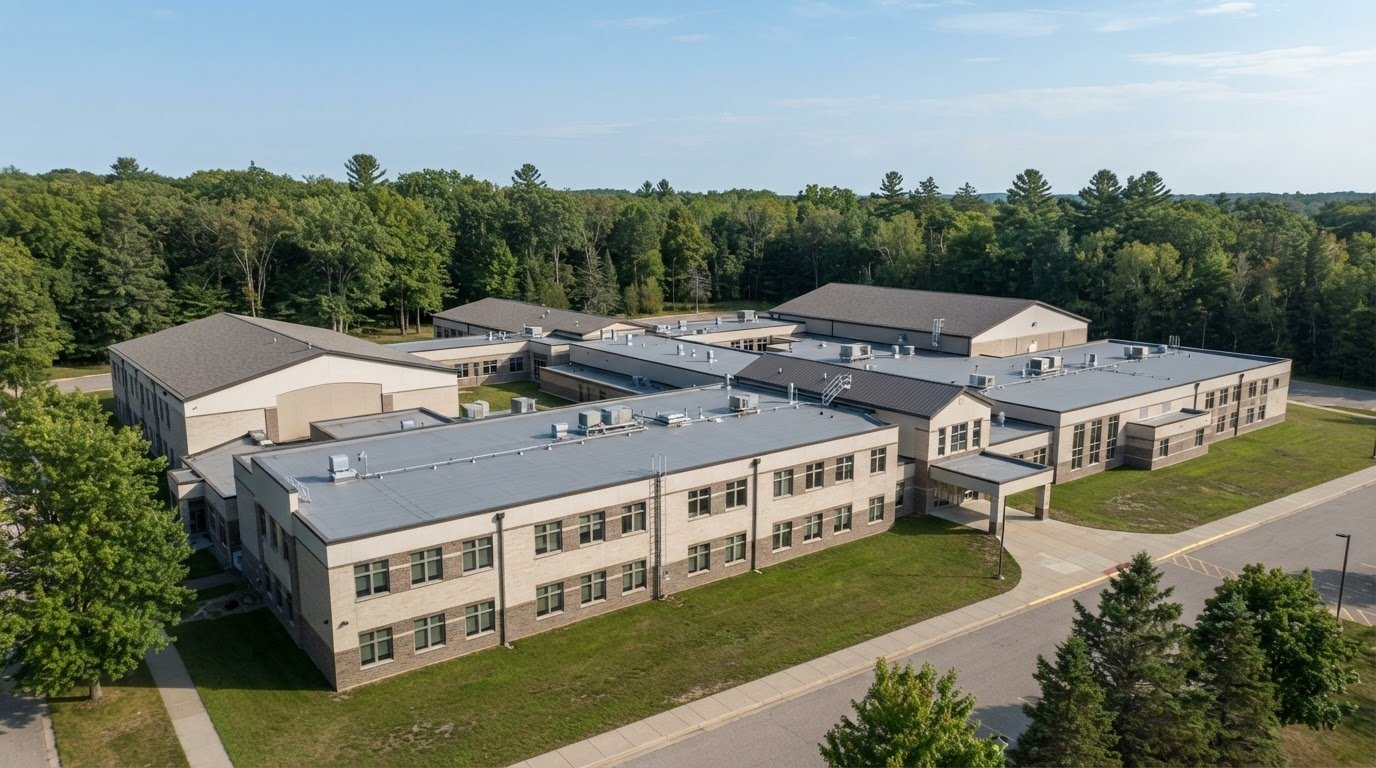
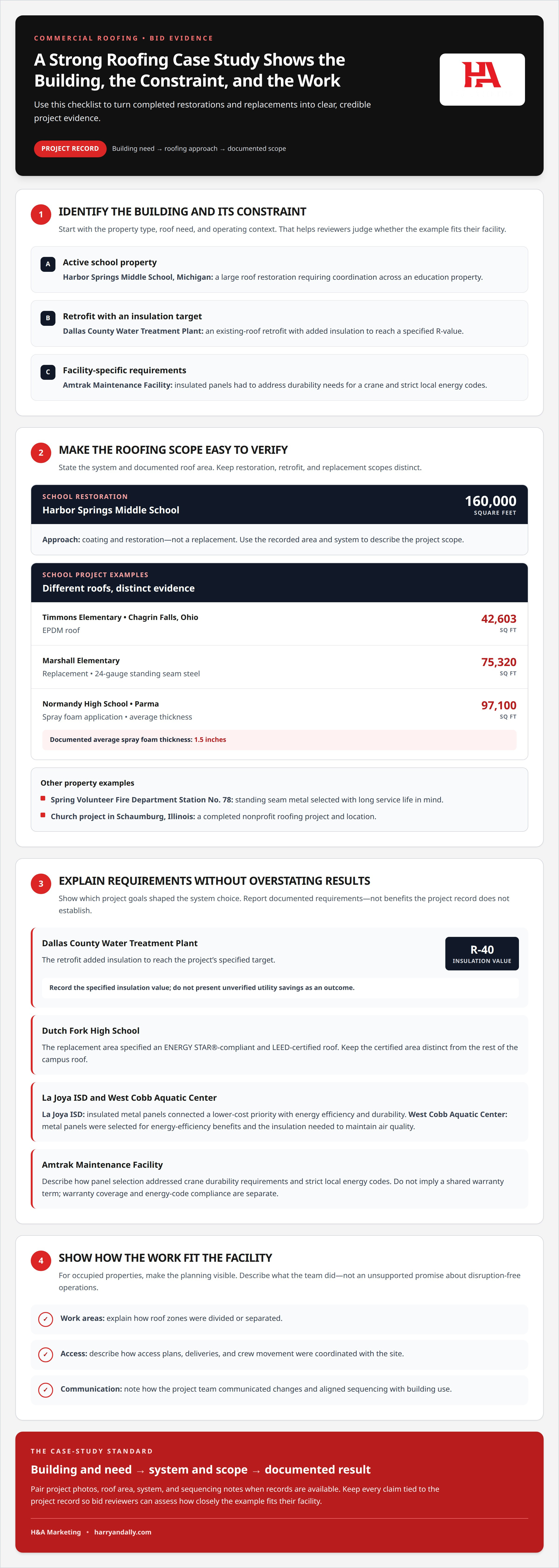
Harbor Springs Middle School in Michigan needed work across a 160,000-square-foot roof. The project used a coating and restoration approach, rather than describing the work as a replacement. Its documented result is a large school roof restoration with a defined area and system. For a bid, that scope helps illustrate experience coordinating work across an active education property. A case record can also explain how crews divided roof zones and communicated access plans.
School projects: match the scope to the building
School roofs vary in area and specified system. Timmons Elementary in Chagrin Falls, Ohio, had a 42,603-square-foot EPDM roof. Marshall Elementary’s replacement used 24-gauge standing seam steel across 75,320 square feet. Normandy High School in Parma involved 97,100 square feet, with an average of 1.5 inches of spray foam. Each example gives bid reviewers different evidence: membrane scope, metal replacement, or foam application.
Present each case in three steps: describe the building and roofing need, identify the work performed, and state the documented scope or outcome. Avoid claiming energy savings, fewer disruptions, or longer service life unless project records support those results. For school and nonprofit roofing work, include the operational considerations that shaped access, sequencing, and communication.
Municipal and nonprofit properties
Public-serving buildings can show how project constraints shape a roofing plan. Spring Volunteer Fire Department Station No. 78 selected a standing seam metal roof with long service life in mind. A church roofing project in Schaumburg, Illinois, was completed in Fall 2009. The first example identifies a system-selection priority; the second gives a completed nonprofit project and location. Together, they can help explain how project needs and building use inform scope.
Scheduling around facility operations
For an occupied school, municipal facility, or nonprofit property, make scheduling visible in the case study. Show how the work area was separated, how access was coordinated, and how the project team communicated changes. These are planning steps, not promises that operations continued without interruption. On a school project, describe how roof zones aligned with building access and site schedules. At an operating facility, explain how deliveries and crew movement fit the site plan. Specific details make the proposal easier to evaluate.
Michigan contractors can use Harbor Springs as a regional example, while keeping the claims tied to its recorded scope. Pair project photos, roof area, system, and sequencing notes when available. That gives bid reviewers a clear basis for assessing whether the example fits their facility.
Energy efficiency and energy-code requirements
Energy goals can shape insulation, panel selection, and replacement scope. Warranty coverage is separate from energy-code compliance. These examples identify project requirements, not a shared warranty term. Requirements vary by location and project. At the Amtrak Maintenance Facility, insulated panels needed to meet durability requirements for a crane and strict local energy codes.
Retrofit decisions: Dallas County Water Treatment Plant
The Dallas County Water Treatment Plant faced a retrofit of its existing roof. The project added insulation to reach an R-40 insulation value. That documented target gives reviewers a concrete way to understand the project’s energy-related scope. It also shows why a retrofit case should distinguish added insulation from a full roof replacement. The result to report is the specified insulation value, not an unverified claim about utility savings.
For a budget discussion, explain how the selected scope addressed the building’s stated needs. Distinguish documented work, such as added insulation, from projected benefits the case cannot substantiate. This keeps the proposal clear and makes comparisons more useful. When project records support it, show which existing conditions shaped the retrofit, such as roof assembly limits or the need to retain portions of the building system.
Certified roofing and school projects
Dutch Fork High School specified an ENERGY STAR®-compliant and LEED-certified roof for its replacement area. The project required a roof that met stated certification goals, so a compliant, certified system was specified for that area. The documented result is the project’s stated roof designation. Keep the certified replacement area distinct from the rest of the campus roof in the case study.
La Joya ISD used insulated metal panels to balance lower costs with energy efficiency and durability. This example connects a budget priority with material selection without claiming a specific savings figure. West Cobb Aquatic Center selected metal panels for their energy-efficiency benefits and the insulation needed to maintain air quality. Together, these examples show how the operating needs of a school or aquatic facility can influence roof decisions.
Make performance claims precise
In a bid narrative, connect each stated goal to the actual scope. Name the building, describe the specified system, and identify the documented requirement. For Amtrak, explain the crane-related durability need and local energy-code constraint. For Dallas County, state the R-40 insulation value. For Dutch Fork, identify the certified replacement area. These details make an efficient proposal easier to assess without promising outcomes the project record does not show.
Keep the budget explanation equally specific. Show how the chosen system addressed the project’s stated priorities, such as La Joya ISD’s cost-conscious selection or West Cobb’s insulation need. Don’t assign a payback period or savings amount without project documentation. A clear separation between requirements, work performed, and measured results helps owners understand the decision behind the roof assembly.
Roofing systems for challenging locations and climates
A climate-specific roof proposal should explain how site conditions shape the assembly, not simply name a material. Wind exposure, temperature swings, moisture, drainage, and rooftop equipment can affect design priorities. Document the existing roof and the conditions the project must address, then connect each proposed system choice to those recorded needs. This gives owners a practical basis for comparing scopes without treating a material label as proof of performance.
Match system criteria to site conditions
For a commercial building exposed to strong winds, explain how the design addresses attachment and edge details. Where recurring moisture is a concern, clarify how drainage and vulnerable transitions factor into the scope. These are evaluation points, not automatic claims about a roofing product. Keep the project narrative tied to its actual assessment and selected design. A credible climate-focused case explains the concern, the decision, and the documented work.
Compare TPO, PVC, EPDM, and SBS against the project requirements and specified assembly. Record the existing substrate, proposed attachment approach, seams or transitions, and details around rooftop equipment. These factors explain system selection without claiming that one membrane suits every climate. For example, a bid can show how its scope addresses drains and penetrations, then identify the inspections or project records that support the work.
Describe built-up and hybrid assemblies accurately
Built-up roofing and hybrid systems need especially clear scope descriptions. For built-up work, identify the layers or repair areas documented for the project. For a hybrid assembly, name each component and explain its role only when project records establish it. Avoid using “hybrid” as a catch-all for a roof with multiple products. Precise terminology lets a facility team compare proposed assemblies without confusing restoration, replacement, and coating scopes.
Climate can also affect project sequencing. A case record should explain how the work plan handles weather-sensitive installation steps and protects exposed areas during active work. Describe the actual sequence, materials, and site conditions documented for the job. Don’t imply that a system suits every weather window or that a particular installation method eliminates weather risk. Clear limits make the proposal more useful to an owner weighing options.
Make the comparison useful to the buyer
For each system under consideration, present the same decision points: existing roof condition, exposure concerns, assembly details, and project scope. Then explain why the selected approach fits the documented conditions. A contractor can use this structure for TPO, PVC, EPDM, SBS, built-up, or hybrid projects without overstating performance. It keeps the discussion focused on the building rather than broad claims about materials.
When a location presents several constraints, separate them in the proposal. Identify wind or moisture concerns, note relevant roof details, and explain the design response to each. This gives reviewers a clear path from site condition to roofing decision, with every performance claim connected to project evidence.
Large-scale industrial and warehouse roofs
Industrial roof bids need to make scale and scope easy to evaluate. State the building type, roof area, existing conditions, and documented work. Then show how the proposal accounts for roof features, site access, and facility operations. Project examples can support different parts of that story, but each should relate to a specific claim. A large roof area demonstrates scale, but it doesn’t establish the schedule, crew size, or system suitability by itself.
Document roof features and scope
The IGLOO Coolers facility in Katy, Texas, covered more than 850,000 square feet, with 130 skylights and 60 penetrations. Those details make roof complexity visible alongside area. A case study can use this example to show why bids should identify rooftop features and explain how they affect the proposed scope. Avoid implying a particular installation method unless project records describe it.
Project Sugar involved 818,300 square feet at an industrial park developed on 70 acres of former farmland. The documented area and site context help establish the project’s scale. For a bid narrative, distinguish the roof scope from the larger property and development. That keeps reviewers focused on the work being proposed and avoids suggesting that the roof area represents the entire site.
Use execution records to explain delivery
MTD’s project covered a 384,000-square-foot roof. Three spray foam robots and a 14-person crew completed the work in 52 days. Together, those documented details describe the project’s scale, equipment, staffing, and duration. A proposal can use this kind of record to explain the delivery approach, while keeping the example specific to the project rather than treating its timeline as a standard for other roofs.
The JM manufacturing facility retrofit in Fernley, Nevada, covered approximately 190,000 square feet. Use that example to establish experience with a substantial manufacturing retrofit, without attaching an unrecorded crew plan or schedule. The MJ Dalsin storage facility presents a different project context: its storage capacity expanded from 10,000 square feet to 36,000 square feet. Keep facility growth distinct from roofing scope unless the records connect them.
Connect project proof to bid decisions
A Kansas City commercial roofing project covered around 13 acres. Its acreage offers another scale reference, but area alone cannot show how the work was sequenced. For each example, separate verified scope details from proposed methods. Then describe how the current bid addresses access, roof features, and facility use. This helps owners compare relevant experience without assuming one project’s conditions match another’s.
Before presenting an industrial example, organize its evidence into building context, documented scope, and project-specific execution details. Use only records that support each statement. This structure makes large-roof experience clear and keeps the proposal focused on the prospect’s actual requirements.
What are notable commercial roofing case studies in the United States?
Notable projects show how roof scale, building use, and site constraints affect scope. A useful case names the property, explains the challenge, identifies the work, and states the documented result. The examples below cover industrial, community, educational, and commercial buildings. They offer different kinds of evidence, from roof area to system choice or installation constraints.
Large commercial and industrial projects
A Florida roofing project coordinated by Johns Manville and Barber and Associates covered 23 acres. Its situation was a roof scope measured across a broad site. The documented project result is the acreage covered. That scale helps explain why a proposal should make roof area and work zones clear. It doesn’t, by itself, prove a particular schedule or production rate.
At Planet Hollywood’s Miracle Mile Shops, reroofing covered 300,000 square feet. The situation was a large retail property needing reroofing. The documented result gives reviewers a substantial area and named location to compare with their own project. For a bid example, explain the scope and the building’s use, then connect those details to the proposed work. Avoid adding operating outcomes without project records.
Occupied properties and safety planning
Covenant Living’s roofing work took place in an active community with a three-story drop. The documented challenge called for extra safety measures. This case can show how site conditions influence planning, especially when residents and daily operations remain part of the environment. State the constraint and documented response. Don’t claim disruption was eliminated unless project records support that result.
At Egypt Valley Country Club, the clubhouse ranged from one to four stories. Its varying height gives the example a specific access and roof-layout context. A project narrative can explain how crews planned around the property’s different levels, if those steps are recorded. That detail helps reviewers understand the site challenge rather than seeing only a project name.
Distinctive institutions and documented outcomes
The North Carolina Botanical Gardens Education Center used metal panels that helped it qualify for LEED platinum certification. The project had a stated certification outcome. The documented action was selecting metal panels, and the result was their contribution to qualification. Keep the wording precise: the panels helped the building qualify, but don’t suggest they alone secured certification.
The Audubon National Wildlife Refuge headquarters selected metal roof panels to support functionality and sustainability. Its case communicates the project’s priorities and system choice, rather than a quantified performance result. St. Vladimir’s Church offers a different record: its spray foam roof was installed in 1992 and had been recoated for the second time. The project applied acrylic base and intermediate coats at 20 mil DFT. Together, these cases show why specific scope details make examples useful.
Use project evidence that matches the prospect’s building and decision criteria. A clear commercial roofing marketing strategy can help present those documented examples to commercial roofing buyers.
H&A Marketing
H&A Marketing helps commercial roofing contractors present project experience clearly and build a stronger path to qualified inquiries. If your restoration or replacement work is documented but not supporting bids online, H&A can shape that experience into focused website content and a consistent brand story. Search Engine Optimization can help prospects find relevant project pages, while lead generation connects that visibility with inquiry opportunities.
The goal is a clear marketing system: show the work, explain the project fit, and make the next step easy for facility managers and property owners. H&A can align your website, branding, SEO, and lead generation around the commercial roofing work you want to win.
Contact H&A Marketing to discuss your commercial roofing marketing.
Turn project experience into your next opportunity
Use project evidence as the starting point for a better conversation about your next bid. Choose examples that match the prospect’s building type and priorities, then make the scope easy to understand. Keep the story grounded in documented work and connect it to the roofing challenge under consideration. This gives facility managers and property owners a clearer way to evaluate your experience.
Commercial roofing case studies can keep working after a proposal is sent. With a clear structure, project examples can support sales conversations, website content, and future outreach. H&A Marketing can organize that proof through Website Design, Logo Design & Branding, and Search Engine Optimization, making your capabilities easier to find and understand.
Start with projects you can document. A clear story helps the right prospect see where your experience fits.
Keep showing the work behind your proposals and make every relevant project count.
Frequently Asked Questions
What commercial roofing materials and systems were used in successful projects?
Projects used systems such as EPDM, standing seam metal, spray foam, coatings, and insulated metal panels. The right choice depends on the existing roof, building use, performance priorities, and project scope. For example, a retrofit may preserve parts of an existing assembly, while a replacement can change the system. A useful project comparison names the installed system and explains which building need it addressed.
How much did commercial roofing projects cost per square foot?
There isn’t one cost per square foot that applies to every commercial roofing project. An estimate depends on the selected system, roof condition, tear-off or restoration scope, insulation needs, drainage details, access, and rooftop features. A roof with numerous penetrations or occupied areas may require different planning from an open warehouse roof. Compare proposals by matching their included scope, materials, and project conditions, not by area price alone.
What energy savings did cool roofs or reflective roofing deliver?
A project’s energy savings depend on its existing roof, insulation, building use, climate, and energy consumption. A reflective surface alone doesn’t establish a measured savings outcome. To assess performance, compare utility use before and after the work while accounting for weather and changes in building operations. Project specifications can document energy goals or selected materials, but those details should remain distinct from measured energy results.
How long did commercial roofing installations take and what challenges arose?
Installation duration depends on roof area, system, site access, weather windows, and whether parts of a facility need to remain operational. Large projects also require sequencing around skylights, penetrations, equipment, and deliveries. A clear schedule divides work into areas, identifies access constraints, and coordinates communication with building staff. Weather delays or unexpected roof conditions can affect the sequence, so proposals should explain how work phases are organized.
What were the measured lifespan and maintenance costs of commercial roofs?
Roof lifespan and maintenance costs vary with the installed system, workmanship, exposure, drainage, and upkeep. The project examples don’t provide a common lifespan or maintenance-cost measure for comparing systems. For a useful evaluation, keep records of inspections, repairs, coating work, and replacement decisions for each roof. That history helps owners understand maintenance needs over time without treating one building’s experience as a guaranteed result for another.
How did contractors address leaks, weather damage, and business disruption?
Effective project planning starts by locating affected areas, protecting vulnerable openings, and sequencing work to limit exposure during construction. At occupied facilities, crews can coordinate access routes, deliveries, and work zones with building operations. A case study should describe the actual response to leaks or weather damage and document how the team handled the site. Avoid claiming operations continued without interruption unless project records support that outcome.
What warranties and building-code requirements applied to these projects?
No common warranty term is identified, and warranty coverage is separate from energy-code compliance. Requirements varied by project, including strict local energy codes at the Amtrak Maintenance Facility and an ENERGY STAR®-compliant, LEED-certified roof for Dutch Fork High School’s replacement area.
