
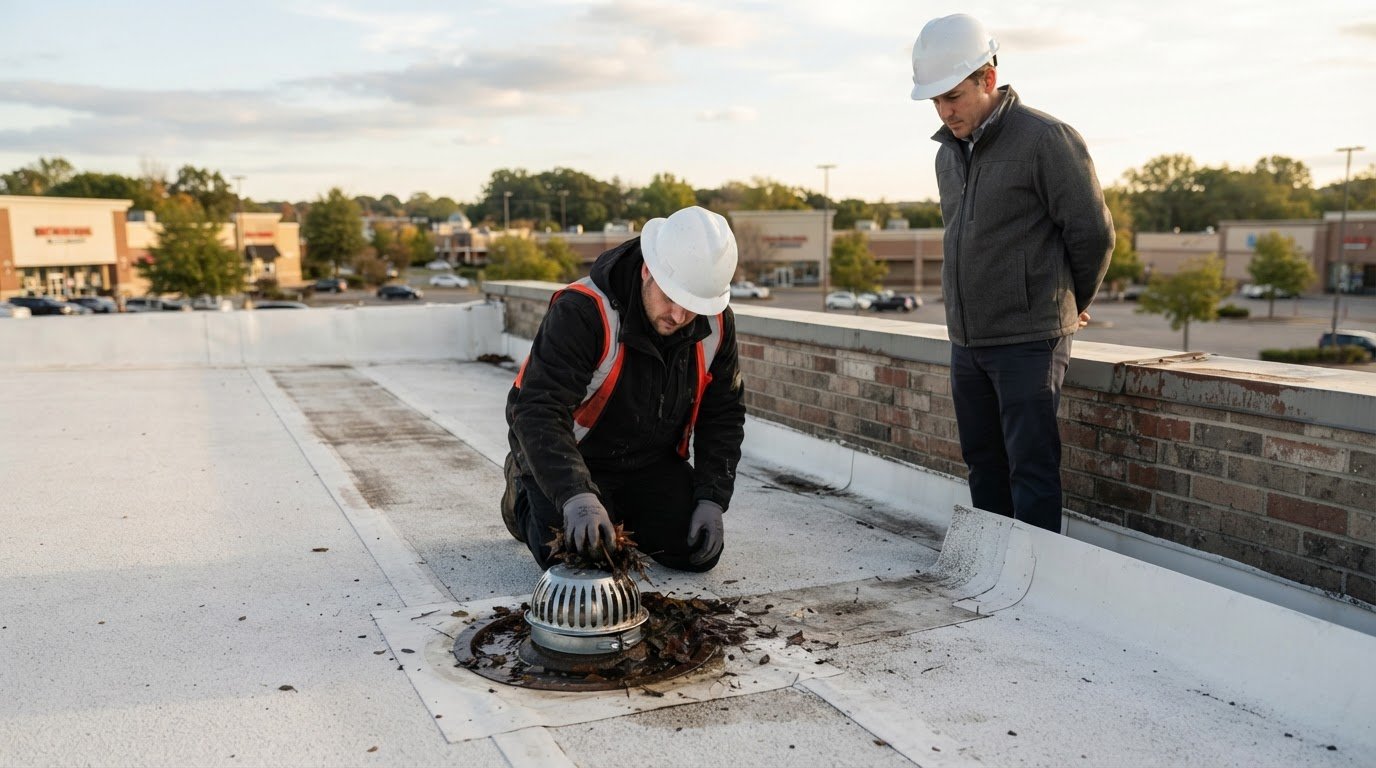

Article by
Harry Stanley III
Harry Stanley III is a construction marketing strategist and fractional CMO at H&A Marketing. He has helped construction companies grow through website strategy, SEO, paid advertising, branding, lead generation, CRM systems, and professional content. His past work includes helping Meraki Solar generate an additional $3.7 million in revenue in his first year and supporting American Builders as a fractional CMO. Today, Harry works directly with custom home builders and construction companies to build marketing systems designed to generate qualified leads and measurable growth.
Property managers hire roofers they trust to protect their buildings and communicate clearly. Learning how to get property manager clients for roofing starts with demonstrating commercial experience, offering a low-risk first step such as maintenance, and following up consistently. Strong references and credible online reviews help build that trust.
Winning these accounts takes more than a one-time pitch. Property managers may oversee multiple buildings, so a successful first project can lead to a longer-term relationship. Show that you understand their priorities: roof condition, planned repairs, replacement timelines, and clear documentation.
This guide covers practical ways to build credibility, use maintenance agreements to start relationships, target property management firms, and support outreach with social advertising and online reviews. You’ll learn how to move from first contact to qualified commercial roofing opportunities.
Key Takeaways
- Build confidence with commercial references, clear project documentation, and follow-through that shows you understand property managers’ priorities.
- Use roof maintenance contracts as a practical first step toward ongoing relationships and future restoration or replacement work.
- Focus outreach on property management firms whose building portfolios align with your commercial roofing capabilities, then nurture those accounts consistently.
- Match social advertising to the audience: use Facebook and Instagram to reach homeowners, and LinkedIn to connect with facility managers and commercial decision-makers.
- Make your website and online reviews reinforce the same message: your team is credible, experienced, and ready to handle commercial roofing projects.
1. How can a roofing business build trust with potential commercial clients?
Trust grows when a commercial roofer makes the hiring decision easier to justify. For a six- or seven-figure project, a property manager needs more than a persuasive pitch. Prepare insurance and bonding documents, examples of similar commercial buildings, and references from commercial clients. For a warehouse restoration, for example, share relevant project photos and explain the work, process, and outcome without overstating your role.
Vendor approval is usually a process, not a single sales conversation. Contact the property management firm to ask about its onboarding procedure, then submit the requested business, insurance, bonding, and reference materials in the required format. Keep documents current, name files clearly, and identify one person who can answer questions.
Referrals can open doors, but build them on sound relationships. Ask satisfied commercial customers whether they’re comfortable serving as references, then make introductions relevant to a property manager’s needs. A useful referral explains why your company is a fit, such as experience with occupied commercial properties or roof restoration. Track introductions, conversations, site visits, and qualified leads, not just names collected.
Past customers can also become a steady referral source. After a project, send a brief thank-you and invite the customer to share your contact with peers facing a similar roofing issue. A gift card or gas card for a referral that leads to a contract may be an option, but distinguish residential referrals from commercial outreach. The Real Estate Settlement Procedures Act (RESPA) prohibits kickbacks for referrals in home sales. Don’t structure compensation for real estate agent referrals in a way that conflicts with that rule.
Real estate agents can be useful relationship partners when roof condition affects a transaction. Offer practical guidance on documenting visible concerns and explain when a commercial roofing assessment may help. Keep the partnership focused on useful information and appropriate introductions, not payments for home-sale referrals. Handle commercial project referrals through a separate, documented process.
For every referral, set a clear next step: acknowledge the introduction, contact the prospect, and record the outcome. If a property manager refers you to a second building after a successful inspection, note what earned that confidence, such as timely updates or organized documentation. This creates a repeatable way to build trust, nurture leads, and improve referrals without vague promises.
2. Roof maintenance contracts as a way to build client relationships
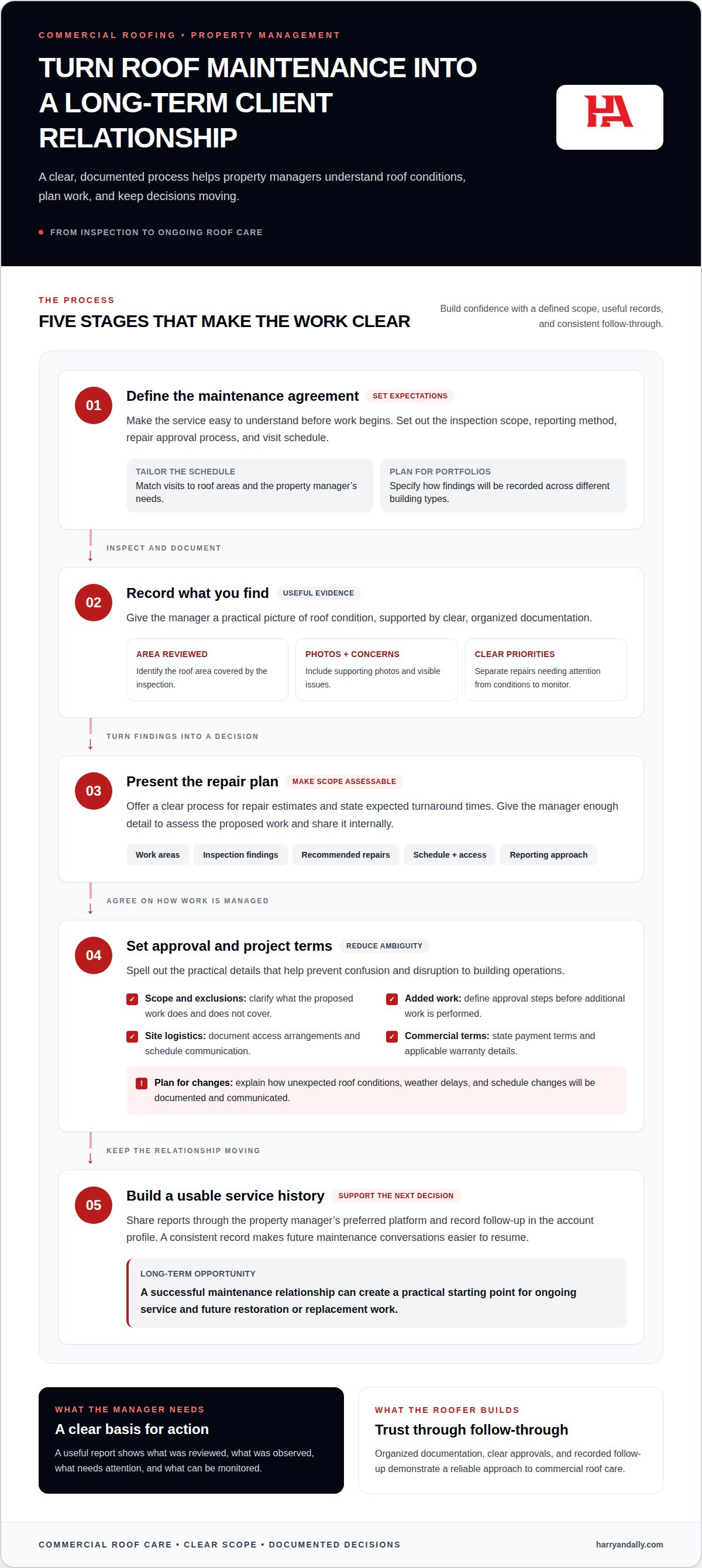
A maintenance agreement gives property managers a defined way to monitor roof conditions before restoration or replacement becomes urgent. Set out the inspection scope, reporting method, repair approval process, and visit schedule. Tailor the schedule to the property’s roof areas and management needs. For a portfolio with several building types, specify how you’ll record findings so managers can compare issues across sites.
Offer property managers a clear process for inspections and repair estimates, including expected turnaround times. A useful report identifies the roof area reviewed, visible concerns, supporting photos, and recommended next steps. Separate repairs that need attention from conditions to monitor. This gives the manager a practical basis for deciding what to address and what information to share internally.
What should a roofing contractor include in a property management proposal or bid? Identify the work areas, inspection findings, recommended repairs, schedule, access requirements, and reporting approach. Clearly state exclusions, approval steps for added work, payment terms, and applicable warranty details so the property manager can assess the proposed scope.
What are the risks and contract terms in roofing work for property managers? Unclear scope, access arrangements, weather delays, change orders, and unexpected roof conditions can lead to disputes or disrupt building operations. Define how you’ll document unexpected conditions, communicate schedule changes, and get approval before performing additional work.
Roof concerns can also affect a home sale when an inspection identifies damage or maintenance needs. A seller may need to understand whether a repair can address the finding or whether the issue needs further assessment. For a roofing contractor, explain observations in plain language and distinguish visible conditions from conclusions that require additional evaluation. Clear documentation helps the seller and transaction team discuss next steps.
A pre-listing roof inspection gives a seller a chance to learn about visible concerns before a buyer’s inspection. Record the areas reviewed, include dated photos, and describe recommended repairs without making unsupported claims about the roof’s remaining life. A focused report helps an agent communicate findings accurately and gives the seller a clearer basis for planning.
Digital roof measurements can help organize roof areas for inspection planning and proposal preparation. Use them alongside site observations, and make sure the final scope reflects conditions documented at the property. Share reports through the property manager’s preferred platforms and record follow-up in the account profile. This creates a consistent service history and makes future maintenance conversations easier to resume.
3. Account-based outreach to property management firms
Account-based outreach focuses roofing lead generation on firms whose properties match your commercial work. A property management firm may oversee a dozen buildings, making a well-developed relationship valuable beyond a single project. If you’re deciding how to get property manager clients for roofing, start by identifying the property types your team serves well, such as multifamily or industrial buildings.
Build a targeted list by researching local management firms, their public property portfolios, and the types of buildings they oversee. Record each firm, relevant decision-makers, property mix, and a specific reason to connect. Use weeks 1-2 to research the local market and prioritize accounts with a clear fit. Keep the list focused enough that each prospect can receive a relevant introduction.
Cold outreach should explain why you chose that account. Address the property manager by name, mention a relevant building type, and describe the commercial roofing work your team handles. A short email might say you work on occupied multifamily properties and ask who coordinates roof planning. Give the recipient one clear next step, such as a brief conversation about an upcoming restoration or replacement.
Frame your roofing services around the manager’s priorities, not a generic list of capabilities. For a firm overseeing retail properties, explain how your proposal makes the work scope, building access needs, and communication plan easy to review. Include project materials that demonstrate experience with similar buildings. Follow up with a specific question about the account rather than sending the same sales message again.
A 12-week launch plan can organize the work from research through review. Use the opening weeks to identify and prioritize firms, then dedicate the middle phase to tailored outreach and relationship development. Allocate weeks 11-12 to measuring and improving the program. Track replies, meetings, qualified roofing leads, proposals, and next steps. Compare activity by property type and message to see which targeting choices lead to useful conversations.
Keep each account’s history in one tracking system. Record who received an email, what they asked, and when you agreed to follow up. If a property manager says a replacement is under consideration during future budget planning, note the timing and prepare a relevant check-in. Commercial roofing decisions can take months, so organized follow-up helps you stay useful without sending messages that add no value.
To win multifamily and commercial roofing contracts, align your outreach with the properties you serve, respond directly to stated needs, and make the proposed scope straightforward to assess. Use account notes to personalize every conversation and review outcomes regularly. A structured roofing lead generation approach can help coordinate targeting, outreach materials, and follow-up.
4. Social media advertising for homeowners and facility managers
Choose advertising platforms based on the buyer and project. Facebook and Instagram can reach homeowners, while LinkedIn can help target commercial building owners and facility managers. For commercial roofing campaigns, focus on restoration, replacement, or roof coating expertise. Keep residential and commercial creative separate so each audience sees work relevant to its property.
LinkedIn lets you shape campaigns around professional roles and organizations involved in property operations. Use that focus to address a facility manager’s responsibilities, such as planning roof work around building access and ongoing operations. Property managers may need clear project information to share with colleagues. Write separate ads for each audience instead of using one message for every commercial decision-maker.
Make each ad specific. For example, invite facility managers to discuss planning a commercial roof restoration rather than promising a solution to every roofing problem. Pair the message with a relevant project photo or example, then direct prospects to a page explaining your commercial roofing work. Give visitors a clear contact step, and make sure the page matches the ad’s service and audience.
Facebook and Instagram can support another part of your marketing. Build familiarity with your commercial work through jobsite updates, project photos, or explanations of restoration considerations. Keep images and captions focused on commercial buildings. A warehouse restoration, for instance, makes the intended project type clearer than a residential shingle photo.
Paid advertising and organic social posts can support each other. Use organic posts to show project progress and explain your commercial roofing capabilities. Use paid campaigns to put a specific offer or message in front of a selected audience. Review inquiries and comments after launch. If responses come from people outside your target project profile, adjust the audience or creative.
Track what happens after someone responds. Record the platform, property type, requested work, and next sales step for each inquiry. If a campaign generates clicks but no relevant building conversations, review the audience, message, and destination page. For longer commercial sales cycles, connect the original campaign to later discussions and proposals in your tracking system.
Google search advertising and social campaigns reach prospects at different stages. Someone searching Google for commercial roof replacement may already be comparing contractors. On LinkedIn, a facility manager may come across a relevant message while focused on other business responsibilities. Use search ads to meet active demand and social ads to build awareness among professional audiences.
Before launching a campaign, define the audience and the conversation you want to create. For example, focus one campaign on facility managers considering commercial roof restoration, then evaluate inquiry relevance and follow-up outcomes. Measure qualified conversations, not just clicks or reactions. These signals help you refine your message and keep advertising tied to real project opportunities.
5. Trust, reputation, and online reviews
Property managers often research a roofing company before discussing a project. 97% of people research local companies online, and 92% read online reviews. That makes your public reputation part of the sales process, not an afterthought. A property manager comparing contractors can use reviews to assess communication, reliability, and how your team handled problems.
Build a consistent review process around completed work. After a commercial restoration or replacement, email the customer a review link or include a QR-code card with the warranty packet. Ask for an honest account of the experience, not a specific rating or scripted praise. A review describing clear updates during an occupied-building project gives future buyers useful context.
Keep your Google Business Profile aligned with your commercial roofing focus. Use accurate business details and project descriptions that clearly distinguish commercial work from residential roofing. Companies with 50 or more Google reviews and ratings of 4.5 stars or higher are described as dominating local visibility and homeowner trust. Treat those figures as context, not a substitute for relevant commercial references and project evidence.
Respond to reviews with the same care you bring to project communication. Thank customers for specific feedback, such as praise for keeping a replacement project organized. If a review raises a concern, acknowledge it professionally and invite a direct conversation without sharing private project details. A calm, consistent response shows property managers how your business handles accountability before they hire you.
Use reviews to build credibility throughout the buyer journey. Feature relevant feedback alongside commercial project examples, and make it easy to find from your website and social profiles. For example, a review about clear scheduling can sit beside a case example of a commercial roof restoration. Keep the customer’s words accurate, and don’t imply that one experience guarantees the same result on every building.
Measure more than your total review count. Track new reviews, response patterns, profile visits, and whether inquiries mention a review or project example. If a property manager asks about a replacement after reading customer feedback, record that source in your lead tracking. This connects reputation-building with qualified conversations instead of treating reviews as a vanity metric.
A steady review process also gives your team useful feedback. If customers repeatedly mention slow updates, improve project communication. If they praise clear documentation, make it a consistent part of the customer experience. These operational details strengthen your reputation and give future commercial buyers a specific reason to consider your company.
Build a stronger commercial roofing marketing strategy
H&A Marketing: Website Design
H&A Marketing helps commercial roofing contractors build websites that support outreach to property managers and turn interest into qualified inquiries. A clear site can organize commercial restoration and replacement services, show relevant project examples, and give property managers a straightforward way to start a conversation.
Website design works best alongside Search Engine Optimization and lead generation. Together, these services connect the information a property manager finds online with a clear next step. Logo Design & Branding can also create a consistent identity across your website, proposals, and outreach materials.
Consider this support when your website doesn’t clearly distinguish commercial work, explain your capabilities, or make it easy to request an assessment. Contact H&A Marketing to discuss a website and marketing approach for your commercial roofing company.
Turn property manager interest into a steady pipeline
Make every interaction reinforce the same commercial roofing story. Getting property manager clients for roofing means becoming easy to find, evaluate, and follow up with. Focus your outreach on the projects you want, and make sure your online presence supports the experience you bring to those conversations.
H&A Marketing connects website design, logo design and branding, and search engine optimization to help commercial roofing contractors present a clear, consistent profile. This foundation can support your outreach as property managers research your company and consider restoration or replacement work.
Start with the gap that matters most to your business, whether your website undersells your commercial work or your online presence isn’t attracting qualified inquiries. A focused marketing plan gives you a practical next step and a stronger foundation for building relationships.
Show property managers what your team can do, and turn each new conversation into lasting momentum.
Frequently Asked Questions
How can a roofing business build trust with potential commercial clients?
Build trust by making your working process predictable for property managers and building occupants. Before a project begins, identify a primary contact, explain how access will be coordinated, and describe how you’ll communicate schedule changes. For example, a manager overseeing an occupied office needs to know who handles tenant questions and how the crew will share updates. Consistent communication makes your company easier to work with beyond the initial sales conversation.
What are the most effective online strategies for reaching commercial property owners?
Use a commercial-focused website and search content that reflect the projects you want to win. A roof restoration page should explain the building types you serve, the problem the service addresses, and what happens after an inquiry. Pair that information with search advertising or social campaigns aimed at relevant decision-makers. Give each campaign a specific destination so someone responding to a commercial replacement ad doesn’t land on a general residential roofing page.
What roofing credentials, insurance, and licenses do property managers require from contractors
Property managers commonly review insurance and bonding documents, experience with similar buildings, and commercial-client references. Ask each firm about its vendor onboarding procedure and submit the requested materials in the required format.
How to network with property managers and real estate associations
Research property management firms and their portfolios, then contact relevant decision-makers with a tailored introduction and clear next step. Build relationships through useful roofing education and appropriate introductions with real estate agents, keeping home-sale referrals free of kickbacks.
